


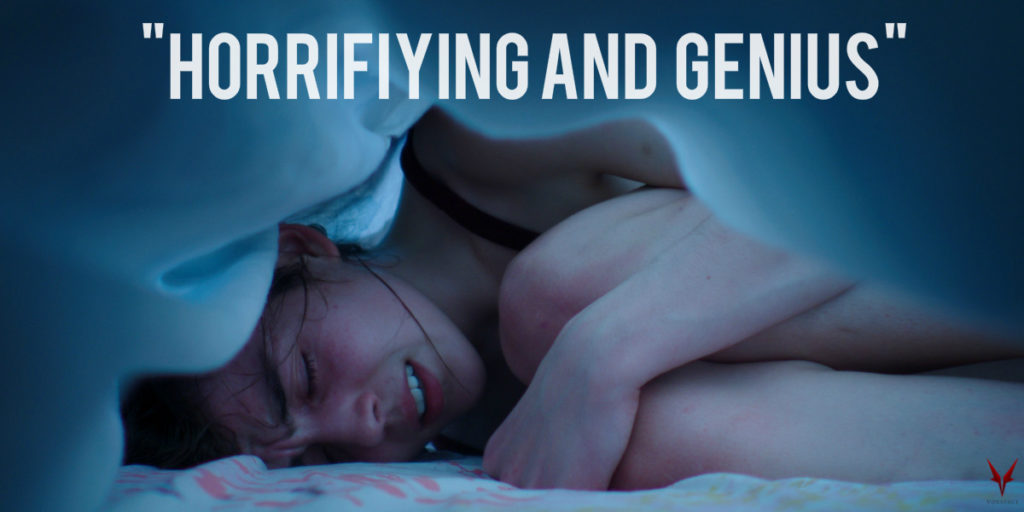
Nearly a decade later, Raw's unflinching approach to body horror and psychological transgression continues to challenge and captivate discerning horror fans worldwide.
Verdict
Raw is an extremely confident film that will satisfy both gore hounds and purveyors of smart horror. Julia Ducournau’s directorial debut is unflinching, provocative, and genuinely disturbing—a visceral exploration of identity, desire, and the monstrous potential within us all.
Rating: ★★★★½
You know it’s a good horror movie — or at least a properly revolting one — when people faint while watching it, and that’s just what happened at the Toronto Film Festival last night when “multiple audience members” passed out during the film Raw’s premiere screening.
Written and directed by first-time filmmaker Julia Ducournau, Raw‘s synopsis reads as follows:
A shy, vegetarian student at a veterinary college develops an insatiable lust for flesh as the result of a gruesome hazing ritual, in this grisly and gory tale of a cannibalistic coming of age.
The offending scene is likely the same one that Bloody Disgusting reviewer Joe Lipsett described in his review as “one of the most uncomfortable and anxiety-provoking sex scenes in recent memory.” So, you can imagine.
The Plot goes something like this :
Everyone in Justine’s family is a vet. And a vegetarian. At sixteen, she’s a brilliant and promising student. When she starts at veterinary school, she enters a decadent, merciless and dangerously seductive world. During the first week of hazing rituals, desperate to fit in whatever the cost, she strays from her family principles when she eats raw meat for the first time. Justine will soon face the terrible and unexpected consequences of her actions when her true self begins to emerge.
https://youtu.be/qAWcBQ5COW4
Consuming meat sets Justine down a dark path. She develops a bizarre rash that she can’t stop scratching (the first example of the film’s love of squirm-inducing body horror-esque visuals). She develops a taste for flesh that she can’t seem to control and her hunger begins to dictate her actions, making her increasingly unstable and dangerous. Alexia seems to encourage this transformation (the sibling rivalry drama between the girls is palpable), especially after she witnesses Justine indulging her new hobby following a disastrous attempt at sisterly bonding over Brazilian waxing. The resulting scene, as Justine ponders and then consumes the spoils of the accident, had the TIFF audience on the edges of our seats in disgust and appreciation. It is a show stopper.
Running parallel to Justine’s new culinary diet is her sexual awakening. A substantial part of the film is dedicated to the debased, humiliating hazing rituals that the assholish “elder” veterinary students putt the “newbies” through. The sexualized nature of these activities is a vital component of the film and something that Justine initially struggles with. At the start of the film, her parents fret about her because she is shy and introverted; an early scene at a dance also makes it clear that she is sexually inexperienced. As Justine’s hunger for meat grows, so too do her other urges. When the hunger for sex and meat finally intersect the result is one of the most uncomfortable and anxiety-provoking sex scenes in recent memory.
https://youtu.be/q34Pcc3HL_Y
Ducournau’s script is filled with these kinds of witty observations about female sexuality and agency. An ER Doctor candidly speaks about body shaming, a random classmate offers unsolicited advice for throwing up and the hazing frequently takes on a gender-specific dynamic such as the day when girls are told to dress sluttier. I was frequently reminded of the way that Canadian horror classic Ginger Snaps mined the same territory to similarly fantastic results. In fact one of Raw’s greatest strengths is its ability to balance its pointed commentary with its horrific and comedic elements.
At the end of the day Raw is an extremely confident film that will satisfy both gore hounds and purveyors of smart horror. It is one of the most surprising films of the fest and should be particularly appealing to audiences who appreciate France’s brand of extreme horror. It is highly, highly recommended.
Frequently Asked Questions
Is Raw (2016) based on a true story?
No, Raw is an original fictional work written and directed by Julia Ducournau. While the film explores the psychological aspects of transformation and identity through a cannibalistic narrative, it is not based on any real events or true crime cases.
Why did people faint watching Raw at Toronto Film Festival?
The film contains graphic body horror sequences and an intensely uncomfortable sex scene that audiences found deeply disturbing. The combination of gore, psychological tension, and visceral imagery proved overwhelming for some viewers, leading to multiple fainting incidents during the premiere screening.
What does Raw (2016) say about vegetarianism?
The film uses Justine’s breach of her family’s vegetarian principles as a catalyst for her psychological unraveling. Rather than making a statement about vegetarianism itself, Ducournau explores themes of conformity, identity, and the consequences of transgressing personal and familial boundaries.
Is Raw (2016) appropriate for all horror fans?
No. Raw is an extremely graphic and disturbing film featuring intense body horror, gore, and psychological distress. It is strictly for experienced horror viewers seeking challenging, boundary-pushing cinema. Many mainstream audiences will find it unwatchable due to its graphic content and unsettling themes.
How is Raw (2016) different from typical cannibal horror films?
Rather than sensationalism, Raw uses cannibalism as a metaphor for sexual awakening and identity formation. Ducournau’s film is a character-driven coming-of-age story that examines the psychology of transformation with artistic precision and unflinching honesty, elevating it beyond conventional horror tropes.
Disclosure: This article may contain affiliate links. VoxSpace may earn a small commission if you make a purchase through these links, at no additional cost to you. This does not influence our editorial opinions or reviews.