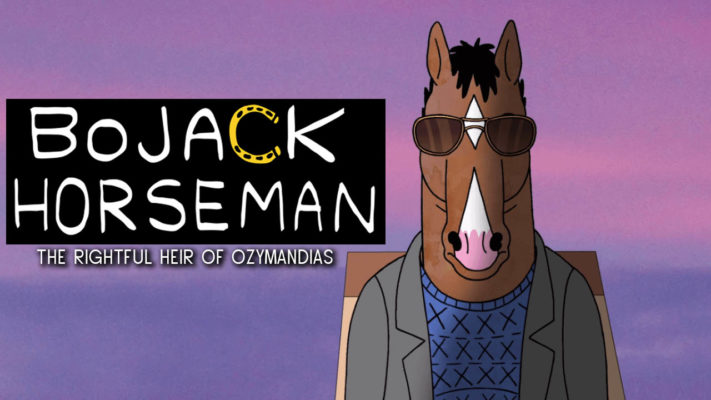
Even years later, BoJack Horseman's unflinching take on depression and fame continues to resonate with Indian audiences navigating similar psychological landscapes.
The Verdict
BoJack Horseman is a masterclass in subverting comedy itself. It’s a show for those willing to sit with their own psychological complexities—a darkly comedic mirror to modern existence wrapped in animal puns and existential dread.
“Let’s Get Rich” This Is BoJack Horseman. Obviously!
A humanoid horse imposingly kisses a female human by a beach on a certain peaceful and calm night. Crickets cheer in the distance as stars gleam on the horizon. The blue of the night sky is planted above the blue of the ocean. . . Welcome to the show, BoJack Horseman!
As Netflix releases the fifth season of BoJack, written originally by Raphael Bob-Waksberg and Hanawalt, once again we get to see the ceaseless moving of a bright beautiful menagerie of animals pitted against humans. Sadcom regains a whole new dimension after Rick and Morty and promises another deplorable journey in God forsaken “Hollywoo”-the irony. Bojack Horseman himself is a distressed, self-loathing protagonist consumed deep into the toxic celebrity culture and it is just the kind of show that a generation of unresolved psychological complexities needs.
“I guess I’ll just try
And make you understand
That I’m more horse than a man
Or I’m more man than a horse”
Pretty much sums up the absurdities of his “horsin’ around” and tries to establish some sort of meaning within himself. Netflix might technically categorize the show as a comedy, but at the heart of this show is also a universe filled with characters, indifferent to personal sufferings and leading a life spattered with petty distractions. Parodying existence, casually throwing animal puns, giving two hoots about misery, friendships and personal loss, and oh, of course, subverting the very idea of comedy itself.
Why The Show Has Its Own Tenor
Lisa Hanawalt, Illustrator, has done a commendable job in filling BoJack Horseman with delightful creatures like Princess Carolyn, Mr Peanutbutter and Pinky Penguin to savour the taste of animal puns, like a bear holding a placard saying ‘BoJack’s views are unbearable’.
It has to be one of the saddest shows wrapped in the foil of comedy I have ever seen. A show, self-referential and pivoted around a culture tremendously hollow and toxic at its core! This show would never for once make you snug and happy without thrusting you back from the screen every now and then.
BoJack is perhaps the rightful heir of Ozymandias, the “king of kings” writhing in his arrogant pride and abundance of yesteryear. So if you are planning to watch BoJack Horseman unwind for a while, embrace yourself to this existential dark comedy; here even a dog excels where our favourite philosophers stumble “ The key to being happy isn’t a search for meaning.”
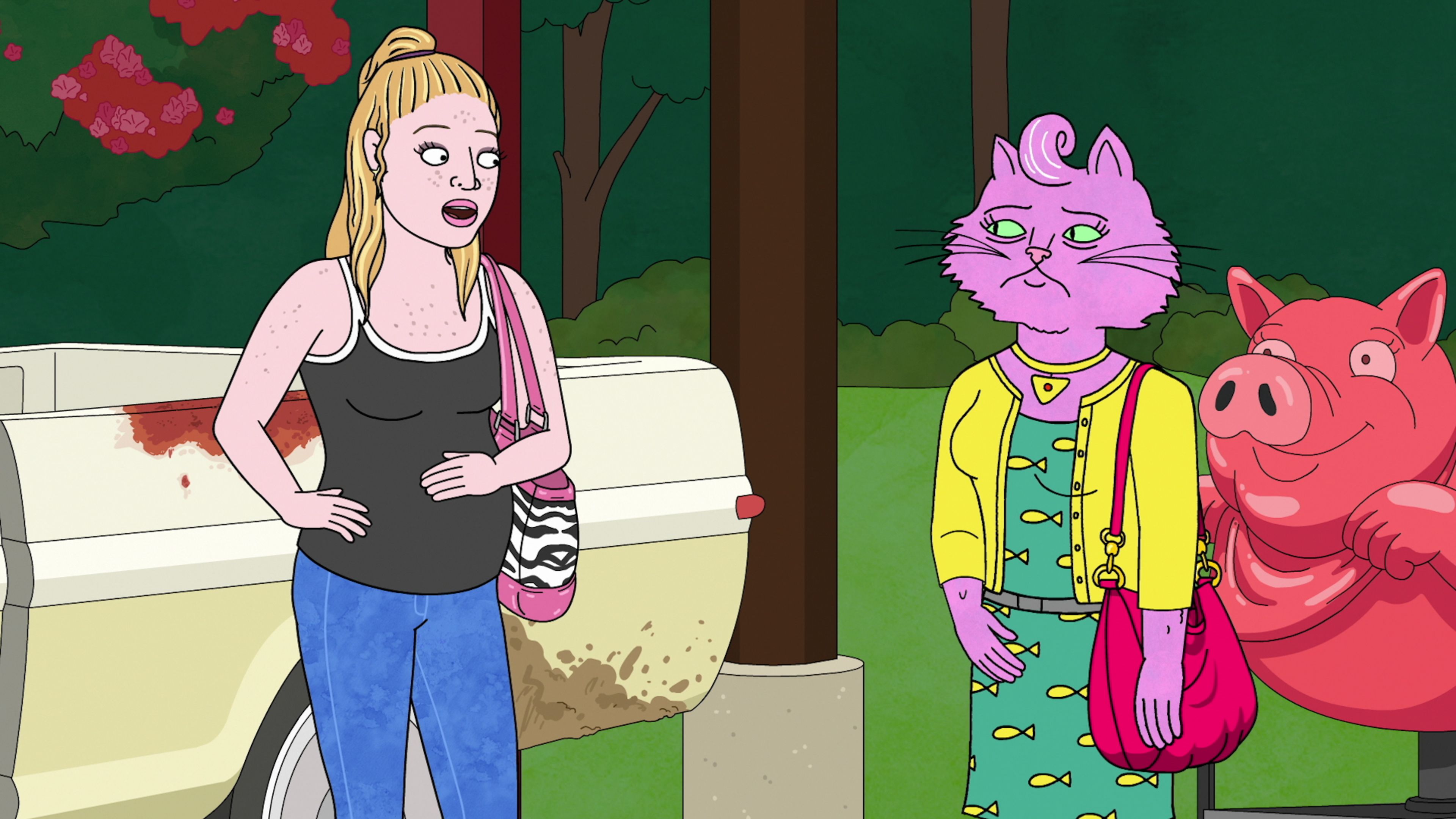
BoJack Horseman differs from other standard comedy shows. Gracias to this surreal world of American Dream where the manager of sinking Penguin Publishers is actually a penguin. It is Los Angeles and nobody cares about where one hails from and it is that one opportunity to beat your boats against the current.
BoJack made it for himself, irrespective of all his self-deprecating jokes and substance abuse into which he has lately fallen. He has built his residence on a cliff surrounded by palm trees, where he has the privilege to throw random parties and vomit candyfloss.
The same has also made him aloof and self-destructive, unhappy and forever jumping from one …to another. Paparazzi (birds sitting on windowpanes with cameras) won’t leave him alone and his manoeuvres make him the prisoner of his own device.
BoJack amassed popularity and fame doing “Horsing’ Around” somewhere in the 90s, and you cannot help but draw a parallel between BoJack and Joey Tribbiani (F.R.I.E.N.D.S) as they both prefer to bask a lil’ more in their past glories.
Now, Bojack Horseman can both be the biggest empathiser and critic of the 1990s-2000’s lifestyle disorder, punching viewers rough in the gut with its show-biz jokes and witty remarks. As the characters try to fill in their own lacuna, you know that the sum of these activities would never amount to anything particular.
To Creators Bob Waksberg And Hanawalt
A community is trapped within this sitcom, with multiple references to the real world you cannot help but reflect on the general conditions of things. Thanks to animation, that BoJack Horseman receives a waggish treatment at the hands of Bob Waksberg and Hanawalt, without letting go off its hook the darker elements.
BoJack’s grandfather hurriedly reminds himself that “Modern American man cannot manage a woman’s emotions.” So, apart from subtly bringing life into the society we live in with gentle strokes of a paintbrush, the show is a bitter reminder of its let downs.
If BoJack is using one distraction and the other to carry on living, it also means every such exploit is carving a deep cavity within him. The show reverberates with a Sisyphean meaninglessness of life and populates itself with characters who are blessed with different degrees of awareness of the same irrespective of their varying social leverages and celebrity status.
Not Your Daily Soap!
Season 5 is a fine embellishment of some of the show’s favourite characters like asexual Todd, chronically depressed Diana Nguyen, and frivolous and stupid Mr Peanut Butter. The season does not spare its hero so easily. Each time BoJack suffers from the repercussion of his actions, as he camouflages under different identities, you know these people are inappropriate to fit in anywhere else. Also, BoJack’s eulogy in season 5 once again is a stark reminder that this is BoJack, the humanoid horse, who took television by storm in the 90s.
“By the time you realize you’re sinking, it is too late,” Charlotte Carson, sometime during the 1980s.
Frequently Asked Questions
Is BoJack Horseman actually funny or just depressing?
BoJack Horseman blends dark humour with genuine pathos. It’s funny precisely because it refuses to look away from the uncomfortable truths about addiction, ego, and self-destruction. The comedy emerges from recognizing ourselves in flawed characters.
What makes BoJack Horseman different from other Netflix comedies?
Most comedies prioritize laughs; BoJack prioritizes character development and thematic depth. It parodies existence itself while exploring friendship, loss, and the emptiness of celebrity culture—themes rarely tackled with such nuance in mainstream entertainment.
Should Indian audiences watch BoJack Horseman?
Absolutely. The show’s exploration of fame, ambition, and mental health transcends geography. Indian audiences navigating Bollywood culture and societal pressures will find BoJack’s cynical worldview both disturbing and liberating.
Does season 5 of BoJack Horseman continue the sadcom format?
Yes, season 5 deepens the sadcom (sad comedy) formula introduced in earlier seasons. It maintains the show’s commitment to blending comedy with psychological complexity, with BoJack’s self-destruction accelerating further.
What is sadcom and why does BoJack Horseman define the genre?
Sadcom blends sadness with comedy, refusing to choose between them. BoJack Horseman pioneered this by treating dysfunction, addiction, and moral bankruptcy with both humour and genuine emotional weight—a format now widely imitated.
Disclosure: This article may contain affiliate links. VoxSpace may earn a small commission if you make a purchase through these links, at no additional cost to you. This does not influence our editorial opinions or reviews.














Comments are closed.