The Film That Drove Across India
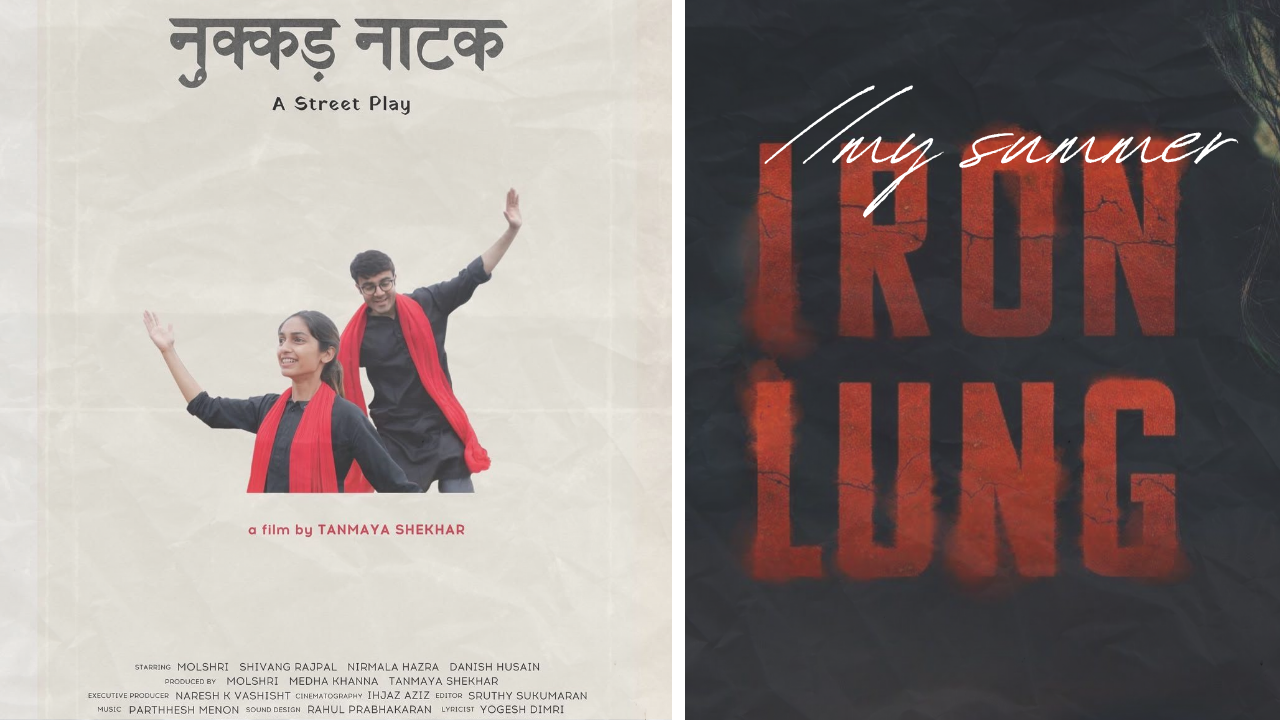
Take Nukkad Naatak — a debut feature by first-time director Tanmaya Shekhar and debut actor Molshri Singh, with zero studio backing, zero marketing budget, and zero industry connections. What they had instead: a hand-painted caravan and an idea so audacious it sounds fictional. They drove across the country performing literal street plays — at college campuses, intersections, maidans — turning every performance into a word-of-mouth engine. Pure hustle. No boardroom sign-offs. No focus groups. The result? A 100-screen theatrical release, powered entirely by public goodwill. That is not a small achievement. That is a blueprint.Corporate Fatigue Is Real — And Audiences Are Done
The success of films like Nukkad Naatak points to something deeper than a good marketing stunt. It reflects a growing psychological exhaustion with traditional film promotion. Audiences today are experiencing what you might call corporate fatigue — a visceral rejection of manufactured hype. We are tired of trailers engineered by committees, campaigns that feel like boardroom mandates dressed up as excitement, and releases that treat the audience as a demographic to be processed rather than a community to be engaged. We no longer want to be sold to. We want to discover. And a new class of creators has figured this out. They are not competing with studios on their terms. They are rewriting the rules entirely.How Markiplier Bypassed Hollywood Entirely
The same grassroots energy is playing out globally. YouTuber Markiplier — 35 million subscribers, no film studio experience — self-funded his indie horror film Iron Lung and bypassed Hollywood distribution entirely. His strategy was elegantly simple: activate an already engaged community rather than rent one through traditional advertising. The result was a $3 million budget film approaching $50 million in returns globally. Not because it was perfect. Because it was authentic. His audience did not feel marketed to. They felt invited.Hundreds of Beavers and the Punk Rock Release Model
If Iron Lung is the YouTube playbook, Hundreds of Beavers is the touring band model. Made on a staggering $150,000 budget — less than the catering bill on most studio films — the micro-budget comedy refused to accept the quiet streaming dump that awaits most films of its size. Instead, the creators took it on a localized roadshow, treating each screening like a concert event in a small venue. City by city. Audience by audience. Cult by cult. The result: over $1.5 million in returns, built entirely on word-of-mouth and the kind of passionate audience ownership that money cannot manufacture.Gaami, Terrifier 2, and the Numbers That Cannot Be Ignored
This is not a Western phenomenon or a fringe trend. It is a global renegotiation of how cinema reaches people. The Telugu film Gaami evolved from a modest crowdfunding campaign into a theatrical hit, grossing over ₹22 crore against a lean ₹6 crore budget — a return that would embarrass many studio productions with ten times the spend. Terrifier 2, the American slasher sequel made for $250,000, used organic horror community word-of-mouth to generate $15.8 million at the box office. No stars. No studio. No problem. And then there is Laalo – Krishna Sada Sahaayate. Made on a micro-budget of just ₹50 lakh, relying entirely on raw, unfiltered community word-of-mouth, Laalo crossed the ₹100 crore mark globally — becoming the highest-grossing Gujarati film of all time. Let that number sit for a moment. ₹50 lakh in. ₹100 crore out. When art resonates at that depth, the community does not just recommend it. They evangelize it. They become the marketing department, the distribution team, and the box office engine — willingly and passionately.Why This Works: The Psychology of Ownership
The mechanism behind all of these stories is the same, whether the film cost $150,000 or ₹50 lakh. When a creator operates independently — without the buffer of a studio brand, without the safety net of a marketing agency — the promotion stops feeling like a billboard and starts feeling like a conversation. It feels personal because it is personal. The filmmaker is not a corporation. They are a person who made something and is asking you to care about it. That directness creates a psychological transfer of ownership. The audience does not just watch the film — they feel responsible for it. They want it to succeed. And in wanting it to succeed, they make it succeed. This is not a marketing strategy. It is a fundamental shift in the relationship between creators and audiences. And it applies far beyond cinema — to software, startups, journalism, and every creative endeavour that requires an audience to sustain it.What This Means for Indian Independent Cinema
India is uniquely positioned for this revolution. The infrastructure of grassroots community — college networks, regional language pride, religious and cultural festivals, social media ecosystems that move at extraordinary speed — already exists here at a scale that most Western independent filmmakers can only dream of. Gaami proved it in Telugu. Laalo proved it in Gujarati. The question is not whether it can work in Hindi, Bengali, Malayalam, Kannada, or Tamil. The question is who will be the filmmaker daring enough to trust it fully. The gates are open. The tools are available. The audiences are ready. The only thing that has ever been needed is a creator willing to drive a hand-painted caravan across the country.Frequently Asked Questions
What is grassroots film marketing and how does it work?
Grassroots film marketing is the practice of building an audience for a film through direct community engagement rather than paid advertising. It involves strategies like roadshows, social media activation, creator-community relationships, and word-of-mouth campaigns. Films like Nukkad Naatak, Gaami, and Hundreds of Beavers have used this approach to achieve returns that rival or exceed studio-backed productions.
How did Nukkad Naatak achieve a 100-screen theatrical release without studio backing?
Nukkad Naatak’s team drove a hand-painted caravan across India, performing street plays at colleges and public spaces to generate organic awareness. This direct community engagement built genuine public goodwill that translated into exhibition support, resulting in a 100-screen theatrical release achieved entirely without studio involvement or a traditional marketing budget.
What is the ROI of grassroots indie films compared to studio productions?
The returns can be extraordinary. Laalo was made for ₹50 lakh and grossed ₹100 crore globally — a 200x return. Terrifier 2 turned $250,000 into $15.8 million — a 63x return. Gaami generated ₹22 crore from a ₹6 crore budget — nearly 4x. These returns consistently outperform many studio productions on a percentage basis, though absolute gross figures are naturally smaller.
Can Indian indie filmmakers replicate the success of Markiplier’s Iron Lung?
Absolutely, and with natural advantages. India’s regional language communities, college networks, and deeply engaged social media ecosystems provide grassroots reach that Western indie creators often lack. The success of Gaami and Laalo demonstrates that the Indian audience is both willing and eager to champion independent work when it resonates authentically with their culture and experience.
What is “corporate fatigue” in the context of film marketing?
Corporate fatigue refers to the growing audience disillusionment with manufactured, committee-approved film marketing campaigns. Modern audiences increasingly distrust polished studio promotions and respond more positively to authentic, creator-driven engagement. This psychological shift is one of the primary reasons grassroots and community-powered film releases are outperforming traditional marketing approaches globally.