Why Telugu cinema’s Sankranti window broke the zero-sum game
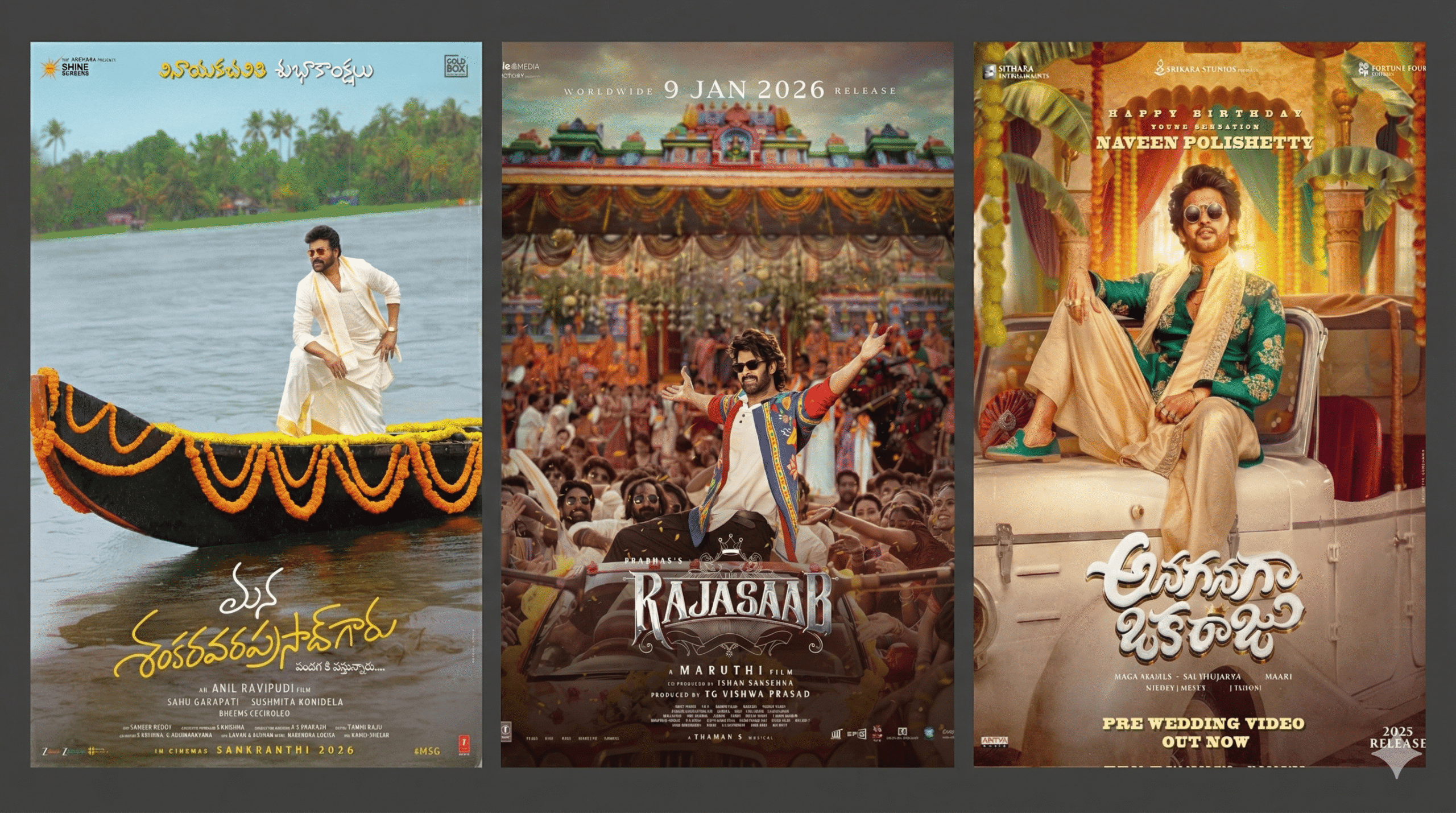
The 2026 Sankranti season just rewrote how we think about festival releases in Telugu cinema. Instead of one film cannibalizing another’s box office, we watched Mana Shankara Vara Prasad Garu and Raja Saab combine for ₹600 crore worldwide—proof that the industry’s obsession with “winning” weekends misses the actual story. The real victory wasn’t individual; it was collective. A crowded release calendar didn’t crater the market. It inflated it.
For years, we’ve treated Sankranti like a battlefield. Studios strategize release dates like generals plotting territory. Trade analysts dissect first-weekend numbers as if cinema were a stock market. But what actually happened in 2026 suggests we’ve been asking the wrong questions. The question was never “which film will dominate?” It was “how many people can we get into theaters?”
The multiplier effect nobody talks about
Here’s what made 2026 different: ₹350 crore in domestic collections wasn’t divided among competitors—it was multiplied by them. Schools shutting down for Sankranti doesn’t create a fixed pie of viewer hours. It expands the pie entirely. When your office closes and your kid’s school is shut, the theater visit becomes default behavior, not an appointment you’re carefully scheduling.
This is the structural insight everyone misses. Sankranti isn’t just another festival release window like Diwali or summer. It’s wired into the Indian family calendar. The ritual precedes the cinema. Your family will travel, eat together, gather indoors—the question for filmmakers isn’t “will they come?” but “where will they spend those hours?” Two films releasing simultaneously doesn’t compete for the same 2-hour slot. It competes for the same 10-day behavioral window where a family might visit theaters multiple times.
Raja Saab crossed ₹225 crore despite middling word-of-mouth. That’s not star power or marketing dominance. That’s a rising tide. Mana Shankara Vara Prasad Garu secured ₹220 crore by anchoring traditional family sentiment—a completely different emotional register. Both succeeded. Both drew audiences. Both expanded the ecosystem.
What the data reveals about audience behavior
The real numbers here are about repeat visits. Sankranti audiences aren’t monolithic. A 60-year-old grandmother watching Mana Shankara Vara Prasad Garu for its devotional texture might not be your Raja Saab viewer. But the same family group—three generations together—might visit theaters twice in 10 days. Once for the elder’s preference. Once for the younger generation’s. The festival creates psychological permission for what would normally seem excessive.
This explains why mid-budget films like Anaganaga Oka Raju found their lane. They weren’t competing for the “biggest opening weekend” trophy. They were filling gaps in the festive menu. Different tone, different audience segment, different release timing within the window. The market had room for all of them because the window itself wasn’t zero-sum.
Trade analysts who focus only on opening-weekend figures are missing the architecture. Sankranti releases have longer legs. A film that opens to ₹40 crore on day 1 might accumulate ₹220 crore because Sankranti extends the theatrical window’s potency. Your film isn’t just competing for first-weekend attention; it’s benefiting from 10 days of elevated footfalls. That’s a different math entirely.
The creative implications for writers and directors
If the market expands during Sankranti, the creative mandate changes. You’re not designing a film to beat the competition; you’re designing it to fit a moment. That means filmmakers should stop chasing “novelty” during festival seasons and start chasing “resonance.”
The biggest earners in 2026 weren’t the most formally ambitious. They were the most emotionally calibrated for togetherness. Multi-generational humor. Family conflicts that resolve into understanding. Characters your grandmother and your nephew can both relate to. This isn’t a dumbing-down; it’s an alignment with how audiences actually consume cinema during Sankranti.
Writers should note: Sankranti audiences aren’t looking for narratives to deconstruct in think pieces. They want stories they can share. A hero redemption arc lands harder. A father-son reconciliation means something. A wedding-season comedy works because it touches the exact moment families are gathering. Experimental storytelling has its place, but not here. Here, the ritual matters more than the rebellion.
Why this breaks industry orthodoxy
The old industry logic treats every release window as a duel. The stronger film wins. The weaker one fails. Zero-sum thinking. But 2026 proved that during culturally anchored windows—Sankranti, Diwali, major festivals—the dynamics shift. The window itself becomes the protagonist, not the individual film.
This should change how studios approach release strategies. Instead of trying to monopolize a festival window, smarter players might actually release complementary films. Different genres. Different audience segments. Different emotional registers. The rising tide doesn’t just lift all boats; it makes the harbor more attractive overall. More screens fill up. More families plan theater visits. More word-of-mouth flows through social networks.
But this requires studios to think beyond quarterly box office reports. It requires seeing the market as a long-term ecosystem instead of a series of weekend victories. Indian cinema, especially in Telugu, is built on family viewing. Sankranti crystallizes that like nothing else. The industry that stops fighting over crumbs and starts baking bigger loaves wins.
What this means for the wider industry
The 2026 Sankranti season isn’t an anomaly. It’s a template. As regional film industries mature, they’ll inevitably discover what Telugu cinema just demonstrated: festival windows aren’t scarce resources to be fought over. They’re expandable opportunities when you understand the cultural mechanics underneath.
This has implications for casting, music release strategy, theatrical promotion, even OTT release windows. If Sankranti can sustain multiple ₹200+ crore films, then the traditional scarcity mindset—one slot, one winner—is outdated. The question becomes: how do we collectively expand the market rather than individually dominate it?
Telugu cinema chose expansion over dominance. The numbers proved it worked. ₹600 crore worldwide isn’t the sum of zero-sum battles. It’s the product of a shared harvest. Every stakeholder—producers, distributors, theaters, platforms—benefited. That’s not compromise. That’s intelligence.
Frequently asked questions
Did multiple 2026 Sankranti releases hurt each other’s box office collections?
No. The combined ₹600 crore worldwide gross across multiple releases proved that Sankranti is the expanding market rather than a fixed pie. When audiences have 10 days of increased theater-going behavior, films in different genres and emotional registers can coexist and thrive.
Why does Sankranti specifically create a multiplier effect for box office numbers?
Sankranti aligns school closures, office slowdowns, family travel, and cultural rituals into one 10-day window. This transforms theater visits from scheduled appointments into default group activities. Families don’t just attend once; repeat visits become acceptable, expanding total footfalls beyond typical release periods.
Which 2026 Sankranti release performed best and why?
Mana Shankara Vara Prasad Garu anchored the window with ₹220 crore worldwide by targeting traditional family sentiment and multi-generational appeal. Its success wasn’t about beating competitors but about filling a specific emotional niche during a festival designed for family togetherness.
Should other Telugu releases follow the 2026 Sankranti strategy of releasing multiple big films together?
The strategy works specifically for culturally anchored windows like Sankranti and Diwali where behavioral patterns expand naturally. For other release periods without that cultural trigger, the zero-sum dynamics remain. The multiplier effect depends on the ritual calendar, not just the release date.
How should filmmakers change their creative approach for Sankranti releases based on 2026 data?
Design for emotional accessibility rather than novelty. Multi-generational humor, family sentiment, and resolvable conflicts perform best because Sankranti audiences consume cinema as a shared family ritual. The market rewards stories that honor togetherness over films chasing formal experimentation.