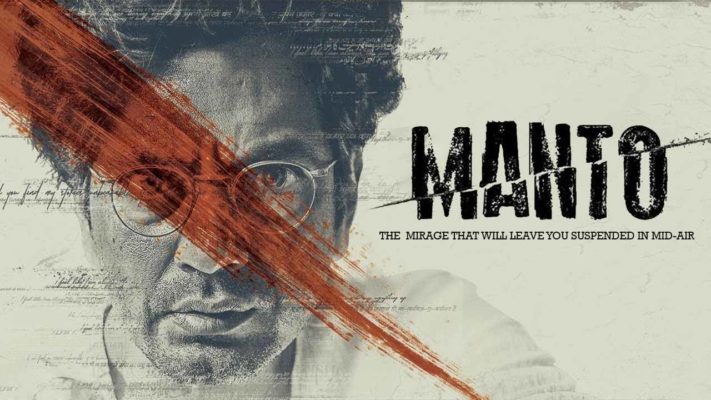
Nearly a decade later, Nandita Das's Manto remains essential viewing for understanding how cinema can honor literary genius and historical resistance.
VERDICT
Nandita Das crafts a hauntingly beautiful film that suspends viewers in poetic ecstasy. Nawazuddin Siddiqui’s magnetic performance as Manto, combined with Das’s masterful direction and the integration of Manto’s own stories, creates magic realism that reminds us of literature’s eternal power to challenge society and expose pretense.
Rating: A must-watch for cinema and literature lovers.
Das Offers Us A Short Recluse Through Her Period Drama
Saadat Hasan died at 42…Manto lives on..
Nandita Das’s Manto opens in Bombay in 1946, a different land for our Manto. Where he could reminisce his childhood, recite nazm sitting beside his ammi’s grave, he could metamorphose living people into fictional characters and vice versa. Five minutes into the film and the chiaroscuro effects start playing on you. Nandita Das has left no stone unturned to create magic realism, making literature merge into every day, like a fine work of lace. Toba Tek Singh, Kali Shalwar, Thanda Gosht and Khol De are immortalized through the narrative, thanks to her brilliant story-telling capacity.
She makes us a confidante of Manto and we cannot help but see that Literature and society are inherently homogenous, they belong to each other, forever indebted to each other. Nawazuddin Siddiqui’s magnum opus, Saadat Hasan Manto, the character radiates from him. Let it be his gaiety, thick-framed glasses, grainy skin, starched white Kurta, measured strides, a maternal way of moulding his drafts, stuffing in his pockets- Nandita Das creates her ambience. Manto has mastered every ounce of a writer’s nuances. Manto, in the end, remains a poignant anecdote of a man suffering from the glaring pretentiousness of his mulk, his religion. Manto becomes a lone wolf who will never let his realm hide into the folds of Fancy’s multi-layered garb and false ideologies that Nationality and Nationhood fostered into the hearts of thousands.

A Mantosque World By Das
As a period film, the locales and surroundings ostensibly look authentic, it orchestrate the sheer desperation and unravels slowly the rot within the lives of a Mantosque world. There are photographic moments in the film- somewhere in the murk a hurricane is gleaming, a prostitute is writhing in pain, and a Nehru portrait hanging from a refugee’s cluttered paraphernalia. All these might be discarded by a historian for having no bearing on facts and records but are of unequal literary merit for Das.

The backdrop of the film with all its desolation harks of the bruises that partition left on the subcontinent and society on the artist. More Manto refuses to be benumbed by all these, the more his surroundings reverberate with the voices of the discarded. As a leitmotif, the sheer madness of partition runs throughout the film- a trauma inflicted on a thousand wretches, shuttling between two lands, healing the bruises, but for Manto, it becomes his literature.
Manto – A World Between The Idea And Reality
Nawaz might not be the tallest person in the room, but no other character can eclipse this man. Nawaz unflinchingly portrays a man torn between familial responsibilities and professional failures; the constant yearning for his Hindustan and his new life in Pakistan takes a different toll on his him. Das would let you take a rendezvous with Manto’s contemporaries like Ismat and Faiz, all complacently smoking and sipping on coffee in a Bombay cafe. It is a Bombay on the verge of breaking into a communal frenzy. In Jinnah’s newly attained Lahore people again start questioning literary merit of his works, labelling them ‘obscene’, his reality slowly crumbles down and ebbs away from his grip.
At this juncture, we witness the downward fall of a man from towering heights of literary merit into the clutter of his mind. We see a man cowering in the dust of a mental asylum, reading in a newspaper about the demise of his only friend and hankering after his homeland, his pre-independent Bombay. It is precisely this aspect of Manto that elevates it on a pedestal higher. Das simply did not make the film to glorify Manto, or Nawaz for that matter, intending her creation for numbered literary fanatics, who could later discuss its merits and flaws. The film is for everyone, it is a piece of ordinary life woven with a high sense of aesthetics and love for poetry.
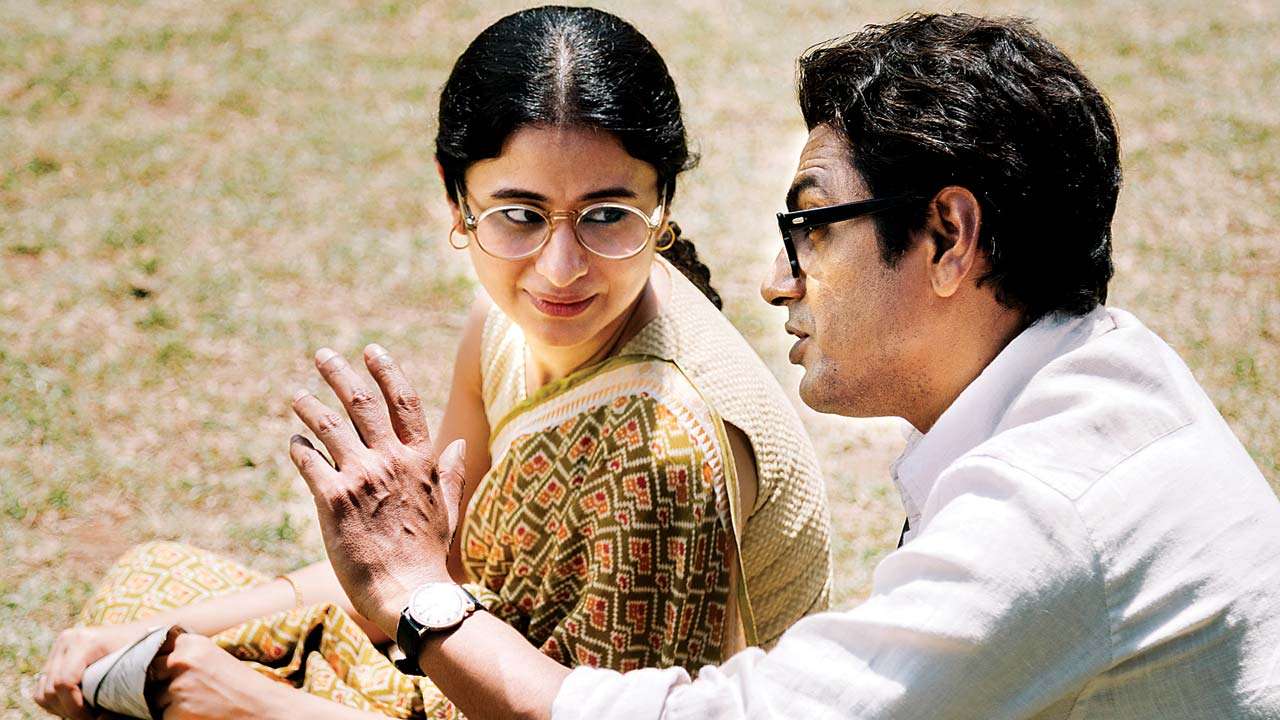
Each and every character in the film is phenomenally eccentric and exists in their own right. Rajshri Deshpande as Ismat Chugtai, Rasika Dugal as Safia and Tahir Bhasin as Shyam would leave you in a daze. Javed Akhtar appears in a short cameo. Nandita Das has draped her characters in period costumes, the designs and cutting reek with Imperialism. Safia and Ismat’s sarees are woven into oriental fashion. Throughout the film, Manto’s own lines are scattered here and here, however, they have seeped in so homogenously with the flow of the polished Urdu lines that they are hard to identify.
“Here lies buried Saadat Hasan Manto in whose bosom are enshrined all the secrets and art of short story writing. Buried under mounds of earth, even now he is contemplating whether he is a greater short story writer or God”
Frequently Asked Questions
Who directed the film Manto and when was it released?
Nandita Das directed Manto, which premiered at the Berlin Film Festival in 2015 and released in Indian cinemas in 2018. The film offers an intimate portrait of Saadat Hasan Manto’s life during the Partition period in Bombay.
What is Manto about and why is the film significant?
The film explores writer Saadat Hasan Manto’s life in 1946 Bombay, showcasing how his stories challenged social pretense and religious hypocrisy. Nandita Das brilliantly merges literature into everyday narrative, making Manto’s works of magic realism integral to understanding his resistance against nationhood’s false ideologies.
How does Nawazuddin Siddiqui perform as Manto in the film?
Nawazuddin Siddiqui delivers a magnum opus performance, embodying every nuance of a writer’s character—from his gaiety and measured strides to his maternal way of handling drafts. He radiates Manto’s essence through meticulous attention to detail, making the character unforgettable and deeply human.
Which Manto stories are featured in the film?
The film immortalizes several of Manto’s celebrated stories including Toba Tek Singh, Kali Shalwar, Thanda Gosht, and Khol De. These stories are woven seamlessly into the narrative through Nandita Das’s brilliant storytelling, demonstrating how Manto transformed lived experiences into powerful fiction.
Is Manto a good film to watch if you love Indian cinema and literature?
Absolutely. Manto is essential for anyone interested in Indian cinema, literature, and history. The film’s poetic narrative and Nandita Das’s command of magic realism create a viewing experience that transcends entertainment, offering profound insights into how literature and society are forever indebted to each other.
Disclosure: This article may contain affiliate links. VoxSpace may earn a small commission if you make a purchase through these links, at no additional cost to you. This does not influence our editorial opinions or reviews.



Comments are closed.