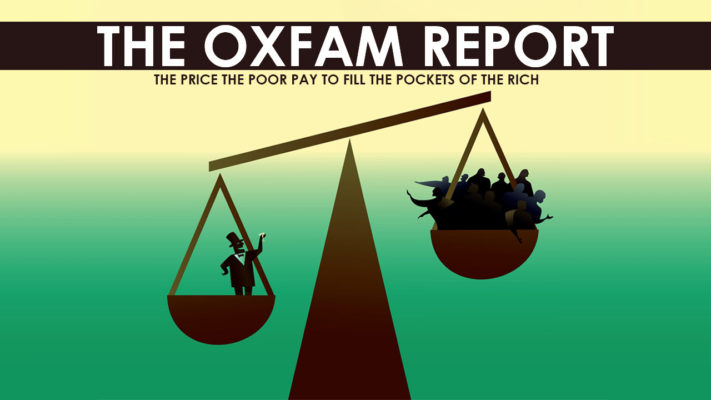
Six years later, Oxfam's wealth inequality findings remain strikingly relevant as global economic disparities continue to widen.
26 Of The Richest Own As Much As The Poorest 3.8 Billion
The inequality regarding the concentration of the world’s wealth has increased exponentially over the last year according to Oxfam. In their latest report, it was stated that the 3.8 billion of the poorest sect of people saw their wealth decline by 11% while there was an increase of 12% in the fortunes of billionaires, which rounds up to about $2.5 billion increase per day in the pockets of the wealthy. The report also stated that the number of billionaires has doubled since the financial crisis, with a new billionaire being created every two days in between the years of 2017 – 18.
The current richest man in the world is Jeff Bezos, the owner of Amazon. He saw his fortune increase to $112 billion. By doing the math correctly we can say that just 1% of his fortune is equivalent to the health budget for the whole of Ethiopia, which is a country of about 105 million people. The poorest that are present in some areas such as Brazil are paying more in taxes than compared to their wealthy.
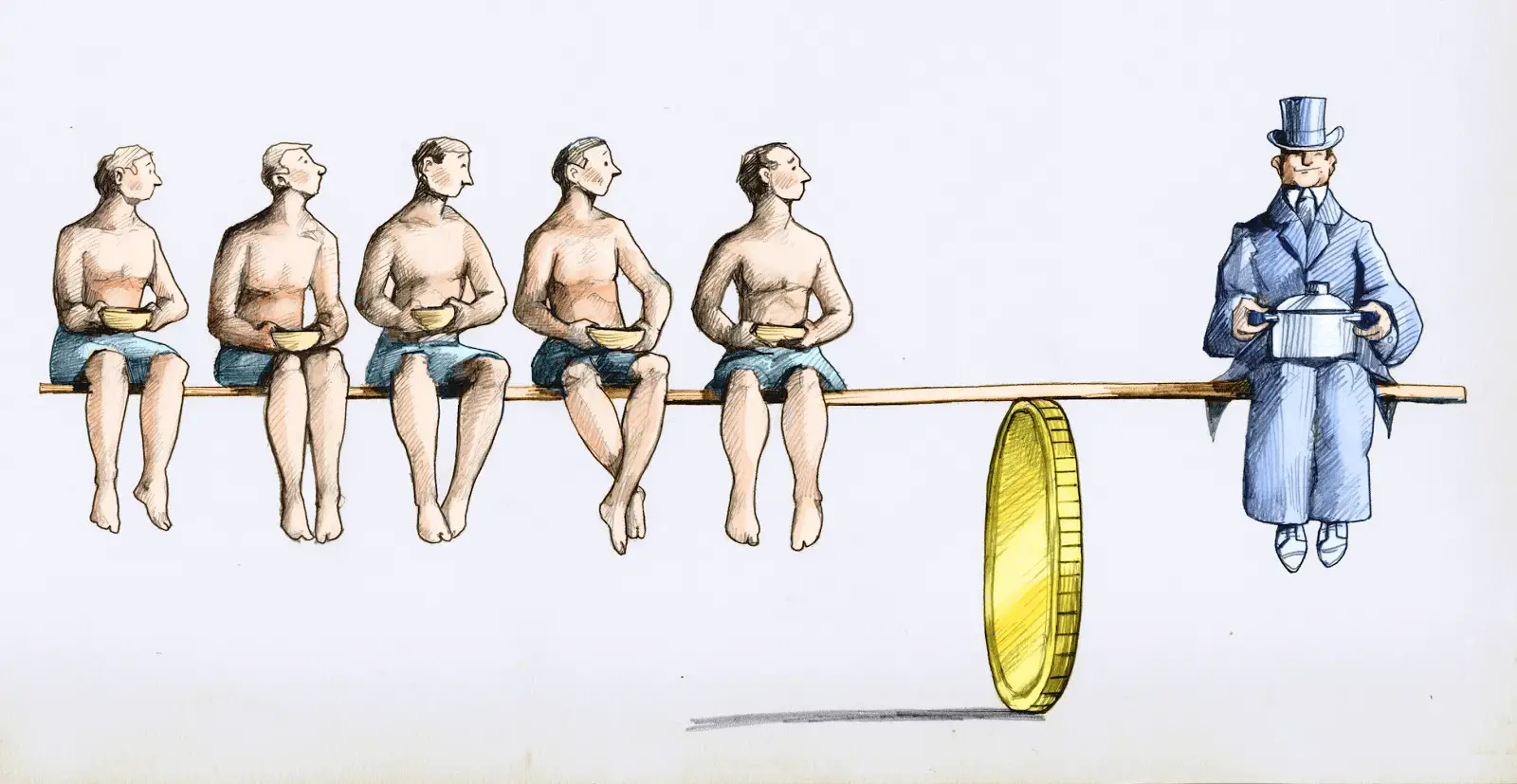
According to Oxfam’s director of campaigns and policy, Matthew Spencer, while there has been a decrease in the people who are living in poverty, it does not change the fact that with the way the current economy is structured is faulty. While the rich are becoming richer, due to poor tax policies that currently exist, there will be more inequality further down the line. He finishes by saying that it does not have to be this way and asks the Government to ensure that taxes are raised for the wealthy and to fund free, good-quality public services from the money collected.
Alexandria Ocasio-Cortez’s Take On The Wealth Gap
The wealth gap that exists has been a prevailing problem for years now. But, it has come to its head during the previous two years and therefore there has been a strong push for new reforms in regards to the taxation of people who represent the 1% of the world’s population. The latest proposal that has caught the attention was proposed by Alexandria Ocasio-Cortez where she proposed a 70% tax that should be applied to the wealthiest after the 10 millionth dollar.
During her appearance on “The Late Show with Stephen Colbert “, she explained her proposal saying “So after you make $10 million in one year, your dollars after that start to get progressively taxed at a much higher rate. And really, what that is … at what level are we just living in excess?”
With the current state that we are in, there is no chance for progress. So I urge you to be vigilant and keep an eye open for the people and policies that are being voted upon, As change begins with you and whatever small amount of power that you wield.
Frequently Asked Questions
What does the Oxfam report say about wealth inequality?
The Oxfam report reveals that 26 richest individuals own as much wealth as 3.8 billion poorest people combined. The poorest saw their wealth decline by 11% while billionaires’ fortunes increased by 12%, adding $2.5 billion daily to wealthy individuals’ accounts globally.
How many billionaires were created between 2017 and 2018?
According to the Oxfam report, a new billionaire was created every two days between 2017-2018. The total number of billionaires has doubled since the financial crisis, demonstrating accelerating wealth concentration among the ultra-wealthy elite worldwide.
What is Jeff Bezos’s fortune according to the report?
Jeff Bezos, owner of Amazon and the world’s richest person at the time, had a fortune of $112 billion. Just 1% of his wealth equals Ethiopia’s entire health budget for 105 million people, illustrating extreme wealth concentration.
How does wealth inequality affect developing countries like India?
The Oxfam report highlights that poor tax policies exacerbate inequality in countries like Brazil and India. Citizens in lower income brackets pay higher tax rates proportionally than the wealthy, perpetuating systemic economic disparities and limiting resources for social development.
What solutions does Oxfam propose for wealth inequality?
While the report emphasizes that poverty rates have decreased, Oxfam’s director Matthew Spencer argues the current economic structure is fundamentally faulty. The organization advocates for reformed tax policies and structural economic changes to address systemic inequality.
Disclosure: This article may contain affiliate links. VoxSpace may earn a small commission if you make a purchase through these links, at no additional cost to you. This does not influence our editorial opinions or reviews.
You Might Also Like
- [VoxSpace Life] Elite Matrimony : The Conundrum Of Our Match Making Skills
- [VoxSpace Selects] New Vatican Law By Pope : First Step Towards Abolishing Sexual Abuse
- [VoxSpace Life] Ali Banat : The Man 'Gifted' With Cancer
- [VoxSpace Life] Are We Overlooking The Protest Against Gender Inequality At Cannes?
- [VoxSpace Life] Amidst Spite And Controversy, The Maddening Spree Of The 2019 Academy Awards
- [VoxSpace Life] Eating Habits : Are You Eating To Live Or Living To Eat?
- [VoxSpace Selects] Netflix's Wild Wild Country - The Riveting Docuseries On Rajneesh Cult In Oregon Is Not To Be Missed








Comments are closed.