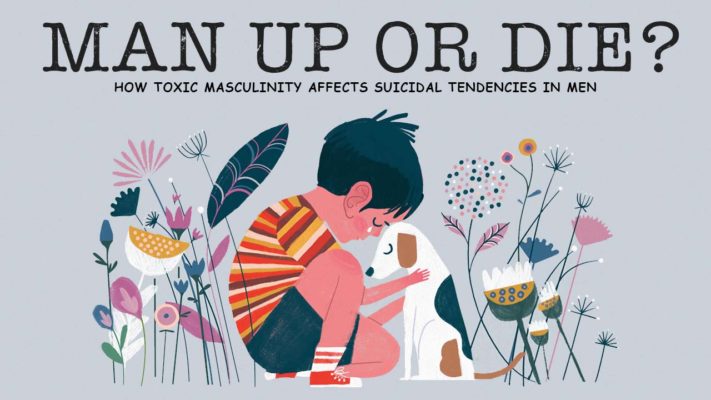
In 2025, toxic masculinity remains a critical factor in India's rising male suicide rates, demanding urgent conversation and cultural change.
Key Takeaway
Toxic masculinity suppresses emotional expression in men, directly contributing to depression, isolation, and increased suicide risk. Breaking these gender norms and encouraging vulnerability isn’t weakness—it’s essential mental health advocacy that can save lives.
Toxic Masculinity And Suicidal Tendencies In Men
Let’s suppose a couple of your guy friends had a huge fight. You’re hanging out with one of them late that day and he says “Hey, am sad, I feel disturbed and hurt.” What would your reaction be? Is it “C’mon, are you serious? Be strong” or “I understand. Give it some time. Can I help?”
If it’s the first one, then this article is just about what made you say so.
We have all come across people who find men crying, being sensitive, talking about their insecurities obnoxious. They can’t take the idea of men being submissive, introverted or expressive. If you are one of them, am sorry but you need help. You are suffering from Toxic Masculinity.
Toxic Masculinity refers to the attitude that confines men to certain predetermined gender norms and socially constructed ideas of ‘being men’. It describes the masculine gender role as dominant, violent, unemotional, sexually aggressive, tough and so forth.
What’s Wrong With Toxic Masculinity?
Everything. First of all, men are not things that they need to fulfil certain criteria to be called what they are called. They are humans and humans are diverse. They constantly evolve. They are constantly becoming.
Then how can we confine them to set rules? But Toxic Masculinity does. The alpha-male approach says men seek to be dominant and restrict their emotional expression to anger alone.
https://www.youtube.com/watch?v=afeog8O-dPc
Such ideas restrict young boys and men from exploring and being themselves. Let’s not even get started on how toxic masculinity affects women and the queer community.
What Is And Isn’t Toxic Masculinity?
Let’s bust a few myths about Toxic Masculinity. Wanting to be muscular or strong is not a sign of Toxic Masculinity. But wanting to be muscular because you are a man, and thinking that if you don’t have them makes you less of a man is certainly toxic. Treating women as sex objects, not listening to or valuing their opinion, harming themselves if they fail at standing up to the established standards, homophobia, bullying those who slightly drift from the established masculine traits (such as wearing makeup, dancing, liking flowers or dolls) are other examples of toxic masculinity. Enjoying naturally occurring masculine traits such as beard, hanging out with their counterparts, playing a sport etc are not examples of toxic masculinity.
Toxic Masculinity And Suicide
Imagine how cruel it is to tell a person that they can’t be low, weak, vulnerable or sensitive. Poor young boys believe it, even follow, make it a habit and then, it becomes a part of their life. It is these men who throw acid on women, unable to deal with rejection, get physically aggressive in a petty fight to show their power, restrain themselves from crying in front of their peers and female counterparts. The list doesn’t end any sooner.

But there are these men who struggle their entire life to get accustomed to these rules, fit in and be accepted. When they fail, they are trolled, bullied, abused and even isolated. Most of them eventually end up suffering from one or more mental illnesses, majorly depression, anxiety, gender dysphoria and the like. Of these, only a few of them seek help great difficulty. But, psychologists say a lot of them can’t even verbalize that they have depression or anxiety.
According to WHO, there are innumerable cases of suicide being reported all over the world of which men exceed women by thousands in number. Although women tend to have suicidal thoughts and non-fatal suicidal behaviour more often than men do, more men die of suicide than women.
Busting Myths And Alpha Male Shit!
In Actor Justin Baldoni’s words, it is exhausting to be man enough for everyone all the time.
Being sad or unhappy isn’t a sign of weakness. Being able to recognize what one’s feeling and expressing it is actually a sign of emotional strength. Gender shouldn’t and doesn’t stop one from being vulnerable or sensitive.
Dear Men,
Wanting to dress up and wear makeup doesn’t make you any less of a man. Both men and women inherently possess femininity and masculinity in small portions respectively. Just like how women have testosterone, men have estrogen in their body. So, don’t suppress your feminine instincts. Feminine is not the opposite of Masculine. It’s just different. You needn’t be the strongest, bravest or the most confident ‘man’ out there. But, if you want to, then be brave enough to be vulnerable as well. Be strong enough to talk about your insecurities, at least with your male counterparts. Be confident enough to listen to and value others’ opinion.
You can be and say however and whatever you feel like, as long as it’s not physically and mentally abusive. You don’t have to do it all by yourself. It’s okay to seek help. Don’t get paralysed if you have to talk about your failures. Realise the strength of your partners and don’t be shameful to rely on them to share your responsibilities.
You are not entitled to play a role that somebody else has assigned for you. Period.
I would like to end this article with a beautiful quote by Abdu’l Baha – The world of humanity is possessed of two wings: The male and the female. So long as these two wings are not equivalent in strength, the bird will not fly.
Frequently Asked Questions
What is toxic masculinity and why does it affect Indian men’s mental health?
Toxic masculinity enforces rigid gender norms that pressure Indian men to suppress emotions, avoid seeking help, and equate vulnerability with weakness. This emotional suppression increases isolation, depression, and suicide risk among men who feel unable to express their struggles authentically.
How does toxic masculinity contribute to male suicide rates in India?
Men conditioned by toxic masculinity are less likely to seek mental health support, talk about their pain, or reach out during crises. This silence, combined with the pressure to remain ‘strong,’ creates a dangerous environment where untreated depression and hopelessness escalate unchecked.
Why do Indian men struggle to admit they’re sad or vulnerable?
Indian cultural and social conditioning has historically discouraged emotional openness in men, labeling sensitivity as unmanly. This ‘be strong’ mentality means many men internalize pain rather than seek support, leading to chronic stress, mental health deterioration, and increased suicide risk.
What are the signs that toxic masculinity is affecting a man’s mental health?
Warning signs include social withdrawal, anger outbursts masking sadness, reluctance to discuss feelings, substance abuse, overwork, and dismissal of mental health concerns. Men may also express distress through physical symptoms rather than emotional language due to conditioning.
How can Indian society help men break free from toxic masculinity?
Normalize emotional expression in men, encourage help-seeking behavior, remove stigma from therapy, promote mental health literacy, celebrate vulnerable role models, and create safe spaces where men can discuss mental health without judgment or shame.
Disclosure: This article may contain affiliate links. VoxSpace may earn a small commission if you make a purchase through these links, at no additional cost to you. This does not influence our editorial opinions or reviews.













Comments are closed.