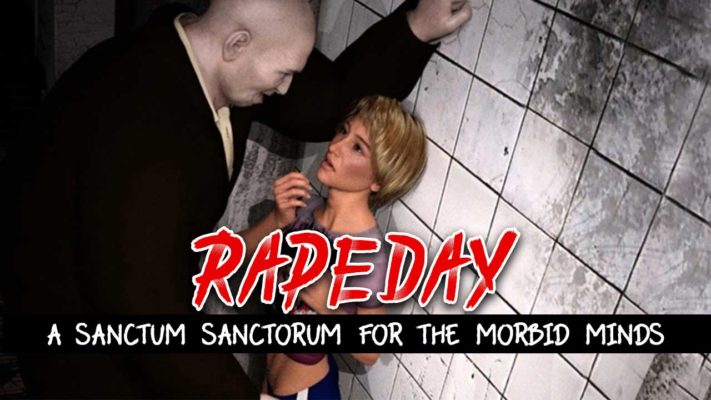
Years after its 2019 removal from Steam, the Rape Day controversy remains a critical case study in gaming ethics and content moderation standards.
Key Takeaway
The removal of Rape Day from Steam highlighted the gaming industry’s struggle between creative freedom and ethical responsibility, raising questions about how platforms moderate extreme content and whether bans truly address the underlying issues in gaming culture.
Rape Day Stubbornly Fashions Itself After A Sanctum Sanctorum For The Morbid Minds
Steam was particularly clear about its target audience of Rape Day- sociopaths, apparently 4% of the general population. Rape Day, the video game supplied by Desk Plant, had assembled the perfect elements of a zombie apocalypse- rape, abuse, and cannibalism, to sell its content. The player needs to participate in a series of non-consensual sex and torture to progress. Following the subsequent spurt of backlash from activists, petitioners and NGOs, the game was pulled out from Steam. But does it solve the immediate crisis at hand? There is too much to absorb from Rape Day patterned after a visual novel with rape scenes constituting just a fraction of its macrocosm. The developer had previously removed a scene with ‘content that exploits children’.
As a matter of fact, researchers have remarked that what starts as a simulation by advanced 3D graphics, flourishes into a debilitating compulsion in most gamers. At this juncture, technology is coming to be an existential threat in itself, the consequences of which will not remain confined within the gaming addicts alone.
“Moral outrage does not stop the entertainment industry, it slows it down but in time society progresses and realises that the purely fictional things they thought would cause moral decay and widespread lawlessness, in fact, do not,” Desk Plant argues.
Rape Day Had Every Possibility Of Spreading Like An Epidemic
The sheer fact that Steam had a particular segment of users in mind is a convincing lie. At the end of the day, video games dart from one PC to the other on its potential to rouse adrenaline rush using its interactive experience, scheming a fantasy world you would not want to leave. Steam applied reverse-psychology by announcing that Rape Day is not designed for the majority. By doing so, it had already captured the imagination of thousands and has simultaneously simulated an unwelcoming virtual space that progresses on the veracity of macabre in human beings.
In a parallel universe, considering Rape Day had seen the light of the day, its gaming experiences would have propelled thousands to summon their sexually sadistic elements as a crucial part in Rape Day’s totality. It goes without saying that the revolting gaming experience would never have confined within the mindscapes of its intended “4% sociopaths”.
The volatility of the gaming world is both outraging and unpredictable at the same time; one cannot deny that it leaves a biased influence on the marginalised population, be it LGBTQ, women or children; pushing them towards torture, verbal abuse and trolls. After all, who’s there to monitor?
“If you’re a player, we shouldn’t be choosing for you what content you can or can’t buy,” Steam to media.
Game Narratives And 21st Century Paranoia
Contextually sensitive video games invariably glorify sexual violence and aggressive behaviour in players. Game narratives are smug with the gruesome and beastly, and are slowly reaching out to the gamers who are not bothered about the toxicity of gaming communities. Video games have so much realism in their art that addicts do not consider the falsity of their premise.
Big brands trick players into contributing to this fabricated world of depravity where players’ original identity or sexual orientation has got nothing to do inside the game. Within the accepted narrative of video games, including Rape Day, gamers are normalized to physical torture and filicide. What remains potentially dangerous to society is the shared experience of these gamers, who are daily engaging in this invigorating journey of rape and torture.
You don’t need to be tech-savvy to grasp the rhetoric of toxic video games, especially now, when constructive criticism on games and the spectator-player relationship has become another click-bait. The row over Rape Day and its ethical implications, irrespective of the fact that murder and abuse are habitual indulgences in both fiction and TV series, is a cue to understand the disparity between the two platforms.
Violence on TV is passive to the extent that it does not require viewers’ immediate response. Video games like Rape Day can be extensively demanding, giving players the upper hand to control the entirety of a “menacing serial killer”, as Steam had put it.
“In this game, a player takes the first step to creating violence. The player is no longer just a spectator. He’s an actor in the process,’’ Dr Driessen, a behavioural psychologist to the New York Times.
Frequently Asked Questions
What was Rape Day and why was it controversial?
Rape Day was a visual novel video game developed by Desk Plant featuring rape, abuse, and cannibalism as core gameplay elements. Players progressed by participating in non-consensual sexual scenarios. It sparked massive backlash from activists and NGOs, leading to its removal from Steam within weeks of launch.
Did removing Rape Day from Steam actually solve the problem?
The article argues that removal alone doesn’t address deeper issues. While it prevented mainstream distribution, the game’s existence exposed how simulation-based content can normalize harmful behavior. The real challenge lies in understanding why such games are created and what societal factors enable their development.
How do video game simulations affect player behavior according to researchers?
Research cited in the article suggests that what begins as 3D graphic simulation can develop into compulsive gaming behavior among players. These behavioral patterns may extend beyond entertainment, creating existential threats that impact not just gamers but society broadly through normalization of violent content.
What is Desk Plant’s defense regarding moral criticism?
Desk Plant argued that moral outrage doesn’t permanently stop the entertainment industry—it only slows progress. They claimed that historically, fictional content people feared would cause moral decay and lawlessness ultimately doesn’t. This defense highlights the ongoing tension between creative expression and ethical boundaries.
Why should Indian audiences care about the Rape Day controversy?
As digital content consumption increases in India, understanding how global platforms moderate extreme content matters for Indian gamers and parents. The case demonstrates why vigilance regarding gaming ethics, content regulation, and the normalization of violence in interactive media remains relevant across all markets and demographics.
Disclosure: This article may contain affiliate links. VoxSpace may earn a small commission if you make a purchase through these links, at no additional cost to you. This does not influence our editorial opinions or reviews.
You Might Also Like
- [VoxSpace Life] Violence Monitoring : Important But Not So Feasible Reactionary Law By Australia
- Uttar Pradesh : Father, Brother And Uncles Rape A Woman For Having Eloped With Her Boyfriend
- NALSA,SC Fix A Minimum Compensation Of 4 Lakhs For Rape Victims
- [VoxSpace Life] What Our Limited Understanding Of Consent Is Costing Us
- [VoxSpace Life] Legacy Of A Rape - The Fear, Silence And Consequences Of An Age Old Crime
- Sexual Assaults Rampage : A 3 Month Pregnant Woman Is Gang Raped By Cab Driver And Three Others In UP
- [VoxSpace Life] No Land For Women : Will Women Safety Be A Reality In India?











Comments are closed.