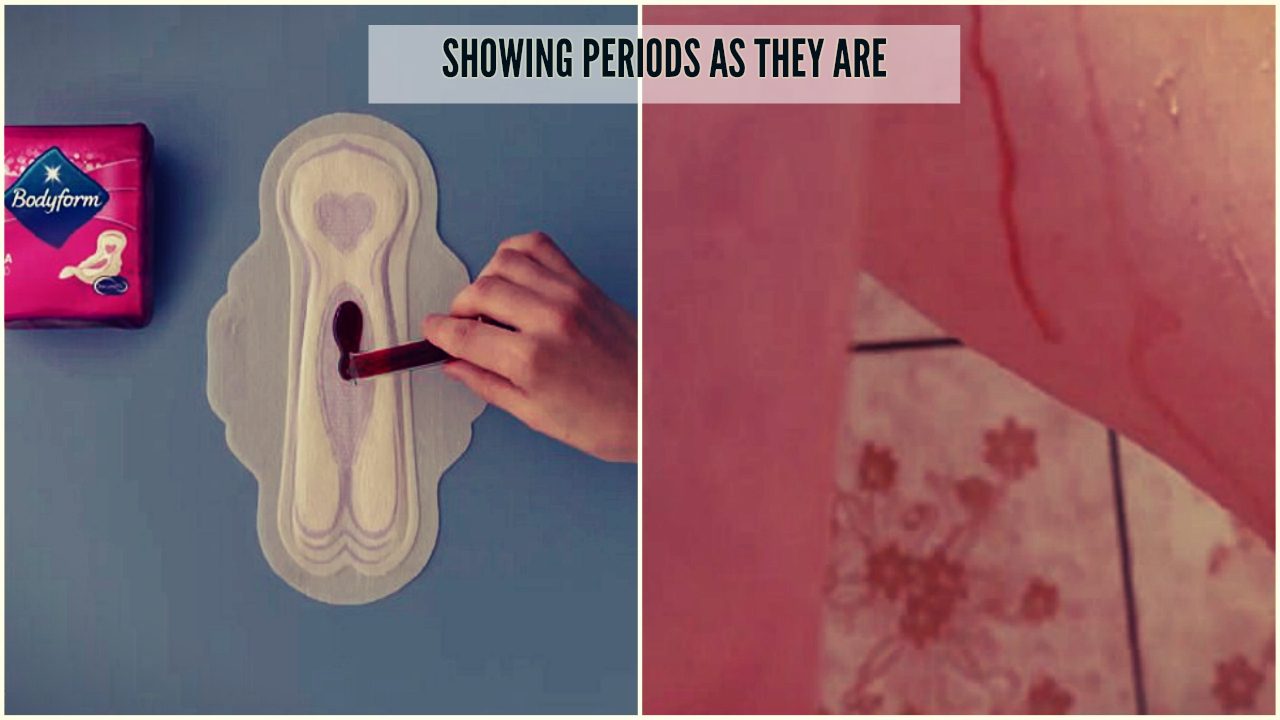
Nearly a decade later, this Bodyform campaign remains a watershed moment in how Indian brands approach period advertising.
The Takeaway
Bodyform’s decision to depict menstruation authentically—using red blood instead of the absurd blue liquid—represents a pivotal shift in Indian advertising. By normalizing periods as a natural, messy biological process rather than a sanitized fantasy, the brand set a new standard for period product marketing that challenges decades of stigma and misinformation.
Sanitary Napkins And Periods – A Reality And A Taboo
A while back a video by renowned comic Aditi Mittal was going viral on social media and YouTube. The video was about sanitary napkins and some of her unique and hilarious observations about sanitary pads and mainly the way it is advertised left us all in splits. Come to think of it, Sanitary Napkin ads have a world of their own. A world where the girls want to wear white pants specifically on her periods and want to go for all the adventurous or world-saving activities and are happy and smiling. You really think I will be happy when my own body seems like it is conspiring to kill me? No.
But the most classic of them all is the mysterious blue liquid that is used to represent the blood flow. I mean, that’s how blood looks, right? Blue. Because women are aliens from another planet (insert the rolling eyes emoji).
The Misleading Approach Of Pads Utility
However, setting these stereotypical and misleading approaches aside, a new ad by ‘Bodyform’ pads is perhaps the first sanitary pad advertisement to show the real deal. Instead of the stupid blue liquid, the ad uses red liquid to show the blood flow. You know, the colour of actual blood. The ad did not stop at breaking just this one stereotype. It also features a shot where blood is shown running down the thighs of a woman in the shower.
Amidst various attempts to normalize the concept of menstruation, and starting a dialogue about it that would help women to break the taboos associated with menstruation, this ad gets a brownie point for showing period and blood as it is in real life. Interestingly, there are no happy women in white pants saving the world in the ad. In fact, the ad does not show a woman properly at all. Rather it breaks another stereotype.
If you have observed sanitary pad advertisements closely, you would notice that men in such advertisements are absolutely absent. But this ad not only has a man, but he is the one buying the pad from the store. And guess what, the world around him did not collapse after the act!
Jokes apart, this imagery is almost as powerful as showing real blood, as it would take both men and women to end the concept of period shaming once and for all.
The Prevailing Ignorance About Periods, Sanitary Pads And Female Hygiene
In a country like India where ignorance about periods, female hygiene and basically anything related to reproductive organs and sex is rampant, an ad like this is the change we need desperately and urgently.
Apart from the ad, the company has also started a campaign with the ‘bloodnormal‘ hashtag. In fact, they have also released a tongue-in-the-cheek video where the CEO of the company apologizes for misleading men with the blue liquid for ages. Funny and witty, this video further adds to the company’s attempt to normalize period and period blood.
For years, menstruation has been a source of shame and topic to be discussed only in female company, that too in a hushed tone. As a kid getting my first period, even I was instructed to keep it a secret and taught to feel ashamed of something that is a normal body function. In fact ostracization of a sort is often carried out when the women in our country go through menstruation. Why? Because men, if at all informed about menstruation, are conditioned to be disgusted by it.
Thus the idea is to market sanitary napkins to woman wrapped in images of empowerment and happy faces in tight white pants so that if a man catches the advertisement on TV it does not make him uncomfortable or disgusted.
A Cautious Effort To NOT Show And Tell
In fact other campaigns, like the ‘Touch the Pickle’ campaign by Whisper, although an attempt to end the taboos surrounding periods, refrain from showing the supposedly explicit images of blood and the actual messiness of periods. Yes, it is messy, but it is normal and definitely not something to be disgusted by. It is this particular point that the ad drives home and does it effectively.
From the early ads when the idea was to convince woman to use a sanitary napkin in place of clothes, to products that make sure that nobody knows that you are on your periods, to pads that ensure you can climb and conquer Mount Everest on your periods, to the one that finally shows how women bleed in real life and it is absolutely normal for men to go and buy female hygiene products, sanitary pad advertisements have come a long way.
Numerous campaigns and awareness programmes to start a dialogue about menstruation, and taboos it is surrounded with, have been initiated, but unless we can convince people, especially men to not to be grossed out by this bodily function, our efforts will fall short. And this ad deserves an applause to have taken a giant leap in this direction.
Frequently Asked Questions
Why do sanitary pad ads use blue liquid instead of red?
Traditional advertising regulations in many countries, including India, historically restricted realistic depictions of menstruation. Brands used blue liquid as a euphemism to avoid offending audiences and comply with conservative broadcasting standards, perpetuating the taboo around periods.
When did Bodyform release their red period ad?
Bodyform launched their groundbreaking campaign in 2017, marking one of the first major sanitary pad advertisements globally to use authentic red liquid and realistic imagery of menstruation instead of misleading blue liquid.
How has period advertising changed in India since Bodyform’s campaign?
Following Bodyform’s lead, several Indian brands have begun normalizing period narratives in their advertising. However, many traditional sanitary pad ads in India continue using euphemisms, reflecting ongoing societal discomfort with menstruation discussions.
What does Aditi Mittal’s video say about sanitary pad advertising?
Comedian Aditi Mittal’s viral video humorously critiques conventional sanitary pad ads that portray women in white clothes doing extreme activities while menstruating, highlighting the unrealistic and insulting stereotypes perpetuated by mainstream advertising.
Why is showing realistic period blood in ads important for Indian women?
Authentic representation reduces menstrual stigma by normalizing periods as natural biological processes. For Indian women, who often grow up amid taboos, realistic advertising helps destigmatize periods, encourage open conversations, and combat misinformation about menstruation.
Disclosure: This article may contain affiliate links. VoxSpace may earn a small commission if you make a purchase through these links, at no additional cost to you. This does not influence our editorial opinions or reviews.
You Might Also Like
- [VoxSpace Life] Menstruation : I Don't Have A Problem Talking About It? Can You Come Out Of Your Taboo?
- [VoxSpace Life] Take A Pause And Understand A Period - Let's Get To The 'Period Talk' Now
- How Whisper #LikeAGirl Campaign Actually Drives Home The Point
- [VoxSpace Life] Shaming : The Indian Culture Of Subjugating Women Time And Again
- [VoxSpace Life] RR Blue Mount : The Crown Jewel Of Loafer Street
- [VoxSpace Selects] Narratives Of The Body : Bringing Together Diverse Voices
- [VoxSpace Life] 7 Women Health Myths You Need to Stop Believing In Right Now















Comments are closed.