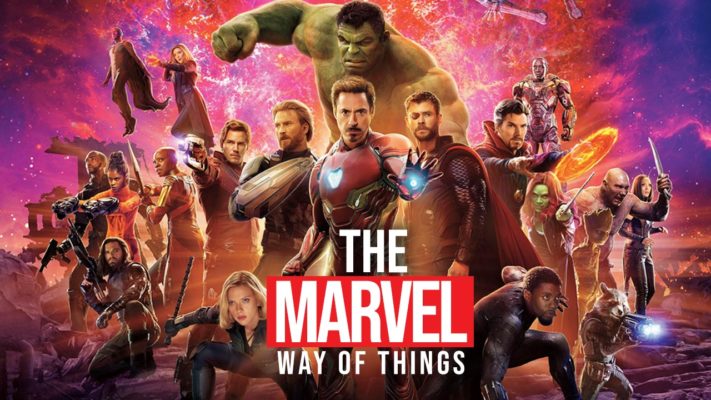
Even in 2025, Marvel's shift toward comedic storytelling remains a masterclass in franchise redemption that influences superhero cinema globally.
Key Takeaway
Marvel’s willingness to embrace humor and absurdity—particularly in Thor: Ragnarok and Avengers: Infinity War—proved that franchise safety wasn’t always the answer. By letting characters breathe beyond rigid formulas, Marvel demonstrated that calculated risks in tone and storytelling could revitalize audience interest and critical acclaim.
The Edge Marvel Has Over Other Franchises
The Marvel cinematic universe, despite its box office pull and mind-boggling successes, has been stuck in a rut when it comes to innovative storyline. Most of the Marvel films have been formulated in a manner that they follow the comfort zones and cushion itself against making any mistakes that would ruin a franchise. This has worked well for them. Over the years, other studios have tried to create their own franchises but somehow have never been able to make it work. The latest being the ‘Dark Universe’ that Universal Studios was supposed to kick off with the launch of the new ‘Mummy’ movie with Tom Cruise and Russell Crowe in it. In fact, the producers had everything planned out; there were even rumours in the wind that Johnny Depp would play The Invisible Man, Javier Bardem will be Frankenstein’s monster and that Dwayne ‘The Rock’ Johnson will be roped in to play The Wolfman. However, everything came crashing down after the overhyped Mummy reboot turned to be a critical as well as a commercial flop.
The Time Marvel’s Experiment Paid Off
So, there is a reason why Marvel has been keeping its feet on the ground and sticking to one or two over-the-top superhero stories every year. The formula worked but after stringing along the same tropes from 2008 to 2014, people were slowly looking at Marvel movies with a sense of vague interest. They knew that they would watch it because they loved the characters but at the same time, they knew they would walk out of the movie hall yawning and wishing there was more in the movie than the same end of the world threats and endless hero-wins-the-day scenarios. Even Iron Man, arguably the most successful box office weapon of Marvel, was getting a little bit rusty.
Therefore, a new direction had to be devised; something that would help Marvel break from the gilded cage it had created for itself and thankfully, the respite came from “Guardians of the Galaxy,” a franchise that has been around for a long time but no one gave a serious thought to it. Even the 2014 movie didn’t go with the original roster of heroes that were there; instead, it did a bit of nitpicking and assembled a motley of crew that was off saving the galaxy in a Star Trek meets 80’s disco way. However, this franchise let Marvel test the waters and see whether a different formula would work or not. It also presented Marvel with the opportunity to test if it was okay for the heroes to not take themselves seriously.
And boy! Did it work! 2014’s “Guardians of the Galaxy” managed to salvage MCU and even the regular movie going audience signed in for the adventure. It may sound incredible but having naïve self proclaimed Star Lord (Chris Pratt), an wise cracking genetically modified racoon (Rocket voiced by Bradley Cooper), a tree that can utter only one phrase over and over again (Groot voiced by Vin Diesel), an assassin trained by Thanos ( Gamora played by Saldana) and an over the top bald killer ( Drax played by Dave Bautista) actually helped Marvel overcome the criticism it has been facing from the reviewers for having characters that are too aloof and are fighting battles that are more self-serving. In “Guardians of the Galaxy,” Marvel gives James Gunn the freedom to take a self-mocking tone and have a serious comic tone instead of the backhanded sarcasm handed by Iron Man in his best day. The movie worked and Marvel thrived.
Time To Give Thor An Upgrade
However, after that Marvel realized there was one more mistake that it needed to rectify before it could have the big blast on “Avengers: Infinity War” and that was to fix its most damned franchise in terms of character development and content – the Thor franchise. Thor’s movie debut in 2011 was as like an overpowered man-child, who needed time off on earth to learn a lesson and then in the second outing he goes after a bunch of elves and ends up losing his mother while his brother Loki does another trick and gets to be the protector of the nine realms.
In the movie outings as well as the team up, Thor has never come across a hero you would root for because you know at the end of the day, he’s going to be okay. After all, what could kick the ass of a demigod with a magic hammer and thunderbolts? Nothing! So, even if he goes through a tragedy, it’s okay because that’s what so-called Gods do – go through biggies of life with golden locks and palaces. This mindset had to be fixed. The challenge was to reinvent a character to give it vulnerability and make people really think that he’s someone they should root for.
“Thor: Ragnarok” with a relatively unknown indie director managed to do exactly that. The trick was to make the character that was always on a high horse more self-aware, more reflecting. It had to drive home the point that even Gods do fall. Therefore, you get the God of Thunder bereft of his hammer, with his kingdom taken and Odin out of the way to save his overhyped hide. The only way to go through it was by working it through with good old bare hands and a little help from the friends and enemies.
Marvel in this movie also got to salvage, to some degree, another of its irredeemable hero- The Hulk. Here, we first find the green giant creating a bond, having a conversation that’s more than “Smash” and “Hulk, Angry.”
Infinity war is going to be the crown jewel of Marvel and now that it has finally managed to get two of it, let’s call them, lacklustre franchises back on track, we can have our hopes high. If Thor can smile at himself, know what he is and give it straight to the Hulk saying, “We’re the same, you and I… just a couple of hot-headed fools;” there’s still hope.
Frequently Asked Questions
Why did Marvel change Thor and Hulk’s character direction before Infinity War?
Marvel recognized that audiences were fatigued by formulaic storytelling. By injecting humor and absurdity into Thor: Ragnarok and Avengers: Infinity War, the studio made these characters feel fresh while maintaining emotional stakes. This tonal shift prevented the films from feeling stale and reinvigorated viewer interest in characters who had become predictable.
How did Marvel’s formula work from 2008 to 2014?
During this period, Marvel played it safe with origin stories, character introductions, and interconnected storytelling that built toward The Avengers. While commercially successful, this consistent approach became predictable. Audiences knew what to expect, which led to declining engagement despite strong box office numbers and character loyalty.
What is the Dark Universe and why did it fail?
Universal’s Dark Universe was an attempt to create a shared cinematic universe featuring classic monsters like The Mummy, Frankenstein, and The Wolfman. It collapsed after the 2017 Mummy reboot with Tom Cruise and Russell Crowe underperformed critically and commercially, demonstrating that massive star power and elaborate franchise planning cannot replace compelling storytelling.
How does Marvel’s success differ from other franchise attempts?
Marvel succeeded because it balanced fan service with character development while maintaining consistent creative oversight through Kevin Feige. Unlike competitors who attempted quick franchise launches, Marvel built audience trust over a decade. Their willingness to experiment with tone and direction—especially with secondary characters—set them apart from studios focused solely on star power.
Can other studios replicate Marvel’s formula in 2025?
Replication is difficult because Marvel’s success stems from patience, creative consistency, and willingness to take measured risks—elements that cannot be rushed. Studios attempting to build universes must invest in storytelling quality before franchise architecture, establish creative leadership, and allow characters to evolve beyond their initial appeal to audiences.
Disclosure: This article may contain affiliate links. VoxSpace may earn a small commission if you make a purchase through these links, at no additional cost to you. This does not influence our editorial opinions or reviews.
You Might Also Like
- [VoxSpace Selects] Avenger's Infinity War Part One Drops It's First Trailer And It's Epic In Every Sense
- The First Trailer Of SpiderMan : Homecoming Is Here And Its Awesome..!!
- Understanding Blockbuster Movies : The Mantra Of Kevin Feige & Marvel Cinematic Universe
- Watch The Brand New Full Length Trailer Of Justice League - The Heroes Come In All Ways
- [VoxSpace Selects] Thor Ragnarok : Marvel Cinematic Universe At Its Best
- [VoxSpace Review] Captain Marvel u2013 Only For The Marvel Bunch
- Marvel's Jessica Jones - All 13 Episodes To Be Directed By Women








Comments are closed.