Even as streaming platforms dominate today, understanding television's golden era reveals why Indian audiences embraced digital storytelling.
1990’s – The Golden Age Of Indian Television Serials
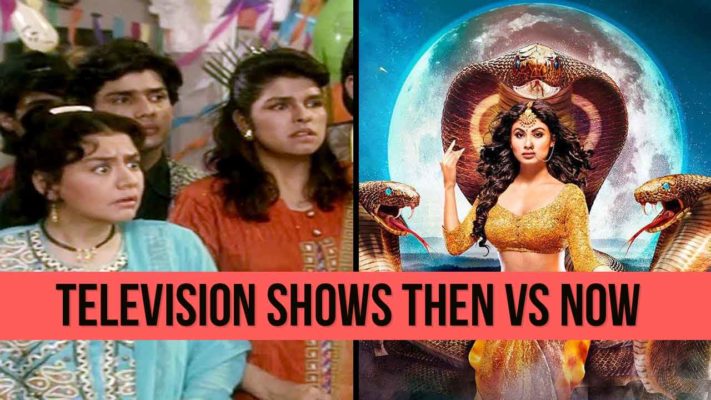
Being an early 90’s child, growing up was exceedingly fun. No; there was no online social media platform to keep us busy or a plethora of cartoon channels to glue us to the television. It all started with DD1 and DD2 airing simple Disney cartoons – remember ‘Disney World’, ‘Chip n Dale’, ‘Duck Tales’, and ‘He-Man’ among others – and some great television shows and serials, such as ‘Dekh Bhai Dekh’, ‘Sea Hawk’, ‘Junoon’ and many others. Slowly, the “cable” networks, such as Zee TV, Star TV, Star One seeped in only for the better, providing us with teleserials like ‘Sarabhai Vs. Sarabhai’, ‘Hum Paanch’, and the list is just endless.
https://www.youtube.com/watch?v=NqFJ6ObpUDU
The best part about television serials back then was the fact that something was made for everyone. From ‘Malgudi Days’ to ‘Karamchand’, and from ‘Surabhi’ and ‘Chitrahaar’ to ‘Office Office’, ‘Flop Show’, and ‘Zee Horror Show’, there was at least one show for every member of the household – simple, rooted to reality yet moving and entertaining at the same time.
Telefilms Or Short-Films Made Intrinsic Part Of The Show Schedules In The ‘90s
Not just television serials, but what made late 80’s and the subsequent decade all the more special were the television films or telefilms or short films that were featured often at designated times. Now, these films or even series would be extremely progressive ones, belonging to various genres. They would often be directed by directors of national eminence – like Satyajit Ray, Shyam Benegal and the likes – and would attract the commoners’ attention to a plethora of social customs and institutions. I, for example, cannot forget Ray’s treatment of casteism in his short film ‘Sadgati’, which was made for the Doordarshan.
https://www.youtube.com/watch?v=rRpaPV3QayY
However, as the calendar veered towards mid-2000’s, with cable channels beginning to sweep the glory of Doordarshan channels, thanks to better resolution images, fancy sets and subversive wardrobes, the former quietly gave way to modernity and better technology. Sadly, Doordarshan – no matter how much it tried – could obviously never match up to the glitz of the private channels. Paving the way for a whole new, if not stupid, era of Indian daily soaps and reality shows.
Healthy Mix Of Various Types Of Entertainment Shows
It was essentially the healthy mix of serials and series – such as ‘Chitrahaar’ and the likes – which made watching television back in the 90’s worthwhile. There would be everything from cartoons to series based on literature to daily soaps and entertainment shows in the Doordarshan. However, with specialized TV channels crawling one by one to the threshold, thanks to cable networks, gradually people veered towards quantity over quality. After all, how good would it be to watch daily soaps or sports or news day-in and day-out rather than waiting for turns?
Now, if you remember, even Zee TV or Star TV would have, in the beginning, the definitive time schedule for kids’ programme or movies. Slowly, the pressure of showcasing more and more serials to earn more revenue became such a craze that these channels would specifically show only serials all the time. Needless to say, the directors of these serials or shows had to do something different to keep the TRP high for each serial; so, they began finding various tropes.
The Era Of Saas-Bahu Serials – The Golden Age For Cable Networks
The main targets for the producers of TV serials have mainly been the house-wives. So, they specifically began making serials which would strike a chord with the women, specifically house-wives. Now, when talking of saas-bahu serials, we would automatically think of the Balaji Telefilms’ serials. However, the start was never so stereotypical. Serials, such as “Saans”, were way more progressive than any of the serials we are seeing today.
https://www.youtube.com/watch?v=zg8KDFCph98
But, alas! The money-minting prowess became so stronger with every passing day that Indian television had even granted sanction to a serial, where an adult woman was shown to have got married and celebrating her first nuptial night with her adolescent husband! Let alone those shows, where the leading lady would turn into bees and what not – and, mind you, we are not talking about any mythical show.
https://www.youtube.com/watch?v=DvElD2hadkc
And then, there would be serials, like Kyunki..Saas Bhi Kabhi Bahu Thi, which would start with a small “homely” story and would run down generations after generations with no story at all! Then there is C.I.D – which happened to be a favourite of mine during my formative years – a series that started brilliantly but, thanks to the pressure of being the longest-running show ever, turned out to be one of the most obnoxious shows ever.
People Wanted Change, The Channels Wanted To Run As They Were
Absurdity is a good thing in great literature. However, Indian television has now taken absurdity to such a ghastly level that most urban people – especially the youth – are steering away from television altogether. The reason is bad programmes – even the news channels are saturated with bad debate shows. All people now want is a good series that would be sharp, crisp and short! However, the television producers are in no mood for a change. And this is exactly where YouTube capitulated. A free video-sharing platform, gradually YouTube became a great platform for budding filmmakers and videomakers to showcase their talent. The short-films or telefilms, which the viewers were not getting an access to, were again there to be watched, liked and shared among others. From social videos to documentaries, travel videos and even comedy shows, everything was slowly being aired on YouTube.
In short, YouTube filled the blank space called simple, fresh entertainment that urban viewers were missing on national television. With every passing day, web series also became a common thing on YouTube, which allowed the viewers to enjoy the essence of “daily soaps” without having to bear the burden of it for years. The shows – like ‘TVF Tripling’, ‘Girl in the City’, etc – became talks of the town. The best part is, just like the late 80’s and 90’s, renowned filmmakers of the day would direct numerous short-films and release them on YouTube. Even thespians like Mohan Agashe, Lilette Dubey, Pallavi Joshi and Rajat Kapoor among others would feature in numerous of these films, bringing back the simple joys of watching a good programme all over again.
Netflix, Youtube, Hotstar – The List Of Web Channels Don’t End
Not just YouTube, international web channels such as Netflix have slowly capitalized over the Indian market, providing us access to some of the best television as well as web-series that the global entertainment world has to offer. And with India also releasing some of the most intriguing TV shows – like the ‘Sacred Games’ starring heavy names such as Saif Ali Khan, Nawazuddin Siddiqui and Radhika Apte – on Netflix, we are sure that the sun will shine brighter with every passing day (at least for a decade from now).
Frequently Asked Questions
Why did Indian television serials lose popularity to web series?
Indian TV serials declined due to repetitive storylines, excessive melodrama, and rigid broadcast schedules. Web series offered fresh narratives, flexible viewing, and creative freedom that resonated with modern audiences seeking quality content over quantity.
What made 1990s Indian television so special compared to today?
The 90s offered diverse programming for all age groups—from ‘Malgudi Days’ to ‘Dekh Bhai Dekh’—with rooted, reality-based storytelling. Unlike today’s niche content, every household member found something meaningful to watch, creating unified viewing experiences.
Which Indian TV shows defined the golden age of television?
Shows like ‘Sarabhai Vs. Sarabhai’, ‘Hum Paanch’, ‘Karamchand’, ‘Office Office’, and ‘Zee Horror Show’ exemplified quality storytelling. These serials balanced entertainment with meaningful narratives, establishing benchmarks for Indian television before the medium’s eventual decline.
How did cable TV networks like Zee TV and Star TV change Indian entertainment?
Cable networks introduced competitive, diverse programming that challenged DD’s monopoly. They brought sophisticated storytelling, better production values, and targeted content strategies, fundamentally transforming Indian television and setting standards that influenced the OTT era.
What role did telefilms play in 1980s-90s Indian television?
Telefilms and short films became cultural touchstones, featuring progressive narratives across genres at designated time slots. Often directed by renowned filmmakers, these offerings added variety and prestige to television schedules, enriching the viewing experience beyond regular serials.
Disclosure: This article may contain affiliate links. VoxSpace may earn a small commission if you make a purchase through these links, at no additional cost to you. This does not influence our editorial opinions or reviews.
You Might Also Like
- [VoxSpace Selects] YouTube Series Which Literally Struck Gold With The Indian Millennial Generation
- [VoxSpace Selects] Vikrant Massey : Tour De Force Of An Actor Across All Platforms
- Marvel's Jessica Jones - All 13 Episodes To Be Directed By Women
- What If Your Pharmcist Was A Witch - Iliza Shlesinger Has It Covered..!!
- [VoxSpace Selects] Doordarshan : The Shows Which Defined Our Childhood Find A New Lease Of Life On YouTube
- Musical collective Indian Jam Project gives a classical touch to popular theme songs.
- Winners Of The 76th Golden Globe Awards- A Complete List