Even today, the revival of Dastangoi through performances like this continues to captivate Indian audiences seeking authentic cultural narratives.
Verdict
Dastangoi: Dastan Miyan Azad Ki showcases the remarkable artistry of two master storytellers who breathe life into centuries-old tales through pure vocal prowess and impeccable intonation. A must-experience for anyone seeking to reconnect with India’s rich Urdu performance heritage.
Dastangoi- Dastan Miyan Azad Ki
Venue: Lamakaan Title: Dastangoi: Dastan Miyan Azad Ki
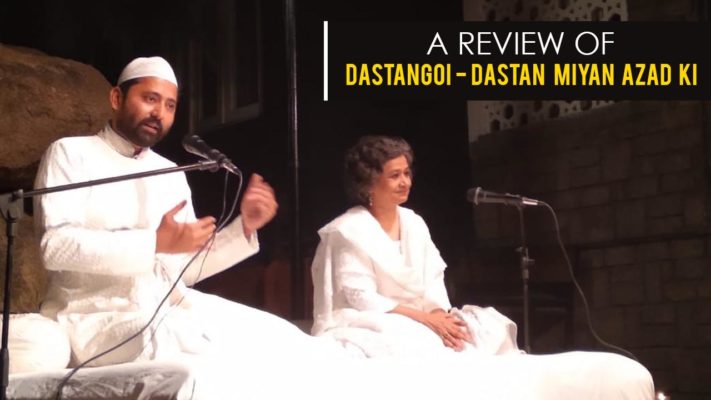
Performed by: Valentina Trivedi & Askari Naqvi
The art of storytelling is possibly as ancient as mankind itself. We’ve created myths, gods, epic poems and shared them over generations. We do it everyday, when we negotiate, trade, love and lie. We all tell stories.
Some can build castles in the air and depict an entire bazaar solely through the power of their voice, a slight inflection here, a strong emphasis there, and you have the story unfolding before your eyes, merely built on intonation. Dastangos are masters of this subtle art, enthralling their audience with fantasies and facts alike. A quick reminder that there are no props or instruments to aid them in the narration, so quickly put away any comparisons to a radio play.

Dastangoi came to India in the 13th century through Persia and enjoyed rich patronage and great practitioners of the likes of Amir Khusrow. However in the early 20th century it had almost vanished after the death of Mir Baqar Ali. Thankfully, it is now enjoying a second wind, largely due to the efforts of Mahmood Farooqui of The Hoshruba Repertory and his uncle and poet, Urdu critic Shamsur Rahman Faruqi.
Nearly a decade ago, I had my first brush with this art form when Danish Hussain & Mahmood Farooqui regalled the audience at J.N.U. with the tales of Amar Aiyyar (sorcerer) from the oldest tome, the Dastan-e-Amir Hamza. SInce then each time I’ve experienced a Dastan, I’ve walked away wanting to hear more.
This weekend, Lamakaan hosted Valentina Trivedi and Askari Naqvi over 3 nights for Dastangoi and the equally challenging songs of lament, Soz Khwani. Their dastaans were based on the Fasana-e-Miyan Azad, a fictional character by Pandit Ratan Naath Sarshaar, through whose eyes we enter the realm of Lucknow of the late 19th century.

A letter full of banter between an aging husband and his young bride, “Khusat shauhar ke naam naukhez biwi ka khat”, a recce of Lucknow during the month of Muharram, “Lucknow ka Muharram ul Haram” an description of the spring of yore of how Lucknow would come alive in Basant. In this tour de force, with Miyan Azad leading dastangos, led the audience through the bylanes of Lucknow and acquainted them to the smells, sounds and sights.
The free chai and famous Lamakaan samosas added just the right amount of old world charm to the evening.
Rating: 5/5
Frequently Asked Questions
What is Dastangoi and how is it performed?
Dastangoi is an ancient Urdu storytelling art form where performers narrate elaborate tales using only their voice, intonation, and facial expressions—no props, instruments, or visual aids. Masters like Valentina Trivedi create entire bazaars and fantastical worlds through subtle vocal inflections and emphasis.
When did Dastangoi come to India and why did it nearly disappear?
Dastangoi arrived in India during the 13th century through Persia, enjoying patronage from figures like Amir Khusrow. However, it nearly vanished in the early 20th century after the death of Mir Baqar Ali, its last great practitioner, before being revived in recent decades.
Who are Valentina Trivedi and Askari Naqvi in the context of Dastangoi?
Valentina Trivedi and Askari Naqvi are contemporary masters of Dastangoi who performed at Lamakaan, carrying forward this ancient art form. They represent the modern revival of this storytelling tradition in India, demonstrating its continued relevance and cultural importance.
What is the Dastan-e-Amir Hamza that Dastangoi performers narrate?
The Dastan-e-Amir Hamza is the oldest and most celebrated Urdu epic tome from which Dastangoi performers draw tales. It features characters like Amar Aiyyar, a legendary sorcerer, and has provided source material for centuries of storytelling performances across India.
Where can I watch Dastangoi performances in India today?
Venues like Lamakaan in Hyderabad regularly host Dastangoi performances. The art form has been revived largely through efforts of Mahmood Farooqui of The Hoshruba Repertory and cultural institutions across major Indian cities that recognize its historical and artistic significance.
Disclosure: This article may contain affiliate links. VoxSpace may earn a small commission if you make a purchase through these links, at no additional cost to you. This does not influence our editorial opinions or reviews.