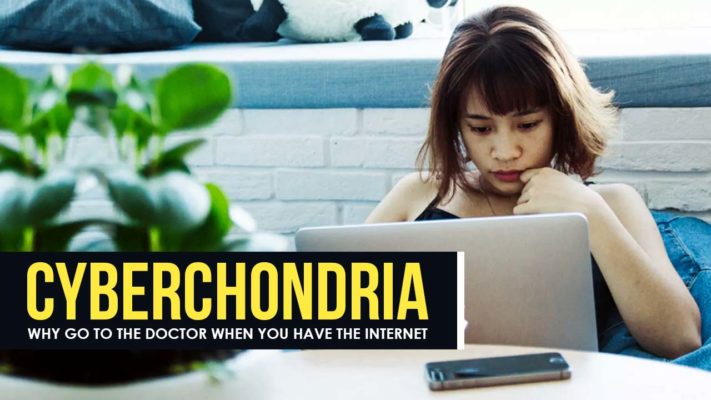
In 2025, cyberchondria remains a growing concern as Indians increasingly turn to online searches before consulting healthcare professionals.
Key Takeaway
While the internet provides valuable health information, self-diagnosis without professional consultation can escalate anxiety. The key is to use online resources as a starting point, not a substitute for medical advice. If health-related searches increase your anxiety, consulting a mental health professional is advisable.
Are You Guilty Of Searching About Health Issues On The Internet?
A few days ago Sweta noticed some rashes on her breast. It may have been a result of her new bra. However, she didn’t bother to think about it – rather, anxiety crept in her in such a way that before judging the case or rushing to the doctor, she chose to refer to Google. It was breast cancer – so said Google. Needless to say, doctors negated her “belief”, saying it was abrupt rashes and nothing else – but she was so adamant that she got all the tests done only to make a fool of herself in her own eyes.
Have you, too, been guilty of checking your symptoms online and being exceptionally paranoid about it? If so, be rest assured you’re not alone in this. Pew Research Centre stated that nearly 72 per cent of the total global internet population search their health maladies on the internet before consulting a doctor. Almost half of them carry on with self-diagnosis until their condition worsens. In fact, nowadays in medicine, there seems to be emerging a new name typified to this category, Cyberchondria. And it is a serious case of anxiety disorder.
Anxiety Disorder, Really? Can Internet Give Us That?
Pew Research Centre is of the view that 10% of the people, who search their health maladies on the internet, fall prey to anxiety troubles and even depression. A few years ago, the psychiatric name of diagnosis anxiety was Hypochondria. But the increasing number of people fatiguing over their probable health issue on the internet has given rise to this nomenclature – Cyberchondria.
While referring to the internet for the probable cause of any issue is okay on a preliminary basis, some people tend to fatigue over it way too much – linking every probable condition to cancer or some important surgery of sorts or even death. Now, this apprehension of ‘what may happen next’ leads from one ‘health article’ to the other, giving rise to many imaginative circumstances and symptoms, which the user may not even have faintly felt!
It is like a chain reaction that ceases to reach a definitive result, giving rise to an anxiety disorder, which is a grave physiological issue. What started as a simple skin rash may end up with successive therapy sessions with the psychologist.
Furthermore, another thing that needs to be highlighted here is the fact that most of the so-called trusted health sites, that the search engines list on their first few pages, hire content writers to pen the articles. Seldom are they being penned down by actual doctors, who, rightly have better work to handle than penning fearful articles on the internet.
Who Should Be Trusted More – The Doctor Or The Internet?
Let’s get one thing straight here – students toil exceedingly hard in medical schools (sometimes more than a decade) to get the degrees that label them as doctors or medical practitioners. So, naturally, they would know about the issues bothering us in a much better way than we could even think of, after spending weeks on the internet. While our minds will constantly drift towards cancer and death, there might be thousands of other maladies – which are not even remotely concerned with cancer and death – hovering inside a doctor’s mind.
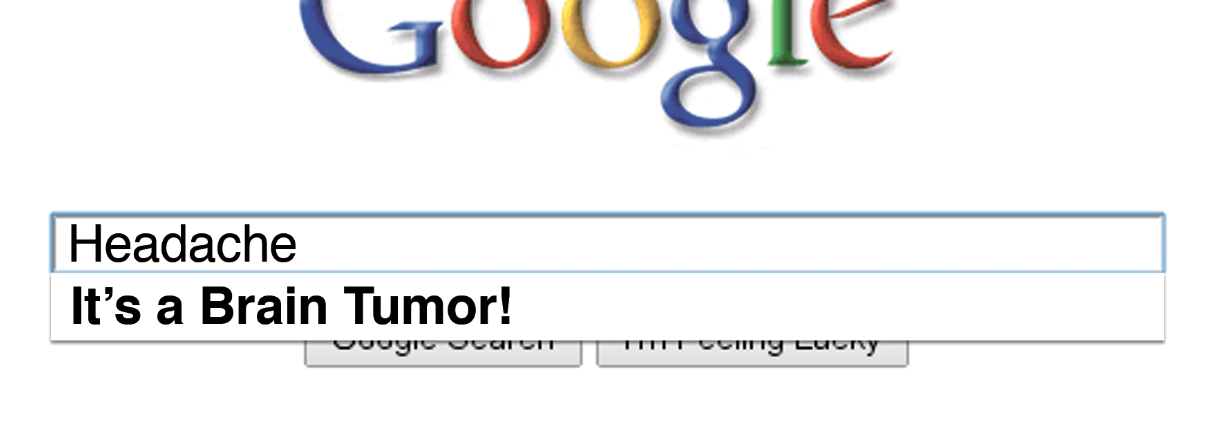
Meanwhile, the health sites (which are often called out for copying other sites’ articles avoiding plagiarism in a smart way) that are tabulated on the first few pages of any search engine are based on few algorithms and not on how authentic they are! Come on, neither Google nor Bing has that time to churn out articles based on their authenticity. So, inevitably, it is a much better choice to leave the job of diagnosis to a certified medical practitioner. In that way, you shall be avoiding falling prey to another severe medical issue – anxiety disorder.
How To Stop Being A Cyberchondriac?
The first and seemingly easiest way to stop being a cyberchondriac is to simply stop searching for symptoms on the internet. However, it is definitely easier said than done. For a person, who has built a habit to search for diseases at least 3-4 times a day or sometimes, even more, it is a bit of a task to stop doing so altogether. In that case, one must need to control the urge – whenever the urge to search arises, delving oneself into activities (reading or, better still, some outdoor activities always help). On a preliminary level, one may also resort to practising meditation to calm their senses.
https://youtu.be/NlzirLiM0Cw
However, if you feel that you cannot tackle the anxiety or there is something actually wrong with you, remember there is no shame in talking about it with your doctor – therapist or not! This will not only help you know if there is something wrong with you physiologically but also help you work on your anxiety.
Also, always remember it is not only you who is suffering from this issue. 2019 is all about mental health – and with celebrities and eminent personalities standing up and talking about it loud and clear, there is definitely no shame in taking professional help.
Do You Need To Restrict The Use Of Internet?
Of course not! Like everything else, the internet also has its share of banes as well as boons. Now, it is up to us, whether we would like to use the same to enrich our lives or put more pressure on it. While googling something to know about a certain thing is absolutely great, pondering over it without any educational (or other uses) agenda is absolutely uncalled for. And, it is upon us to understand and acknowledge that. After all, modern technology must enable us to live happily and ably rather than putting us under unknown pressure, fear and anxiety.
Frequently Asked Questions
What is cyberchondria and how does it differ from regular health anxiety?
Cyberchondria is anxiety disorder specifically triggered by excessive online health searches. Unlike general hypochondria, it’s fueled by internet access and the overwhelming amount of medical information available, making patients more prone to catastrophizing minor symptoms based on worst-case scenarios found online.
Why do Indians increasingly search health symptoms online instead of visiting doctors?
Rising smartphone penetration, affordable data plans, and the convenience of instant information make Indians rely on Google before consulting doctors. Cost considerations, time constraints, and initial hesitation to visit healthcare facilities drive this trend, though it often leads to unnecessary anxiety and self-diagnosis.
Can searching health problems on Google actually cause mental health issues?
Yes, according to Pew Research Centre, approximately 10% of people who search health issues online develop anxiety and depression. The confirmation bias, availability heuristic, and exposure to catastrophic medical scenarios online can trigger or amplify existing anxiety disorders significantly.
How can I use internet health information responsibly without developing cyberchondria?
Set time limits on health searches, consult only credible medical websites, avoid forums with worst-case scenarios, and prioritize professional medical consultation. Recognize that online information is general—your symptoms may differ significantly. If you feel anxious after searching, stop and schedule a doctor’s appointment instead.
When should I see a doctor instead of relying on internet diagnosis?
Consult a doctor for persistent symptoms lasting over two weeks, any sudden physical changes, symptoms affecting daily life, or if online searches increase anxiety. Professional medical evaluation ensures accurate diagnosis and appropriate treatment, preventing unnecessary worry and potential complications from missed diagnosis.
Disclosure: This article may contain affiliate links. VoxSpace may earn a small commission if you make a purchase through these links, at no additional cost to you. This does not influence our editorial opinions or reviews.
You Might Also Like
- [VoxSpace Health] A Brief Guide To Anxiety Disorder
- [VoxSpace Life] Love, Sex, Paedophiles, Rape And A Robot : Welcome To The Future Of Intimacy
- [VoxSpace Life] The Curious Case Of Information Overload - The FOMO Phenomenon
- [VoxSpace Life] Weed Talks : The Debate Around The Legalization Of Marijuana
- [VoxSpace Life] The Vicious World Of Social Media : How Social Media Imposes A Fake Notion Of Perfectness On Teenagers
- Embrace The Change, It Has A Great Opportunity For Everyone Of Us : Rana At TEDx Talk Hyderabad
- [VoxSpace Life] La Dolce Far Nienteu00a0- The Sweetness Of Doing Nothing












Comments are closed.