Since its 2018 release, Black Sheep remains urgently relevant for Indian audiences grappling with contemporary xenophobia and identity politics.
The Verdict
Black Sheep is a visceral, unflinching examination of what it means to be the outsider in spaces where your very existence triggers discomfort. Ed Perkins’ direction transforms Cornelius Walker’s personal narrative into a universal commentary on racism, belonging, and the impossible choices marginalized communities face. For Indian viewers navigating similar conversations around caste, religion, and regional identity, this documentary offers uncomfortable truths that demand introspection.
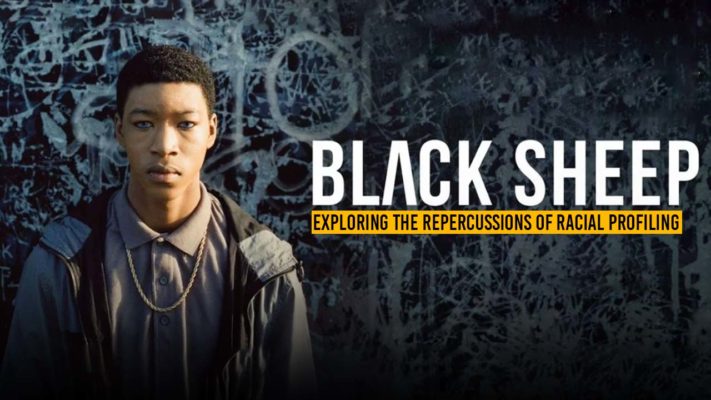
Black Sheep With White Skin To Explore The Repercussions Of Racial Profiling
A black sheep is considered an ill omen for the owner since its fleece cannot be dyed and sold in commercial London. Baa Baa Black Sheep, an apparently innocent nursery rhyme, has got clumps of darker interpretations attached to it. To overlook the intertextual elements in Black Sheep, the 2018 documentary by The Guardian, is a tremendous blow to its opulence.
Starring Cornelius Walker and Kai Francis Lewis, the 26-minute documentary directed by Ed Perkins is available both on YouTube and Vimeo. The proverbial Black Sheep in this documentary is Cornelius Walker, born to a Nigerian and half Sierra Leonean parents, a boy stuck between “I didn’t know if I wanted to be black or white”. For Walker, whose family recently moved out of London to avoid hate crimes, social amalgamation implied clasping tight the toxic masculinity of his white companions.
In Essex, Walker is no better than a disgrace to his white neighbours, until he bleaches his skin white. No matter how much he tries to hoodwink them into believing that he is similar to his white counterparts, he sticks out.
Does Black Sheep’s Testimony Ring A Bell In India?
Black Sheep is brutally honest with its treatment of racism coming from a country where elective representatives portray ethnic minorities of having a certain “funny tinge”. Perkins shots some of the frames in the actual locations where the events took place. In a jiffy, Ed Perkins shifts his lens from multicultural London ensconced in the comfort of Churches and grocery shops, to the neon-lit Essex pitted against barbarism. Each frame exposes the grim reality of racism in a journalistic manner, as the camera zooms in on Cornelius, recording his personal testimony that forms the fabric of this documentary.
The ball starts rolling with the death of a 10-year-old black kid, Damilola Taylor, in the heart of London, in broad daylight. To get rid of the black man’s burden, Walker systematically tries to do away with his eye colour, natural complexion and tightly coiled hair, possibly anything that could betray his ethnic identity, causing a slow dissociation with his own racial identity. What makes Perkins’ take on racism more pronounced is his solid understanding of white supremacy over the physical attributes of black people.
The Walker family, irrespective of having money and social standing, falls victim to racial slurs. Their psychic dystopia has no GPS coordinates on any map. Walker’s ferocious efforts to “fit in” is mind-bogglingly pertinent to our times, with 26 minutes of run time, it remains a haunting reminder of hate crimes in the NCR regions. Black Sheep brings back the ghosts of Delhi-Greater Noida, Gurgaon and Bangalore attacks on Africans, denigrating them as “cannibals” and child lifters. Stray attacks against marginalised Nigerians resurfaces the persisting despondency of state mechanisms, in controlling such blatant Xenophobia.
Black Sheep, that was nominated in the 2019 Oscars in the Short Films category, adds further credibility to – “We are often seen as demons, drug dealers or prostitutes,” says Ibrahim, about the 2016 Bangalore assault on an African woman, who was stripped and beaten. The attacks sometimes verge on the boundaries of extrajudicial violence and it is time we realize what went wrong!
The Hefty Price Of Cultural Assimilation
For Walker, history repeats itself once again as he is forced to denounce his cultural identity in this power dynamic, adopting a wacky, happy-going personality of his oppressors, perpetuating more violence on himself. Interestingly, it is not just Walker alone in faraway Essex, who is subjected to racial profiling. Closer to home, similar incidences are not unheard of.
Back in 2017, Al Jazeera recorded a few statements from those who have personally felt the trauma of mob violence. “Sometimes they look at you like you’re something good to eat” –Elaine Tlende, who had visited India for a series of surgeries.
As someone who was always fascinated by London’s multiculturalism, Walker steps up his game to blend in, leaving in his wake a number of unlawful activities. Black Sheep is verbose about the mythical virility that is often associated with black people, condemning Walker to a lifetime of mental trauma. Walker is not only a victim of racism, but also of deep-seated patriarchy stemming from his own family that first makes Walker antagonistic to his father, and later to himself.
The eventual ignorance in the family of their privileges (or the lack of) and the absence of any candid discussion regarding ethnic differences escalate the violence in Walker’s life. It has been a while since such a poignant observation was made on a subject as delicate and crucial as racism.
The Film Pushes Viewers To Take Accountability
What rattles the viewers is how a black teenage boy is instantly vilified and threatened with rape when he causes an uproar in a “civilised” white neighbourhood. Cornelius as a narrator and protagonist poignantly depicts in his odyssey the metamorphoses of an introverted black kid to a cheeky wannabe white European, bringing out institutional failures in abolishing racism.
Now, when residents are closing their doors on different ethnic minorities, Ed Perkins shows how acceptance in the host country can be both problematic and reassuring for African minorities.
“I spent a lot of time thinking about when we remember something when we have memories from our childhood….what form do they take? – Ed Perkins in an interview with No Film School.
At the end of this documentary, the visuals represent the collective memory of African minorities, who have succumbed to the black/white dichotomy in the history of racism.
Frequently Asked Questions
Who is Cornelius Walker in Black Sheep documentary?
Cornelius Walker is a mixed-race individual born to Nigerian and half Sierra Leonean parents. He’s the central figure in Ed Perkins’ 26-minute documentary, exploring his journey of identity and the racial profiling he experiences in Essex. His story becomes a lens through which to examine systemic racism and xenophobia.
What is the Black Sheep 2018 documentary about?
Black Sheep is a Guardian-produced documentary directed by Ed Perkins that examines racial profiling, xenophobia, and identity in 21st-century Britain. Through Cornelius Walker’s personal account, the film explores how minorities are othered in society and the psychological toll of navigating spaces where you don’t belong.
Where can you watch Black Sheep documentary online?
Black Sheep is available on both YouTube and Vimeo platforms. The 26-minute documentary directed by Ed Perkins featuring Cornelius Walker and Kai Francis Lewis is freely accessible, making it easy for viewers to engage with its important narrative about racism and xenophobia.
Why is Black Sheep relevant to Indian audiences?
Black Sheep resonates with Indian audiences because it addresses universal themes of xenophobia and othering that exist within India’s own social fabric. The documentary’s examination of racism, caste-like discrimination, and identity politics mirrors conversations around inclusion and exclusion prevalent in Indian society today.
Who directed Black Sheep and what’s his background?
Ed Perkins directed Black Sheep, filmed at actual locations where events occurred. His approach combines documentary realism with intimate storytelling, capturing the brutality of racial profiling through authentic settings. Perkins’ direction elevates personal testimony into universal commentary on systemic racism and belonging.
Disclosure: This article may contain affiliate links. VoxSpace may earn a small commission if you make a purchase through these links, at no additional cost to you. This does not influence our editorial opinions or reviews.
You Might Also Like
- [VoxSpace Life] The Magic Of Mayong : The Story Of The Black Magic Capital Of India
- [VoxSpace Life] 'Bakri Swayamvar' : A Ritual Of Match Making For Goats In Uttarakhand Attracts Tourists From All Over
- 'To Avoid Beating..Dress Sexy..!' Says A Turkish Marriage Guide For Women
- [VoxSpace Selects] Oscar nominations 2019: Roma And Favorite Lead The Number Of Nominations With 10 Each
- [VoxSpace Selects] Black Mirroru2019s Smithereens u2013 A Tale Questioning Our Over Dependency On Social Media
- [VoxSpace Life] Elizabeth Holmes : The Inventor Of Theranos And An Architect Of A Noble Lie
- [VoxSpace Exclusive] In Search Of Alien Beings : Interviews With The Worldwide UFO Network [Episode One]