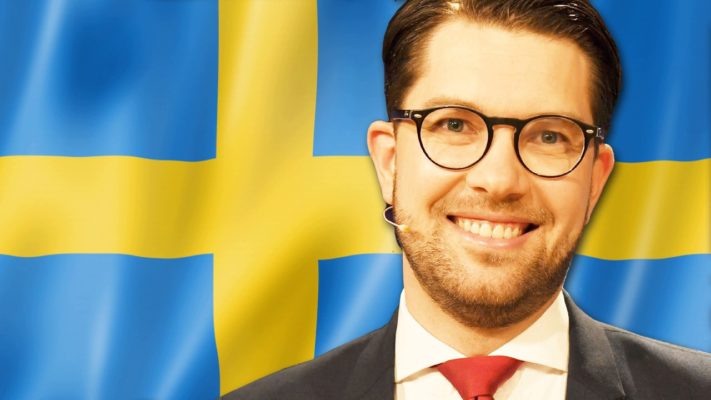
Sweden's 2018 political crisis reveals ongoing global tensions between immigration policy and coalition governance that continue shaping European politics today.
Key Takeaway
Sweden’s 2018 election demonstrated how migration anxieties can reshape political landscapes, forcing traditional coalitions to reconsider governance strategies and ideological compromises in an increasingly polarized Europe.
Far-Right Immigration Party Of Sweden Makes Gains
After both the main centrist coalitions failed to win a majority in General elections on Sunday, along with the far-right anti-immigration party gaining a good percentage of the vote, Sweden has been plunged into a political uncertainty.
It could prove to be quite a palaver as the eight parties that won seats in parliament try to build a working government. There will be a conflict between ideology and practicality. Since, either the centre-left and centre-right blocs will have to coordinate to pass legislation, or they will have to compromise on promises to never work with the far-right Sweden Democrats, a party that has roots in the neo-Nazi movement and has capitalized on the nation’s growing migration fears.
Prime Minister Stefan Lofven’s left-leaning bloc emerged with only a slight lead in the general elections. Both Lofven’s Social Democrats, the Greens and the Left Party bloc, as well as the opposition centre-right Alliance, won around 40 percent well short of the required majority.
The prime minister’s party lost 13 seats in parliament – their worst result in a century. Meanwhile, the junior coalition Green party even saw their support fall dangerously close to the 4 percent threshold for participation in the parliament. The results will be finalized on Wednesday and could change before election authorities make them official.
The Sweden Democrats, who have promised to freeze migration and want to take the nation out of the European Union, gained short of the dramatic surge pollsters had predicted. Swedish Prime Minister Stefan Löfven of the Social Democrats, which leads the centre-left bloc, called for cooperation across the political divide and warned against inviting the far right into government. If the ruling coalition fails to form a government it would be a historic loss for the Social Democrats, which have dominated Swedish politics since the 1930s.
Writing on Twitter in the wake of the preliminary results, former Swedish prime minister Carl Bildt of the centre-right Moderates advised Löfven to step down and allow the speaker of parliament to begin preliminary consultations on a new government.
Although the Sweden Democrats did not fulfil predictions in exit polls that it would become the nation’s second-biggest party, its success has confirmed fears that Europe’s rising far-right tide has now reached Sweden, one of the world’s most liberal countries. Support for the far right in Sweden mirrors similar trends in other European nations. Anti-migrant parties in Germany, Austria, Denmark, France, Hungary, Italy and the UK have all made gains in recent years.
Immigration became highly politicized following a steady increase in new arrivals. Akesson and his party had made much of its opposition to Sweden’s immigration policy, which saw 163,000 asylum seekers arrive in the country in 2015. While the number of asylum seekers has dropped since, concerns over pressure on the welfare system, a shortage of doctors and teachers and a rise in some kinds of crime have been main election issues.
Frequently Asked Questions
What are Sweden Democrats and why did they gain support in 2018?
The Sweden Democrats are a far-right anti-immigration party with roots in the neo-Nazi movement. They capitalized on growing migration fears among Swedish voters and gained significant parliamentary seats in 2018 by promising to freeze migration and withdraw from the EU.
Why couldn’t Sweden’s main coalitions form a majority government?
Both the centre-left and centre-right blocs won only around 40 percent of votes each, falling short of the required majority. With eight parties winning seats, building a working coalition required unprecedented compromise between ideologically opposed factions.
How did Stefan Löfven’s Social Democrats perform in the 2018 election?
Löfven’s Social Democrats suffered their worst result in a century, losing 13 parliamentary seats. Combined with the Greens and Left Party, his bloc emerged with a slight lead but still lacked majority support needed to govern independently.
What is the significance of Sweden’s political uncertainty for European politics?
Sweden’s 2018 election demonstrated how anti-immigration sentiment could fracture traditional European political alliances. It forced mainstream parties to choose between ideological principles and practical governance, setting precedents for coalition negotiations across Europe.
Did the Sweden Democrats achieve the predicted political surge in 2018?
While the Sweden Democrats performed strongly, they gained slightly less than pollsters had predicted. Despite falling short of dramatic projections, their parliamentary presence still forced significant political realignment and coalition negotiations among traditional Swedish parties.
Disclosure: This article may contain affiliate links. VoxSpace may earn a small commission if you make a purchase through these links, at no additional cost to you. This does not influence our editorial opinions or reviews.
You Might Also Like
- The Great American Awokening : A View Into The Revolutionary Shifts In American Racial Politics
- Review Of Danish Renzu's The Illegal : An Unapologetic Tale About The True Cost Of Hope And Survival
- [VoxSpace Life] NRC And Political Appeasementu00a0In Assam : The Question Of Survival In A Lost Land
- VoxTalks With Reggae Rajahs - Of Creating Soulfully Uplifting Music With A Earthy Flavour
- Congress Led Bharat Bandh Receives A Mixed Response
- The Controversial Prakash Raj Debate : A Response To Mr Subramanian Swamy & Times Now
- [VoxSpace Life] Tolerance Makes You More Trusting















Comments are closed.