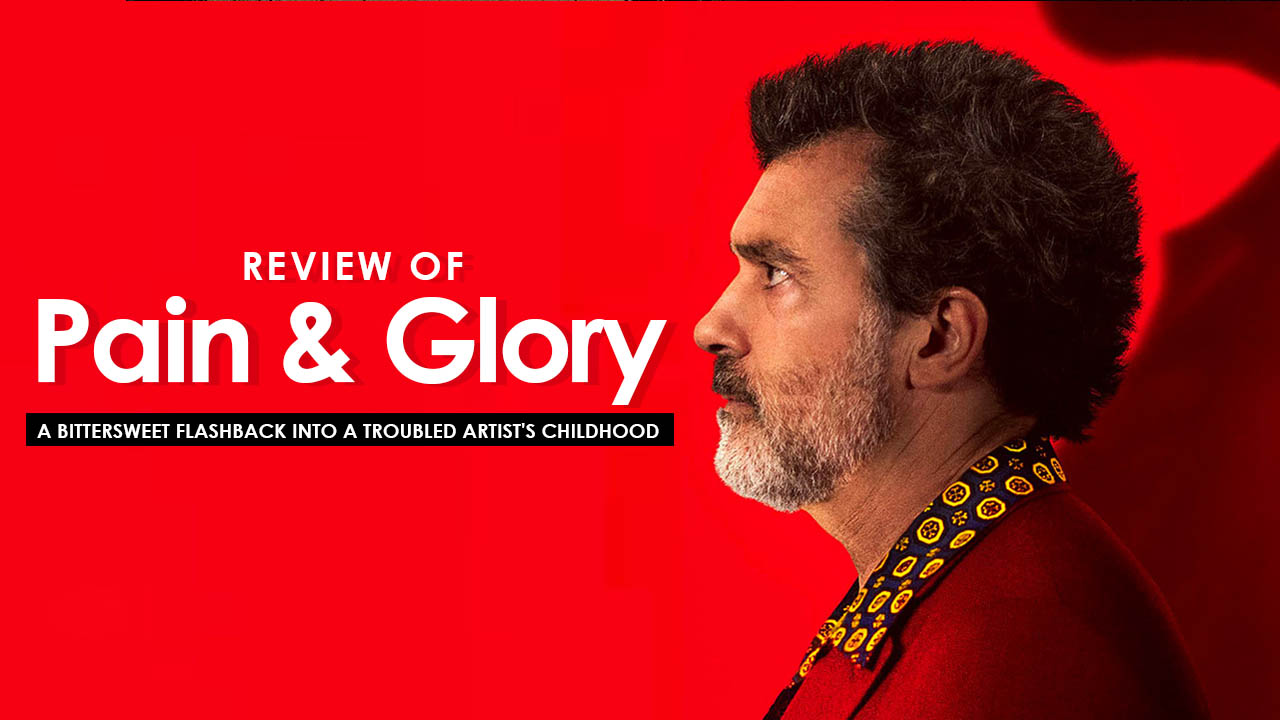
Since its 2019 release, Pain and Glory has only deepened its relevance for Indian audiences who appreciate introspective character-driven cinema.
VoxSpace Verdict
Pain and Glory is a profound, visually stunning meditation on creativity, loss, and human connection. Pedro Almodóvar delivers a semi-autobiographical work that resonates deeply, anchored by Antonio Banderas’ nuanced performance. Essential viewing for those who appreciate cinema as art.
Rating: ★★★★☆ (4/5)
Pedro Almodóvar’s Pain and Glory – Familiar Themes Through A New Lens
There is a line around halfway through the film, uttered by a man doing a monologue on stage that is not written by him. He says, “Love may move mountains, but it is not enough to save the one you love”. This line perfectly captures the essence of this semi-autobiographical mood piece from a master working at the peak of his craft. The film absolutely captivates you with its visual beauty, while it fearlessly touches Almodóvar’s most prevalent themes like desire, passion, family, and identity. I think I am getting ahead of myself here. Let me begin where the film begins.
A Man At The Brink Of A Meltdown
As the film opens, we see Antonio Banderas’ character (Salvador Mallo)- who we later learn is a filmmaker- floating in the water, forcing himself to hold his breath. As we move closer to him, we tap into a memory of his childhood, where his mom and a few of her friends are singing a folk song. As the movie goes along, we learn that he is extremely unhappy, and creatively blocked. Over the next few days in his life, we jump in and out of his memories learning more about his past, including his first sexual awakening, a love that could have been, his unfulfilled relationship with his mother, a deeply wounded friendship and a serious health ailment. All these elements lead up to a superbly staged last scene that is as emotionally rewarding as it is devasting, all at the same time.
Not A Typical Almodóvar Film
This is not a very typical Almodóvar film; it is a lot more subdued and melancholic than his usual films. While it does touch on similar themes, it feels a lot more tangible due to the various similarities to his own life. The last time I felt this way watching one of his films was when I watched Bad Education, which again had a lot of autobiographical elements. The bright colors are all there, the irreverent humor is still there, the profound but natural dialogue is still there, but they are just slightly toned down. Due to this, it does not have the immediate effect that his films most of the time have. It’s only after you have left the screen and have the time to piece it all together that you get the punch in the gut that was intended.
Antonio Banderas Gives The Performance Of A Life-time
Almodóvar goes back to his most trusted and frequent collaborators, Antonio Banderas and Penelope Cruz to essay the characters that most probably are very to him. Penelope Cruz plays the mother in the film with a kind of divine grace and maternal poise, that it gave a glimpse of how the filmmaker remembers her to be. While her character is never happy with her circumstances, you can always see a certain amount of responsible determination to take care of her son. The rest of the cast really fit their roles perfectly, including the once reckless but now reformed boyfriend, the heroin addict actor friend, the little kid with inquisitive eyes who plays young Salvador, etc. But the stand out here is obviously, Antonio Banderas. I have never seen him play a character with so much depth and such a lack of vanity. Not for a second do you question a single choice he makes. He so fully gives into his character that I could not separate him from Salvador, even once In walked out.
Obviously, as it is an Almodovar film, it looks marvelous. The world looks very lived and well thought out. The production design not only brings the world alive but adds an extra level of subtext that is needed for a story like this. The cinematography and camera movement are very floaty and light to give a dream-like feeling, which is enhanced by the seamless editing. The form perfectly fits the narrative the same way that last year’s Roma did.
On the whole, Pain and Glory is a thoughtful recreation of a feeling and a time in the form of celluloid that helps us understand the man behind the camera in a more meaningful way. I would say the film is a lot more rewarding if you know about the master behind the camera. Please do keep a lookout for the sensual dreamlike visual masterpiece that is unlike any other film this year.
Frequently Asked Questions
What is Pain and Glory about?
Pain and Glory is a semi-autobiographical drama by Pedro Almodóvar following Salvador Mallo, a filmmaker grappling with creative block, health issues, and unresolved memories. The film weaves through his past—childhood, first love, estrangement from his mother—to explore themes of desire, passion, and identity with visual elegance.
Who stars in Pain and Glory?
Antonio Banderas delivers a career-defining performance as Salvador Mallo, the filmmaker protagonist. The supporting cast includes Asier Etxeandia and other accomplished Spanish actors who bring depth to Almodóvar’s character-driven narrative exploring complex human relationships and emotions.
Is Pain and Glory worth watching for Indian audiences?
Absolutely. Indian viewers who appreciate introspective, character-driven cinema and visual storytelling will find Pain and Glory profoundly rewarding. Almodóvar’s exploration of memory, identity, and unfulfilled relationships transcends cultural boundaries, offering universal emotional resonance that resonates with thoughtful audiences.
How is Pain and Glory visually different from typical films?
Pain and Glory showcases Almodóvar’s masterful use of color, composition, and cinematography to reflect the protagonist’s emotional state. The film seamlessly transitions between memories and present moments, with each frame meticulously composed to enhance the narrative’s emotional depth and thematic richness.
Where can Indian viewers watch Pain and Glory?
Pain and Glory is available on various streaming platforms in India including international cinema collections. Check your preferred OTT services or cinema listings. Given its critical acclaim and artistic merit, it’s worth seeking out through legitimate streaming or theatrical releases for the best viewing experience.
Disclosure: This article may contain affiliate links. VoxSpace may earn a small commission if you make a purchase through these links, at no additional cost to you. This does not influence our editorial opinions or reviews.
You Might Also Like
- [VoxSpace Selects] Understanding Stanley Kubricku2019s Anti-War Trilogy
- Review Of Hit : A Slick Action Thriller That Will Surprise You At Every Turn
- [VoxSpace Selects] Review Of Jaanu : An Extremely Faithful Remake of An Instant Classic
- Review Of Bhonsle: A Politically Ambitious Cautionary Tale
- [VoxSpace Selects] Narratives Of The Body : Bringing Together Diverse Voices
- [VoxSpace Life] Steve Smith Breaks Down Over The Australian Ball Tampering Incident
- [VoxSpace Life] The Karma Effect : Is The Concept Of 'Greater Good' Actually Good?






Comments are closed.