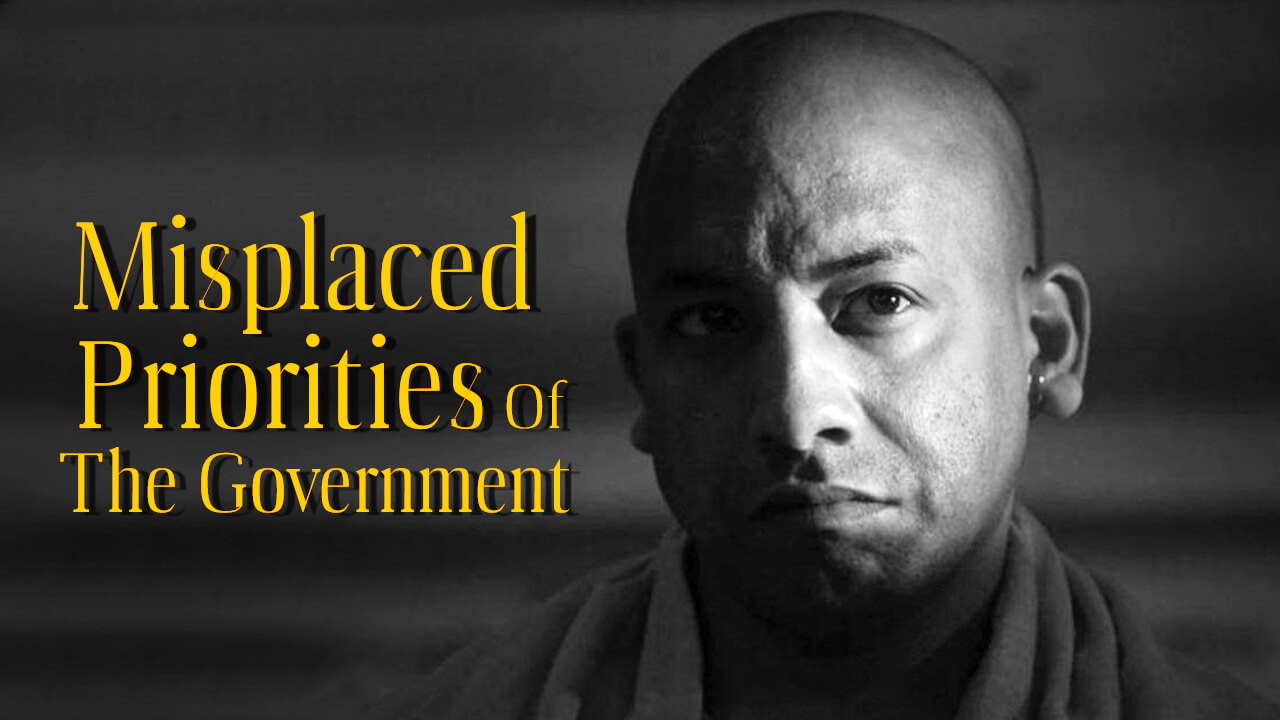
Nearly a decade later, Uttar Pradesh's developmental challenges persist, making this analysis of governance priorities more relevant than ever.
Analysis Verdict
The article critiques governance priorities that prioritize symbolic measures over substantive economic development. With UP still representing 16.16% of India’s population yet contributing only 8.4% to national income, the focus on cultural issues rather than poverty reduction and employment generation raises critical questions about resource allocation and administrative priorities in one of India’s most populous states.
The Fictionalised Growth Stats Of Political Agenda
The work priorities set up by Uttar Pradesh (UP) Chief Minister Yogi Adityanath for himself have been baffling, to say the least. As Chief Minister of one of the backward BIMARU states, his attention should have lied towards the rapid development of his state and generating widespread employment. Consider these figures-
1. Population living below poverty line in UP is still a staggering 32%.
2. Average Unemployment in UP is quite high ie 5.8% in rural UP & 6.5% in urban UP
3. State’s contribution to national income has declined from 9.8% to 8.4%
4. The average growth rate of per capita income for UP is a low 2.95% (against the national average of 5.4%)
When we view the abovementioned figures against the backdrop of the fact that UP’s share in national population is 16.16%; there emerges an enormous scope for improvement.
Ignoring this bleak scenario, the UP Chief Minister decided to open his Chief Ministerial innings with trivial issues like shutting down illegal slaughterhouses, constituting Anti Romeo squads and protection of cows. Trivial because many more pressing needs called for the attention of Chief Minister.
These measures were supposedly taken by the Chief Minister to protect the sanctity of women as well as the sacred cow, but they seemed more like a publicity stunt than anything else. The underlying cause of vulnerability with respect to both cows and women in UP was the deteriorating law and order situation, which required much more tough measures to be undertaken by the Administration, instead of indulging in gimmicks. A lean and mean administration, which is freed from the clutches of the rich and powerful, was actually required to take on the notorious elements of the state of UP.
https://youtu.be/FRarwaPvsQ8?t=5m43s
The Age Old Trick Of Communal Deviancy
From CM’s bag of tricks, latest in the offing was his decision to celebrate ‘Choti Diwali’ in Ayodhya on the banks of Saryu. The choice of place is interesting, but not surprising. With general elections slated in another 2 years from now, the BJP needs a standby agenda to retain power. The affair with Ayodhya restarted earlier this year when tons of building stone suddenly landed in Ayodhya amidst much fanfare with the intention of constructing a grand Ram temple there in immediate future.
News channels were agog with the rumours that the Muslims have decided to let go of their claim over the disputed site and are ready to hand over the same to Ram Janmbhoomi Nyas for construction of Ram Temple. However, the fact remains that the matter is still subjudiced and lies under the realm of the Supreme Court of India.
In the past, the Ram temple issue has served to catapult the BJP from a non-entity to a national party. It still remains a last refuge of the BJP. The BJP knows that if everything else fails, the Ram Mandir issue will surely bail them out. If demonetisation and GST fail to galvanise the voter in their favour, then their quintessential issue of building Ram temple in Ayodhya will still pull them out of their electoral doldrums.
https://youtu.be/gR6DoexNRu0
Waste Of Resources To Fulfil The Political Ego
Accordingly, this gross wastage of time and manpower in programmes like ‘deepotsav’ may be beyond the comprehension of the common man, but it makes sense for the BJP. The Uttar Pradesh Administration is smart enough to attach motives like the development of Ayodhya as a tourist centre, generation of employment to groups like the pottery makers, architects, builders etc to the ‘Deepotsav’ programme, but the truth cannot be hidden behind facades. Everybody in Uttar Pradesh knows the real motive behind ‘Deepotsav’. But there were better and constructive ways available for the Uttar Pradesh Chief Minister to stay in the limelight and garner votes for the BJP.
Rather than engaging the whole administrative machinery in this activity, state finances could have been better used to provide food and clothing to orphanages, old age homes, widows of Brindaban or the other vulnerable sections of the society read Dalits and the downtrodden of Uttar Pradesh. Afterall, the real motive of any politician is to grab the eyeballs of his voters. However, if this style would have been adopted, it would have benefitted both the CM as well as the natives of the Uttar Pradesh state. It would have been a win-win situation for all. But, Alas! It is the same old tale of misplaced priorities of our political masters.
Frequently Asked Questions
What is the current poverty rate in Uttar Pradesh?
According to the analysis, approximately 32% of Uttar Pradesh’s population lives below the poverty line, significantly impacting the state’s development metrics and economic growth potential.
Why has UP’s contribution to national income declined?
The article attributes the decline from 9.8% to 8.4% to governance priorities focused on non-economic issues rather than substantive job creation, infrastructure development, and poverty alleviation programs.
What is the unemployment rate in rural and urban Uttar Pradesh?
Rural Uttar Pradesh faces 5.8% unemployment while urban areas experience 6.5% unemployment, both concerning figures requiring immediate policy intervention and employment generation strategies.
How does UP’s per capita income growth compare nationally?
Uttar Pradesh’s average per capita income growth rate stands at 2.95%, significantly lower than the national average of 5.4%, indicating slower economic advancement for residents.
What governance priorities does the analysis criticize?
The article argues that focusing on slaughterhouse shutdowns and cultural protection measures detracts from addressing the deteriorating law and order situation and critical development gaps in the state.
Disclosure: This article may contain affiliate links. VoxSpace may earn a small commission if you make a purchase through these links, at no additional cost to you. This does not influence our editorial opinions or reviews.
You Might Also Like
- Uttar Pradesh : Father, Brother And Uncles Rape A Woman For Having Eloped With Her Boyfriend
- [VoxSpace Life] Rohan Prakash : Engineer Turned Solo Organic Mango Producer From UP
- [VoxSpace Life]u00a0The Population Conundrum : Imbalance In The Population Of India
- Asaram 'Bapu' Found Guilty Of Raping Minor Girl After Five Years Of His Arrest
- [VoxSpace Life] Unnao Rape Victim's Father Dies In Police Custody While Seeking Justice Against A BJP MLA
- [VoxSpace Life] Hasan Minhaj's Patriotic Act : Understanding The Comical Fate of Indian Elections
- [VoxSpace Selects] Imran Pratapgarhi : A Poet Who Thinks Beyond Poetry


Comments are closed.