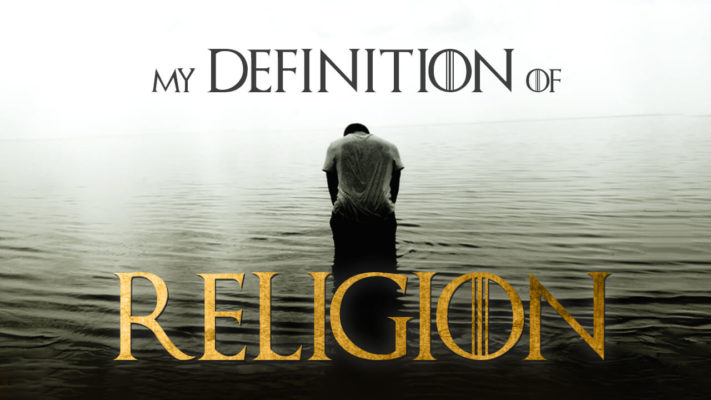
Seven years on, this examination of India's complex relationship with religion remains strikingly relevant to contemporary social conversations.
Forms Of Religion In India
I understand that the pendulum which swings left will eventually go right as well and as we go a little too much to the right, let’s talk about religion.
In India, religion could take any form and can have multiple definitions – moral codes, faith, a way of life, outdated, regressive, binding and most recently irrelevant. But to me, it appears to be like a ruined city. And just as the palaces and houses in a ruined city can be turned into warehouses, perhaps religion has got a few uses as well.
The Quick Fix
A long time ago in a land where people were bedevilled by an other-worldly stench, when the Swach Bharat Abhiyaan hadn’t come as the saviour of the nation’s aesthetics, the knights of the Biodiversity Conference 2012, Hyderabad made a brave and witty attempt to rescue people from the perils of Public Urination.
They painted symbols of all major religions around the hot spots of this ungodliness. For instance, the outer wall of Raithu Bazaar, Mehdipatnam and under the bridge at NMDC. This effectively warded off the evil…forever and ever.
Statistically speaking, 98% of the Indian population calls itself religious. So, they wouldn’t urinate on religious symbols. The remaining 2% of atheists, and individuals among the 98% that couldn’t find a third option in the survey wouldn’t even dare.
*Collective Pause*..*Slow Cap*…*Standing Ovation*
A G-S-C Startup Business Model
India’s past and present is littered with entrepreneurs who sell an image moulded out of religion to people who cannot distinguish between a God-man, Superman and Conman.
Since the commodity is faith and the currency is faith, investors and workforce are readily available, making this an ideal startup venture.
All that the visionary needs is absolutely no talent, no skill, manipulative and marketing prowess, working knowledge of religion.
A Cogito, Ergo Sum(I Think, Therefore I am) Syndrome
The disease has symptoms almost undetectable. Do you know a person who has a malignant growth of judgments disguised as opinions?
Have you seen people who when they sneeze, the thick mucous of reflections go beyond their age, experience, field and common sense?
Well, such people have this disease. It parasites their critical understanding, and makes them well-established in topics like feminism, veganism, freedom of speech; and use soft targets like Salman Khan, politics, pop-culture, and religion. They criticize what most people seem to be criticizing, they regurgitate the thinking of probably someone else and they also try to make attempts at intellectualism, with words of more than four syllables and without much evidence.
Apart from these uses, religion opens up work opportunities for otherwise purposeless fanatics on or around Valentine’s day.
Maybe religion has lost its meaning and purpose and has been reduced to a doctrine of fear and a directive of women’s lives. However, I do feel that religion is a ruined city destroyed by its own inhabitants.
Frequently Asked Questions
What are the different forms of religion in India?
Religion in India takes multiple forms—moral codes, faith systems, ways of life, and social structures. It encompasses ancient traditions like Hinduism, Buddhism, Sikhism, Islam, and Christianity, each with distinct practices, philosophies, and cultural significance deeply embedded in Indian society.
How does religion function as a quick fix in Indian society?
Religion serves practical social functions beyond spirituality—from maintaining public hygiene through symbolic interventions to creating behavioral norms. The Biodiversity Conference 2012 example shows how religious symbols can influence community behavior and address social challenges in India.
What percentage of Indians identify as religious?
Statistically, approximately 98% of the Indian population identifies as religious, reflecting the deeply rooted role of faith systems in Indian culture. This makes religion a dominant social and cultural force shaping individual and collective identity across the nation.
How has religion’s meaning evolved in modern India?
Religion’s meaning in India has shifted from purely spiritual guidance to encompassing varied definitions—sometimes viewed as binding social structures, outdated practices, or irrelevant traditions. Yet it simultaneously serves as awareness catalyst, moral framework, and entrepreneurial business model in contemporary society.
What is the relationship between religion and oblivion in Indian context?
For some Indians, religion offers escape from mundane existence and structural constraints—a form of oblivion from worldly bindings. For others, it represents profound awareness and spiritual awakening, demonstrating religion’s dual capacity to both obscure and illuminate human experience.
Disclosure: This article may contain affiliate links. VoxSpace may earn a small commission if you make a purchase through these links, at no additional cost to you. This does not influence our editorial opinions or reviews.
You Might Also Like
- [VoxSpace Life] Kids In India Show Religious Tolerance
- [VoxSpace Life] Devadasis System : How Marriages To God Lead To A Culture Of Courtesans In South India
- [VoxSpace Life] Hinduism Vs Hindutva : An Understanding Of A Religious Militant Outfit
- [VoxSpace Selects] The Big Sick : The Most Original And Refreshing Film Of 2017 Is All About Overcoming Culture Differences
- Euthanasia : Sometimes Death Takes Too Much Time; The Ailing Need Not Wait For u201cA Good Endu201d
- [VoxSpace Life] The Growth Of Atheism Worldwide And Its Effect On India
- [VoxSpace Life] In The Name Of God - The Baffling Belief Systems Of The World








Comments are closed.