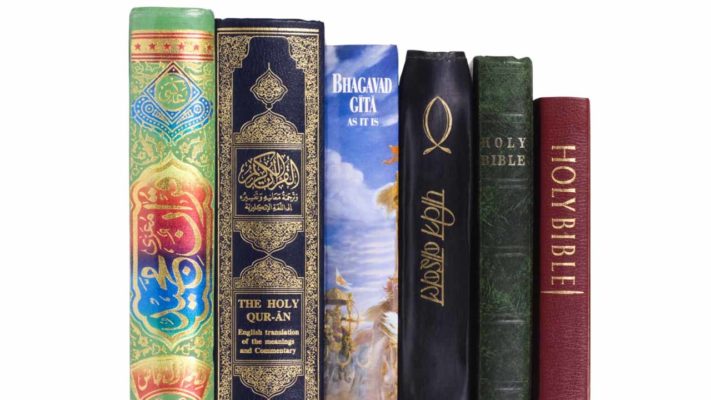
As blasphemy laws remain contested in Indian courts, Punjab's Section 295 AA continues shaping discussions on religious protection versus free speech.
Punjab Government Commends Sentence Of Life Imprisonment For Sacrilege Of Religious Texts
In a shocking announcement, the Punjab government decided to include a new section (295 AA) in the Indian Panel Code (IPC), which states that, “Whoever roots hurt, damage or sacrilege to Sri Guru Granth Sahi, Holy Quran, Srimad Bhagwad Gita and Holy Bible with the intent to indignant the religious feelings of the people; shall be punishable with imprisonment for life.”
One provision already exists under the IPC section 295A. It mentions that the imprisonment is up to three years in the case of ‘deliberate and malicious acts intended to outrage religious feelings’. According to this section, whoever damages or tries to destroy the holy books can entice binding life imprisonment in Punjab. Moreover, impertinent to a prophet or god would end up in jail up for to three years.
How It All Began
The history of criminalisation of the blasphemy moves stealthily in Indian laws and needs to be restated. As per the report published in The Hindu, Mahashay Rajpal, the publisher of a particular book, Rangila Rasul (the colourful Prophet), was pursued to be indicted under the then section 153A. It was alleged that this book caused social disharmony amongst several communities. Rajpal was granted the space to appeal to the Lahore High Court because during that time criticism and defacing the religion figures did not fall under the section 153A.

It was said in the court that the book did not particularly cause any hostility or abhorrence between religious communities and it does not disrupt the section 153A. Consequently, the Muslim community of India necessitated and demanded a law against the affront to religious feelings. Eventually, the British government legislated a new section 295(A) in 1927.
The projected Penal code bill is going to replace the Punjab Amendment Bill of 2016 of Indian Panel Code, approved by the then coalition government of Bharatiya Janata Party-Shrimonai Akali Dal government, which particularly mentions about sacrilege only against the Sri Guru Granth Sahib.
The Criticism It Is Garnering
Many legal experts and intelligentsia have criticised the bill on the basis of the inaccurate way the term ‘sacrilege’ has been defined. The experts stated that it should be clearly explained as physical sacrilege or defilement otherwise any activity, which could even be writing a book or sketching a cartoon in print or social media, or even in speech, may lead to people getting convicted for blasphemy and this is against the constitutionally guaranteed fundamental rights under article 19 and 25 of Indian constitution. Leaders of other parties claim that the move of this particular bill by the ruling party is a desperate attempt to collaborate and move towards the right-wing politics.
Frequently Asked Questions
What is Section 295 AA in Punjab’s blasphemy law?
Section 295 AA is a new provision added to the Indian Penal Code in Punjab, making sacrilege of Sri Guru Granth Sahib, Quran, Bhagavad Gita, and Bible punishable with life imprisonment. It supersedes the earlier Section 295A which allowed up to three years imprisonment for deliberate religious offense.
How does Punjab’s blasphemy law differ from the old Section 295A?
The original Section 295A permits imprisonment up to three years for malicious acts insulting religious feelings. Section 295 AA in Punjab escalates this to life imprisonment specifically for damaging sacred texts, representing a stricter stance on religious protection.
What is the history of blasphemy laws in India?
Blasphemy criminalization traces to 1927 when publisher Mahashay Rajpal faced prosecution under Section 153A for publishing ‘Rangila Rasul.’ Though he appealed successfully, subsequent amendments strengthened protections, culminating in Punjab’s strict Section 295 AA.
Is Punjab’s blasphemy law constitutional in India?
The constitutionality remains contested. While India’s Constitution permits reasonable religious restrictions, critics argue such laws may violate Article 19 freedoms. Legal challenges continue in Indian courts regarding the balance between faith protection and free speech.
Which books are protected under Punjab’s Section 295 AA?
Section 295 AA specifically protects Sri Guru Granth Sahib, Holy Quran, Srimad Bhagavad Gita, and Holy Bible. Intentional damage, desecration, or sacrilege to these texts with intent to offend religious communities invites life imprisonment under this provision.
Disclosure: This article may contain affiliate links. VoxSpace may earn a small commission if you make a purchase through these links, at no additional cost to you. This does not influence our editorial opinions or reviews.
You Might Also Like
- The Borderlands : Border Stories Beyond Military And Diplomatic Relationships
- [VoxSpace Life] Delhi Is Choking : In A Curious Manner The Government Seems Unaffected By The Smog
- [VoxSpace Selects] From Partition To Potboilers; Manoj Kumar To Akshay Kumar - Nationalism Too Needs Masala
- Interpol Issues A Red Corner Notice Against Nirav Modi's Sister Purvi Modi
- [VoxSpace Selects] The Family Man : A New Feather To The Cap Of Changing Indian Entertainment Scene
- [VoxSpace Life]u00a0The Population Conundrum : Imbalance In The Population Of India
- [VoxSpace Selects] New Vatican Law By Pope : First Step Towards Abolishing Sexual Abuse















Comments are closed.