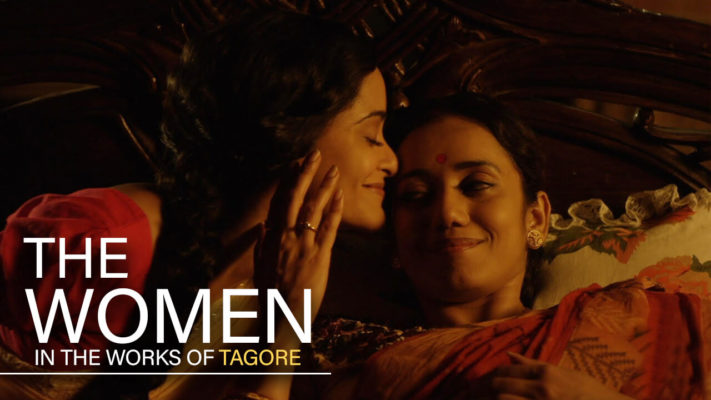
Tagore's nuanced portrayal of women characters remains profoundly relevant to contemporary Indian audiences navigating identity and societal expectations.
Why Tagore’s Women Matter Today
Rabindranath Tagore’s female characters transcend their era, presenting multidimensional portraits of women who resist societal categorization. From Mrinal’s intellectual defiance to the diverse personalities spanning childhood to wisdom, Tagore’s works demonstrate that women’s strength lies not in conformity but in their complexity and authenticity—a message that continues to inspire Indian readers and modern storytellers alike.
“Men can only think. Women have a way of understanding without thinking. Woman was created out of God’s own fancy. Man, He had to be hammered into shape.”
– Rabindranath Tagore
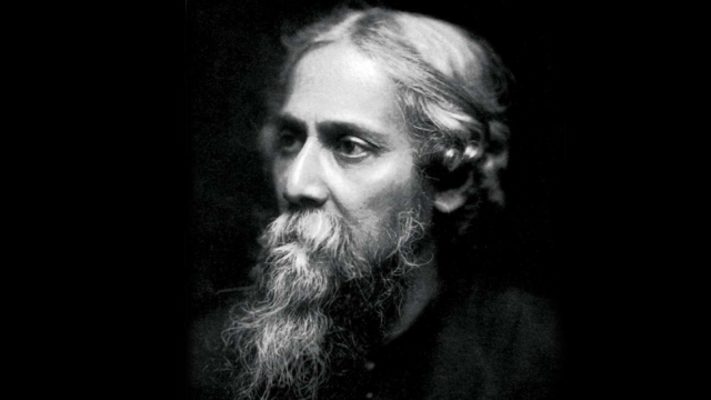
Rabindranath Tagore, the first Indian Nobel Laureate, was a literary gem, a creative genius and an accomplished polymath. His writing had a sublime freshness to it. He had magic in his words; while reading his works one could imagine the characters coming to life in front of their eyes. His writings were based on the traditional values of India with the touch of western thoughts. He was a modern, forward thinker.
Special mention should be given to the women characters of his work. Rabindranath Tagore portrays different traits of women in his writings. From a mischievous child to a wise old woman, his work covered many shades of women personalities. The women in his writings mirrored the women of the real society. The circumstances, emotions, and decisions of the women can correspond to the real life. Few of such women are –
Mrinal, A Wife’s Letter –
A Wife’s Letter is a story which brings out the deep anguish of a woman who has been ignored by her husband only because she is intelligent.
The story is a letter which Mrinal writes to her husband. In the letter, she mentions the standards of society, the way they have labelled every woman in different categories. They perceive a strong-willed and intellectual woman as someone to be aware of. She also observes how the world wants the wife to be always submissive to her husband and to not hold any opinion of her own. She also shares her insight of the poor and cruel treatment of an orphan girl who is ignored by her own sibling. Throughout her life, she felt bound by the shackles of preconceived rules of society until the day she took the step of liberating herself from her husband.
The most powerful line Mrinal writes to her husband is “Removed from the Shelter of Your Feet”.
The shade of woman portrayed here by Tagore is that of patience, freedom and self-discovery. The suffering of her for 15 years shows her patience. It shows how enlightened Mrinal felt after leaving her husband and following her own path, without being bound by any rules. It also shows how strong a character was Mrinal, to be able to free herself from the shackles of lifelong suffering.
Subhashini, Subha –
Subha is the story of Subhashini, a mute child. The story reflects how a disabled child is seen as the world’s biggest burden by her own parents. She is depicted as a silent weight upon the hearts of her parents; and how the entire world seemed to think that. Because she did not speak, therefore she did not feel, they discussed her future and its own anxiety freely in her presence. Though hurt she understood her parent’s predicament and let go of all the grief in her heart.
The story also reflects another angle of a speechless girl’s life, i.e. of her deep lifelong connection with other speechless beings, her friends, the animals. They share a very strong bond where the expression through their eyes was enough to understand each other. This bond gave her the will to move on.
From the words of Gurudev “those who from birth have had no other speech than the trembling of their lips learn a language of the eyes, endless in expression, deep as the sea, clear as the heavens, wherein play dawn and dusk, light and shadow. The dumb have a lonely grandeur like Nature’s own”.
Rabindranath Tagore here portrays the woman as one who has perseverance, understanding and friendship. Subha persevered and endured all the suffering which comes from being disabled. She understood the predicament of her parents and tried to be of less of a burden to them. Her deep friendship with her dumb friends would remain as a lasting experience. Through all her life Subha only faced suffering, but she still persevered and found solace in life.
Manimalika, Monihara (The Lost Jewels) –
https://www.youtube.com/watch?v=IxqQwI25hY8
Monihara is a story where the obsession of a wife leads to the insanity of her husband. In this story, Manimalika, the wife, is passionately obsessed with jewels and shows a dime worth of love for her husband. The situation is vice versa in the case of the husband. She leaves her husband because of distrust towards him, which ultimately leads to the husband becoming insane.
Rabindranath Tagore portrays the character of Manimalika as an obsessive, greedy and distrustful woman. She could not even trust her own husband who bought the jewels for her, who loved her so much.
Kamala, The Story of a Muslim Woman –
This story focuses on the life of an orphan Brahman girl, Kamala, who is very shy, timid and beautiful; she is cared by her uncle but is resented by everyone else in the family. After her marriage, on the way to her in-laws house she is attacked by bandits and her in-laws abandon her. The house where she grew up refuses to take her back stating that she has turned casteless. Then she is given shelter by a Muslim stranger where her life changes forever. After few years when she meets her family she is shown as a protector of people.
The shade of woman portrayed here shows the breaking of chrysalis and emergence of a new form. In this Kamala breaks the chrysalis of her old timid self to emerge as a brave protector of people. This story shows that women can achieve greatness when encouraged and supported. They grow stronger than men with time and experience.
Other female characters from Rabindranath Tagore’s works that portray different emotions are Ratan from The Postmaster, Charulata from A broken nest, Mrinmoyee from Sampati, Binodin from, Chokher Bali, Suman from Tyaag to name a few.
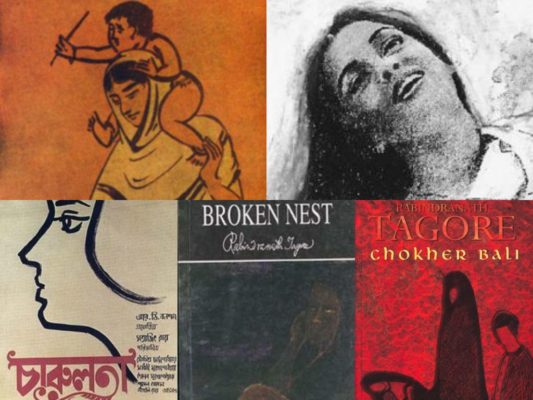
In many works of Rabindranath Tagore the women are portrayed with strong emotions, they may be positive or negative, active or passive, but the impact they create on readers mind is great. Tagore created his characters based on the contemporary situation. The women are portrayed as traditional, forward-thinking, strong-willed and self-dependent. The women in his stories can be seen questioning the contemporary issues of that time. From child marriage to gender inequality, all such issues are dealt in his works.
Through these stories Rabindranath Tagore brings out different shades of a woman’s personality, in some, she plays the hero, in some, she plays the victim, in some she plays the antagonist. On the whole, he brings out the idea of understanding and empowering women. Human nature is ever changing and these shades not only apply to women but also men. All the qualities of life are brought out in Gurudev’s writings. In many of his writings, he subtly or loudly gives out strong messages to the society. The treasure trove of Rabindranath Tagore’s writings is huge; reading at least few of his works would give a person the vivid shades of his Imagination.
Frequently Asked Questions
How did Rabindranath Tagore portray women characters differently from other writers of his time?
Tagore presented women as complex, multidimensional individuals with intellectual capabilities and emotional depth. Unlike many of his contemporaries who depicted women as one-dimensional or purely decorative, Tagore showed women overcoming social stigmas, expressing dissent, and possessing wisdom. His characters ranged from mischievous children to accomplished intellectuals, reflecting real women’s struggles and triumphs in Indian society.
What is the significance of Mrinal in Tagore’s ‘A Wife’s Letter’?
Mrinal represents women who suffer invisibility due to their intelligence and strength. Through her letter, Tagore exposes how society categorizes and marginalizes intellectually gifted women, forcing them into silence. Her character becomes a voice against the oppression of intelligent women, challenging readers to question rigid social standards that diminish women’s worth based on their autonomy.
Why is Tagore considered a modern thinker regarding women’s representation?
Tagore blended traditional Indian values with progressive Western thought, allowing him to critique patriarchal norms while respecting cultural heritage. He recognized women’s emotional and intellectual equality with men, portraying their struggles against social constraints with empathy and nuance. This balance made his works both culturally resonant and forward-thinking for early 20th-century Indian literature.
What emotions and circumstances do Tagore’s female characters face in his works?
Tagore’s women face isolation, societal judgment, unequal marriages, and the conflict between personal desires and social expectations. They experience anguish from being misunderstood, trapped in roles that diminish their potential, and forced to choose between authenticity and acceptance. Yet many of his characters demonstrate resilience, finding ways to assert their identity despite overwhelming social pressure and oppression.
How do Tagore’s female characters mirror real women of his era in Indian society?
Tagore drew inspiration from observable social realities—the constraints on women’s education, restricted social mobility, and limited agency in marriage and family. His characters embody authentic struggles women faced, from navigating unwanted marriages to suppressing intellectual capabilities. By grounding his fiction in real circumstances, Tagore created characters whose experiences resonated deeply with female readers and validated their lived experiences.
Disclosure: This article may contain affiliate links. VoxSpace may earn a small commission if you make a purchase through these links, at no additional cost to you. This does not influence our editorial opinions or reviews.
You Might Also Like
- [VoxSpace Selects] A Musical Evening By Prof Subhendu Ghosh
- [VoxSpace Life] Jamini Roy : The Maverick Of Bengali Folk Art
- [VoxSpace Life] The Paintings Of Ganesh Pyne: The Surrealistic Amalgam Of The Sublime And The Grotesque
- Kalki Koechlin - Why She Remains To Be My Biggest Crush #Always
- 20 Christopher Poindexter Poems Which Will Melt Your Soul
- [VoxSpace Selects] Mrinalini Sarabhai : A Danseuse Who Dared To Venture Beyond Conventionalities
- [VoxSpace Selects] Remembering Rituparno Ghosh : The Pioneer Of Bengali Experimental Cinema







Comments are closed.