
This poignant exploration of mental health struggles remains deeply relevant for Indian audiences navigating their own battles with anxiety and self-doubt.
The Verdict
LoveSick’s final episode is a raw, unfiltered look at mental health, paranoia, and the constant battle with one’s own thoughts. The narrative doesn’t shy away from the harsh reality that recovery isn’t linear—some days you’re winning, some days the voices win. It’s a story that will resonate with anyone who’s ever felt like they’re fighting themselves, making it essential viewing for those seeking honest portrayals of mental struggles in Indian media.
Chapter One: Everything’s Not Worth It
It’s all a waiting game.
It’s never fun. You literally feel like a bomb is strapped to your body and all you can hear is the tick-tock.
Boom! You walk in!
But more about that later. My life was starting to be as bipolar as my head was. There were days when it was a downward spiral where I thought the world is conspiring against me. Hello, paranoia. On other days I was high on life, not on any substance mind you, I was being sober. It was a lot less than grandiosity because paranoia kept creeping in.
That’s when I realised I was falling apart. Because the voices in my head were taking the better of me. They were always there but this time they were strong, stronger than ever. Sometimes they were my best friend, comforting me, giving me hope, sometimes they were being my worst enemy, putting me down, telling me I’ll never get out of this, I’m not worthy of love. And then there were times where the voices were like that brutally honest friend saying it’s in my head.
Chapter Two: The Voices In My Head – The Strangling Memories

Today the voices in my head wanted to talk about something nice, a fond memory. Today they are letting me be happy. You know they are letting me think about the time when… wait no, they changed their mind. I’m back to wallowing in self-pity. Annoying right? Abrupt right? Fickle right? It’s way worse in my head. Believe me when I say that. Oh, now I remembered I had to go for my appointment with my therapist.
One of the worst things about mental illness is the fact that you have to live with the voices in your head. The constant and relentless nagging in your head that’s hell-bent on making you feel you are not worthy enough. That you are not good enough. That you will never be good enough. Try living with it. I dare you.
The thing with living with mental illness is that even on the good days you lose, it’s even harder on the good days because you know it’s an act that you put up and it just kills you a little bit to see that no one sees through it. Especially the ones you so desperately want to. It’s not their fault either. After all, you have the tough person act going on. Wrong move.
Chapter Three: The Strong Person Act

One of the main reasons I didn’t call a single person when I was going through the lowest, suckiest phase of my life is only because I didn’t want them to see that side of me. Too much of the ‘this is beneath me’ feeling. Fuck the strong person act. All I needed was a hug. I needed someone to hug me tight and be like it’s okay. It’s going to be okay. You’ll get through it. I knew I would even if the voices in my head thought and made me believe otherwise, I knew I had it in me to get over it. But that day and all the days surrounding it, I let the voices win. For me, it was me against the voices and the world. I didn’t even stand a chance. I was wrong.
So one such night when I was wallowing in self-pity and was curled up in a corner of the room, which was pitch dark btw. My entire house was such and who would I even switch on the lights for? There wasn’t a single person in the house other than me and for me, darkness was an old friend. And right then a friend came to meet me. He saw me, he saw how I was and right away took me out. How much I needed that! More than anything else.
Chapter Four: The Self-Pity Mode And Wallowing With The Voices
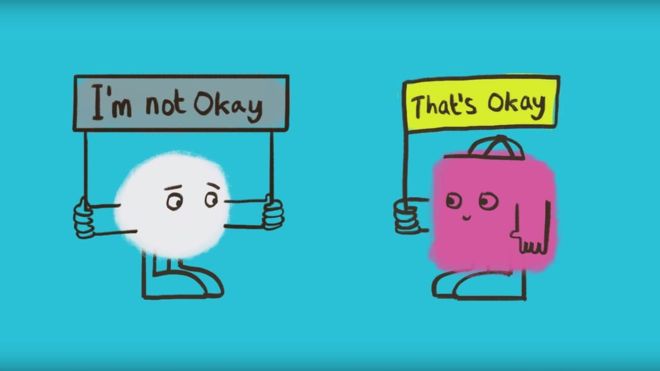
Our outing was to a temple. I’m not big on religion or even spirituality but that one visit to the temple got some kinda calmness in me. It was raining that day. Which made it all the better. Something that I was in dire need of. I’m still not big on either of them. Nor will I ever be.
The night, the outing and the dinner is one of the reasons why I got out of the rut I put myself in. The wallowing in self-pity lessened. Other than that outing the only times I got out was to meet my therapist and to get pills and the malt beverage.
Therapy as a profession is so frowned upon. Yes, I get it, with therapy people want immediate results and when they don’t get it, they believe it to be a money-making strategy and throw therapists in the same category as a fortune teller. Oh, one more person asking a psychology student to read their mind is going to get a punch in their stupid face. It’s NOT the same thing. It’s like apples and oranges.
So yes, the night. Oh, what’s with mental illness and nights? Does nothing happen during the day? The night, I’ll forever be thankful to that friend who took me out for dinner. Thank you. I love you.
Chapter Five: The Immeasurable Empathy Or Sympathy
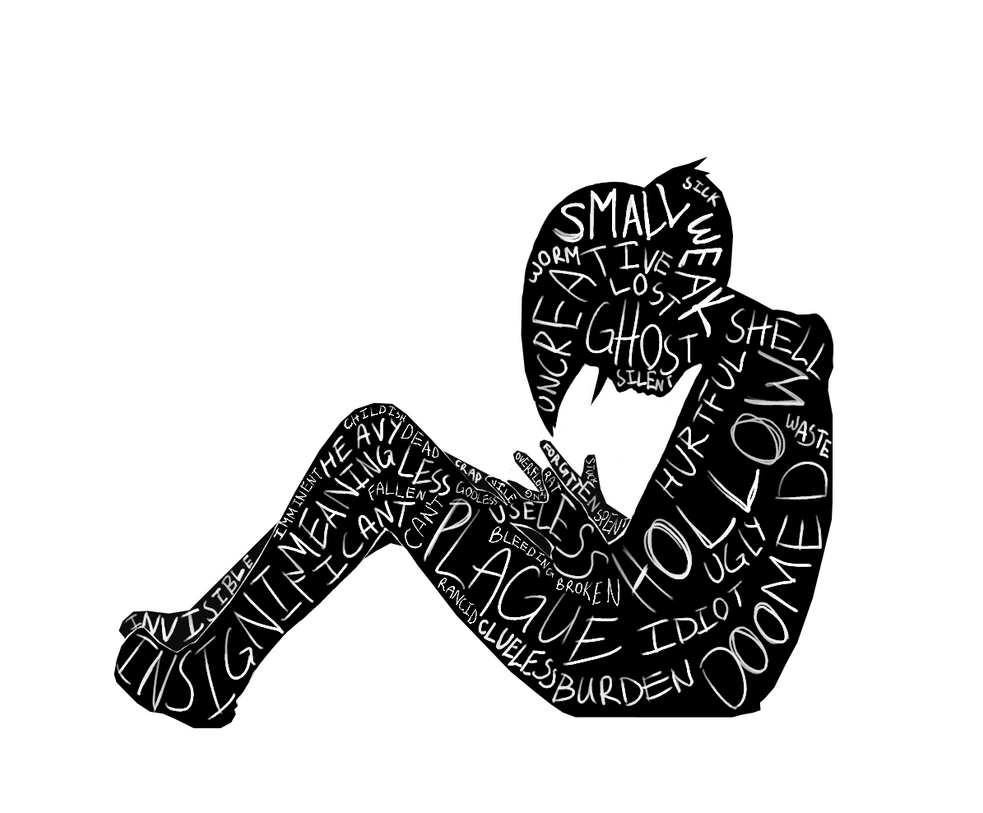
Maybe a lot what I went through, I called it upon myself. But, that’s not what I wanted. It was the exact opposite. Maybe there’s no wrong person here but in my head and in my life I was my own worst enemy. It wasn’t easy and when I was busy being my own enemy, who is hell-bent on ruining everything I cherished so much, all I wanted is for you to be there. This is something no amount of empathy or sympathy can measure. It’s something you will only feel when you go through it. Something I wish no one goes through. Not even you.
It’s not that I liked putting myself through that and it may seem like I voluntarily did that to myself and maybe it’s true too. That’s debatable. But one thing I learned out of all that is, no one’s going to be your hero; there’s no Prince Charming, there’s no Knight in the shining armour. There’s no parent or a sibling or even a best friend who can get you out of it, unless you, yourself decide to get out of it. And once you do, there’s no looking back. Even if you get out of it and have a relapse, you know you did it once you can get through it again. Give the mental illness a sucker punch in the face and be like. You’re better than what the mental illness reduces you to be.
Chapter Six: The Voices Don’t Define You Or Your Being
Mental illness makes you, your own worst enemy. Even psychotic killers are in no comparison to what your own head can do to you. But rise above it. Because your mental illness doesn’t define you, you define it. The voices in your head aren’t real. Even if they are real, their opinion isn’t your reality.
Coming back to the meet. It was ‘our goodbye’. Was it really though? Our goodbye wasn’t cordial of course. Chutiye tu nahi main hoon. Apologies from either side aren’t going to be genuine. Not right away at least. Maybe someday later in life, it will be. I have already had to give forgiveness to one apology I will never ever get. This is the other one for completely different reasons of course.
The End.
Follow This Series From The Start here,
Episode One: [VoxSpace Originals] LoveSick – You Had Me
Episode Two: [VoxSpace Originals] LoveSick – The NOT So Lonely Night
Episode Three: [VoxSpace Originals] LoveSick – Three’s Always A Crowd
Frequently Asked Questions
What is LoveSick about?
LoveSick is an Indian web series that explores themes of mental health, inner turmoil, and relationships. It follows a character struggling with bipolar episodes, paranoia, and intrusive thoughts while attempting to navigate love and personal growth in their life.
Does LoveSick final episode have a happy ending?
The final episode of LoveSick doesn’t offer a traditional happy ending. Instead, it provides a realistic conclusion about acceptance and determination to overcome mental struggles, showing that recovery is ongoing rather than absolute.
How does LoveSick portray mental health in Indian media?
LoveSick breaks stereotypes by presenting an honest, unfiltered depiction of mental illness in Indian storytelling. It avoids romanticizing suffering and instead shows the daily reality of living with bipolar disorder, paranoia, and anxiety.
What are the voices in LoveSick about?
The voices represent intrusive thoughts and the character’s internal struggle. Sometimes comforting, sometimes destructive, they symbolize the dual nature of mental illness—how our own minds can be both our greatest supporters and harshest critics.
Is LoveSick based on a true story?
While LoveSick is a fictional narrative, it draws heavily from real experiences of people living with mental health conditions. The authentic portrayal suggests it’s inspired by genuine struggles rather than being purely fictional.
Disclosure: This article may contain affiliate links. VoxSpace may earn a small commission if you make a purchase through these links, at no additional cost to you. This does not influence our editorial opinions or reviews.
You Might Also Like
- [VoxSpace Originals] LoveSick - Episode Three : Three's Always A Crowd
- [VoxSpace Originals] LoveSick - Episode Two : The NOT So Lonely Night
- [VoxSpace Originals] LoveSick - Episode One : You Had Me
- [VoxSpace Selects] Game Of Thrones S8EP3 Spoiler Review : The Battle For Winterfell
- [VoxSpace Selects] Game Of Thrones S8EP2 Spoiler Review: The Long Night Before The Great War
- [VoxSpace Selects] Narratives Of The Body : Bringing Together Diverse Voices
- Google's India In A Day Movie Has Landed Its First Trailer








Comments are closed.