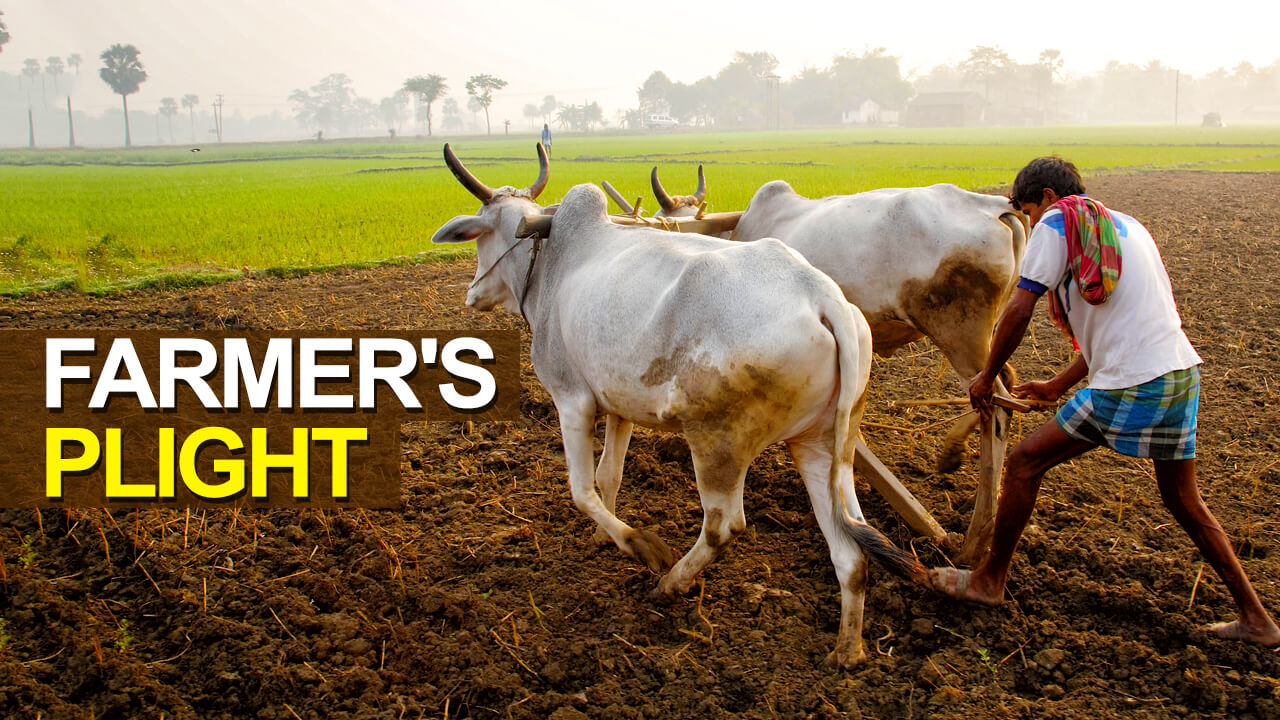
Nearly a decade later, India's agricultural crisis persists as cold chain infrastructure remains critically inadequate for protecting farmer livelihoods.
Key Takeaway
India’s agricultural sector faces a severe storage crisis, with 30% of fruits and vegetables wasted annually due to inadequate cold chain infrastructure. Despite government initiatives and 100% FDI allowance, progress remains stalled, threatening farmer sustainability and food security across the nation.
The Curse Of Being A Farmer?
‘Farmer’s suicide’! Do the words ring a bell? Yes, they do, as they are frequently occupying the front pages of all media these days. Alas! The situation is deteriorating by the day. The farmers are either plagued by frequent failure of monsoons or lack of storage facilities. On one end of the spectrum is the problem of plenty wherein the farmers have no means to store their additional produce. Consider these appalling figures-
1. Though 100% FDI is allowed for the sector, yet India has around 7000 cold storage facilities only.
2. Out of these 7000 cold storage facilities, 92% are suitable for storing potatoes only.
3. Multipurpose cold storage capacity is only 7% whereas fruits & vegetable storage capacity is 1% only.
4. Storage capacity needs to be increased by 40% as only 31 MMT can be stored currently.
5. Only 10-11% of fruits and vegetables produced in India use cold storage.
6. As a result, 30% of fruits and vegetables grown in India get wasted annually.
Over the last few years, several initiatives have been taken by the Govt to increase the storage capacity. The Ministry of Food Processing Industries implemented the Central Sector Scheme of Cold Chain, value addition and preservation infrastructure. Under the scheme, financial assistance was provided in the form of grant-in-aid of maximum Rs 10 Crore per project for setting up of integrated cold chain and preservation infrastructure facilities. These facilities can be set up by individuals, a group of entrepreneurs, cooperative societies, Self-help Groups, Farmer Producer Organizations, NGO’s, Central/State PSU’s etc. The scheme is primarily private sector driven. In addition, Mission for Integrated development of Horticulture and National Horticulture Board under Dept. of Agriculture, cooperation and farmer’s welfare, Ministry of Agriculture and Farmer’s welfare are also providing assistance for setting up cold storages under their respective schemes. But much more needs to be done for increasing our storage capacity and avoiding wastage.
The Spectrum Of Failing Crops – The Price Conundrum
On the other end of the spectrum is the problem of failing crops. Several crops are failing almost annually these days. Sometimes they fail due to inadequate monsoons while at other times they are ravaged by floods. Crop insurance schemes often remain in namesake only. When the crops fail the insurance companies apply every trick in their book to shift the blame for the loss on to the farmers themselves. As such despite paying heavy premiums, the farmers do not get insurance coverage in case of crop failure. The result is that the farmers are gradually but surely shifting from producing foodgrains. Either they are diverting to cash crops like cotton etc or they are seen branching into producing oilseeds, flowers etc. This shift may appear to be slow but is surely alarming. That time is not far away when foodgrains and vegetables will only be consumed by the rich, for they alone might be able to face their skyrocketing prices. But the poor will also need sustenance and what will they do? They will reduce their want, to begin with, but will eventually resort to loot and plunder. This loot and plunder will be for food and not for gold and silver.
Do Crop Insurance Schemes Actually Work For A Farmer?
To prevent such a situation from happening, it is high time that we support our farmers. The much-advertised crop insurance policies should deliver when the crops fail. The farmers should be given all kinds of encouragement from the Govt. like technical assistance, expert advice, assured minimum support prices etc. Only timely encouragement and support will see them return to growing basic food. The middle class does not think twice before buying a common food item like Toor Dal for Rs 120-130 per kg but what about the poor. Don’t they or their children also have similar right to consume food grains or vegetables? Even the most common vegetables like onion and tomato are regularly going through massive price fluctuations.
This year itself the prices of tomato jumped from Rs 10/Kg to Rs 100/Kg within a short span of time before correction occurred. The current price of Onion is Rs 50/Kg which may soon rise to Rs 70/Kg according to market estimates. The middle and upper classes can absorb these price fluctuations, but the poor can’t. The humble onion has always been a loyal companion to our poor masses.
Earlier, if nothing was available to them, then at least they could eat their chapati with onion but now even that option is under constant threat. This is happening because successive Govt’s have failed to support our farmers in their distressed times. Agriculture has become more and more expensive over the years. The small and marginal farmers find it very difficult to raise a crop on their own these days. Only the big farmers, geared with farm subsidies and free power control bulk of the product today. Price fluctuations suit them just fine as they end up making huge profits every time. The real brunt of this is borne by the poor. It’s time that we, the people of this Country, should make our successive Govt’s to support our farmers in totality. We must remember that only a robust farming community can perennially feed the poor of this land and avoid any social unrest in our society.
Frequently Asked Questions
Why are Indian farmers facing distress due to cold storage?
India has only 7,000 cold storage facilities for an enormous agricultural output, with 92% designed solely for potato storage. This severe infrastructure gap forces farmers to waste 30% of perishable produce annually, devastating rural incomes and food security.
How much agricultural produce is wasted in India annually?
Approximately 30% of fruits and vegetables grown in India are wasted annually due to inadequate storage facilities. Only 10-11% of produce uses cold storage, highlighting the massive infrastructure deficit that directly impacts farmer profitability and household food security.
What government schemes exist to improve cold chain infrastructure?
The Ministry of Food Processing Industries implemented the Central Sector Scheme providing grants up to Rs 10 Crore per project for cold chain development. Eligible applicants include individuals, entrepreneurs, cooperatives, and self-help groups, though implementation remains inadequate.
What percentage increase in storage capacity does India need?
India requires a 40% increase in current storage capacity, as only 31 MMT (Million Metric Tonnes) can be stored presently. Multipurpose storage capacity stands at just 7%, while fruit and vegetable storage represents only 1% of total infrastructure.
Does India allow foreign investment in agricultural cold storage?
Yes, India permits 100% Foreign Direct Investment (FDI) in the agricultural sector, including cold chain development. However, despite this liberal policy, investment has remained insufficient to address the critical infrastructure gap plaguing India’s farming communities.
Disclosure: This article may contain affiliate links. VoxSpace may earn a small commission if you make a purchase through these links, at no additional cost to you. This does not influence our editorial opinions or reviews.
You Might Also Like
- Kisan-Mazdoor Sangharsh Rally : Farmers Rally In Delhi
- [VoxSpace Selects] Sambhavtaha : A Heart-Wrenching Tale Of A Farmer's Plight
- [VoxSpace Life] ISAP : The Backbone Of Thousands Of Indian Farmers
- [VoxSpace Selects] ConFarm - Building The CONsumer-FARmer Connect For A Better World
- Patidar Reservation Agitation : Hardik Patel Hunger Strike Enters Eleventh Day
- [VoxSpace Life] Rohan Prakash : Engineer Turned Solo Organic Mango Producer From UP
- [VoxSpace Life] Bhagat Singh, Sukhdev, Rajguru : The Sacrifice Of A Lifetime















Comments are closed.