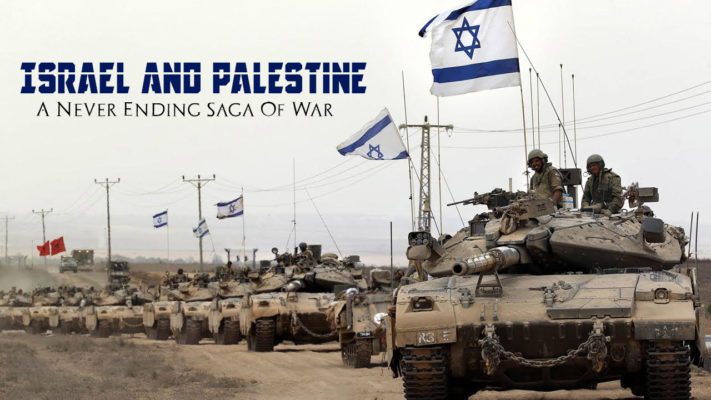
This decades-old conflict continues shaping global politics and remains essential for Indians to understand in 2025.
Key Takeaway
The Israel-Palestine conflict is deeply rooted in competing national identities, territorial claims, and historical grievances. Understanding both perspectives—Palestinian sovereignty aspirations and Israeli security concerns—is crucial for informed global citizenship. Neither side’s narrative is complete without acknowledging the legitimacy of the other’s historical experience.
The Left And Right Of The Issue
The conflict between Israel and Palestine is known to be one of the most intractable struggles. Most discussions regarding these issues come with a trigger warning, owing to not only the violent occurrences but also the religious sentiments involved. Major media sources often tend to side only one side of these loosely defined borders, deterring from the centre.
The Palestinians are an ethnonational group which traditionally originates from the Palestinian area (current day Gaza strip, West Bank, parts of Syria and Jordan) in the Middle East. The Palestinian national identity first emerged and established itself as a response to Zionism (Jewish nationalist identity) in 1939, when it revolted against the British mandate that allowed mass Jewish immigration into the nation. Today, Palestinians are majorly ethnical Arabs who demand a free state claiming the West Bank and Gaza Strip. A major part of this land is currently occupied by the State of Israel (the Jewish state, if you may) which is the source of all of Palestine’s troubles.
The History Of Palestine Explained
Israel is accused of illegally occupying lands and establishing settlements in lands that are rightfully the Palestinians’. In response to which the Right claims that Palestine has never existed as a National entity but only as a National Identity. They argue that the first Israeli-Arab war occurred before the British administration in the then Palestinian colony could be completely dissolved. Following its victory in the war, Israel consolidated its power on all parts of the claimed Palestinian land. In broader terms, Palestine was conquered before it even started to exist. Hence, no land can be termed as “Palestinian”.
An interesting argument that faces this claim is in reference to the Oslo Accords (a peace agreement) of 1993 that was signed by both, the then Prime Minister of Israel and the leader of Palestine Liberation Organization (considered the sole legitimate representative of the Palestinians). According to this agreement, Israel was to withdraw from select areas and make permanent status negotiations, this was to occur in a five-year interim period starting in 1994. By 1999, at the end of the interim period, delayed negotiations and oppositions in cabinets led to the failure of fulfilling the peace treaty. It was unclear if the changes made would still receive a “permanent status” and if the authority so transferred be recognised in such circumstances. Although this ambiguity leads to many people claiming the legitimacy of Palestine as a ‘Nation’.
Israel’s Attack On Palestine
https://www.youtube.com/watch?v=teqp5KQCBl0
Another reason that popular opinion sides Palestine is the violent nature of attacks that the Israelis launch on the Palestinian protesters. Israel’s claim has always been that it does so for self-defence. The Right claims that Israel has always been defensive and never began with an offence, and cites the example of the first Israel-Arab war and the six-day war. While the Palestinians in the Gaza Strip elected Hamas, a political organisation that believes in the eradication of Israel. Hence, it claims that it fights for the protection of its people against Hamas, who have in the past have used suicide bombers to attack Israel. The left counters by pointing to the second Israel-Arab war that Israel declared on Egypt to oppose the nationalisation of Suez canal. It also argues that the attacks that are associated with the Palestinians are often peaceful and extend only till stone pelting, the Israeli resistance which is met with guns.
Segregation Of Palestinians
Israeli West Bank barrier is a wall built by the Israeli on what it claims to be the West Bank borders in order to safeguard itself from suicide bombers and ensure safety. The wall, according to Palestinians, is viewed as a wall for segregation purposes and is a tangible form of apartheid. It is also criticized for encroaching on Palestinian land. According to the UN Office for Coordination of Humanitarian Affairs, 85% of the wall cuts into the West Bank area, isolating 9% of the Palestinian area. It has no reason to exist after the UN General Assembly passed a non-binding resolution demanding Israel to “tear (it) down. The Right’s counterclaims that the Palestinian borders are not clear and not internationally accepted and no land can be legitimately termed as “Palestinian”. (As mentioned earlier)
Peace In The Foreseeable Future?

The argument that one uses changes according to the which side of the border you support. Israelis are defending themselves against the Hamas, that believes in mass genocide of all Jews, claiming land that it has annexed as a result of military gain. While the Palestinians demand the right to their land that has been promised since 1948 and fight against what seems to be a military encroachment. It is important to attempt to understand the other side’s views and try and accommodate them in order to create peace rather than fight and argue by repeating the other’s mistakes and what you believe is your right.
Frequently Asked Questions
What is the Israel-Palestine conflict about in simple terms?
The conflict centers on competing claims to the same land. Palestinians seek an independent state in the West Bank and Gaza Strip, while Israel maintains control over these territories. The dispute involves historical claims, religious significance, refugee rights, and security concerns that have persisted since the mid-20th century.
Why do Indians need to understand the Israel-Palestine conflict?
India maintains diplomatic relationships with both nations and faces similar geopolitical complexities. Understanding this conflict enhances awareness of international relations, territorial disputes, and how nations navigate complex diplomatic situations relevant to India’s own regional concerns.
When did the Israel-Palestine conflict officially begin?
Palestinian national identity formally emerged in 1939 as a response to Zionism and Jewish immigration under British mandate. However, tensions escalated significantly after the 1948 Israeli independence, leading to the first Israeli-Arab war and subsequent decades of conflict over territory and sovereignty.
What are the main arguments from each side?
Palestinians argue Israel illegally occupies their lands and establishes unauthorized settlements. Israel contends that Palestine never existed as a sovereign national entity before their state’s establishment and emphasizes security concerns. Both sides cite historical, religious, and legal justifications for their positions.
Is there a possibility of resolving the Israel-Palestine conflict?
Resolution requires negotiated agreements on territorial boundaries, refugee rights, Jerusalem’s status, and security arrangements. Despite multiple peace initiatives, fundamental disagreements persist. International mediation continues, but a lasting solution demands compromises both sides currently find difficult to accept.
Disclosure: This article may contain affiliate links. VoxSpace may earn a small commission if you make a purchase through these links, at no additional cost to you. This does not influence our editorial opinions or reviews.
You Might Also Like
- [VoxSpace Life] The Monstrosity Of The Palestine Conflict : Deafening Scream of Still-Life War Photography
- [VoxSpace Life] Western Missile Attacks On Syria - A Case Of Misguided Adventurism
- [VoxSpace Health] Vaccination Vs Autism : The Impact A Myth Can Cause
- [VoxSpace Life] Hasidism : The Birth Of A Religion From A Movement
- [VoxSpace Politics] Re-Election Of Putin And The State Of Indo-Russian Ties
- [VoxSpace Life] Syria : Life After The Civil War As Witnessed By A Survivor
- [VoxSpace Life] Death Of Innocence : An Overview Of Syria And Its Ongoing Conflict