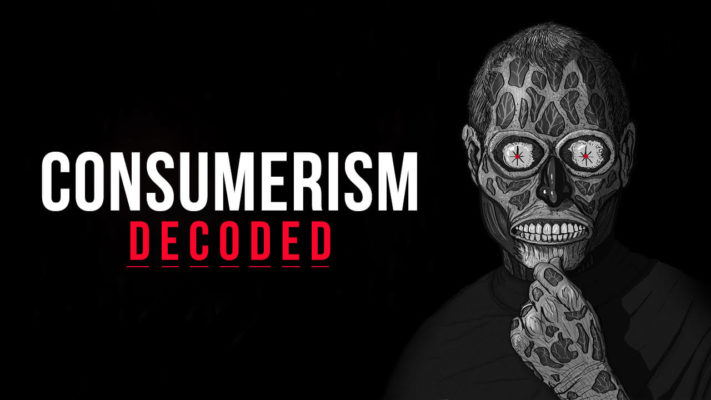
In 2025, consumerism's grip on Indian audiences has only intensified through social media influencers and targeted digital advertising.
How Consumerism Tells Us ‘What We Need’
With celebrities endorsing a shampoo brand that is just a different fragrance, colour and packaging from its competitions, we are attracted to look like the ones we look up to. They show us how we need Fair ‘n’ Lovely to look like Yami Gautam, a number of tones fairer than what we look, to match the perceived beauty standards. They emphasize on how we need a better deodorant to have women falling at our feet, a better salt that passes all the ‘credibility’ and definitely a Manyavar shervani to get married in. And with this and the like, Consumerism plays on the human need of identification with objects to enhance their sense of self.
As Eckhart Tolle in his New York Bestselling ‘A New Earth’ mentions how for most of us, our sense of self or ‘I’ comes from the things we own, this identification with objects finds its roots in our upbringing. Imagine being an infant developing his sense of self through the name that his parents address him with. With the general conditioning, he lives to understand that ‘X’ is ‘My’ name. A new toy that he gets belongs to him as ‘My’ toy. With the toy taken away, it isn’t the separation from the toy that makes the kid cry, for a new toy or candy shall replace it soon. It is the sense of ‘My’ toy being taken away from me that upsets the kid. Soon ‘My’ toy is replaced by ‘My’ books, ‘My girl, ‘My’ house and so on. So consumerism proves to be the best bait for all of us who find identification or our sense of self in objects. Of course, many would like to deny this, be defensive about this but for the sake of argument, read on.
Industrial Revolution’s Effect On Consumerism
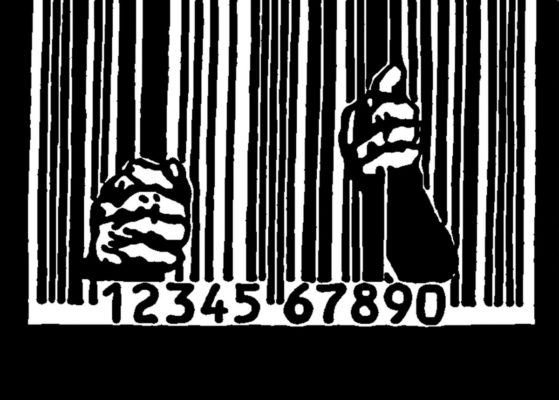
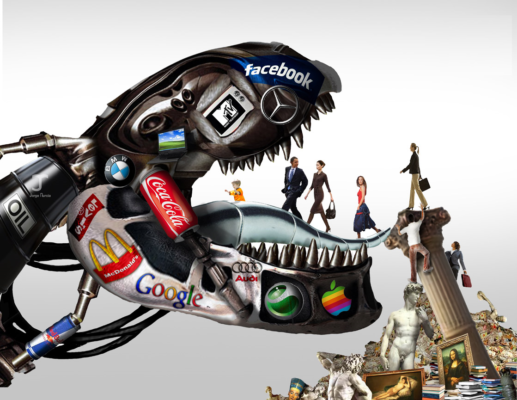
With the Industrial Revolution breaking in the 20th Century there was a massive overproduction of objects and products that nobody was buying. It was around this time that a need for consumerism through advertising was realised. Ad makers identified that by making people see that they can enhance the way they look or are looked at by others, they can make their prospect consumers buy things that they don’t really need. Through copies like Kellogg’s Special and Lipton Green Tea and Fair ‘n’ Lovely, they imply that one can enhance the way they look and be more fully themselves or better. Celebrity endorsements play on this identification with the image in a way that one can have hair, skin, youth, charm and social influence like the ones that they look up to. Of course, the takeaway is that by using the product one could be the surface image of the celebrity being shown.
Consumerism And Social Standards
Consumerism not just plays on the idea of perceived beauty but also on social standards, in a way that exclusivity is directly proportional to superiority. And so anything that is expensive becomes exclusive and therefore desirable, an “identity enhancer” as Tolle calls it. It is the psychological value of brands like Zara that attracts us. If anyone could buy it, the product would lose its exclusivity and the material value that remains will be worth being bought off a flea market. Could this exclusivity be the reason for the economic failure of the Tata enterprise’s Nano (with its ‘middle-class car’ tag)?
What makes the consumer society thriving, and their bluff from being called is the fact that this identification with objects is replaceable. And hence what we desire today, buy tomorrow is soon replaced by a new desire that is advertised to us. So we keep looking for more to fill our sense of self, keep buying, keep consuming more.
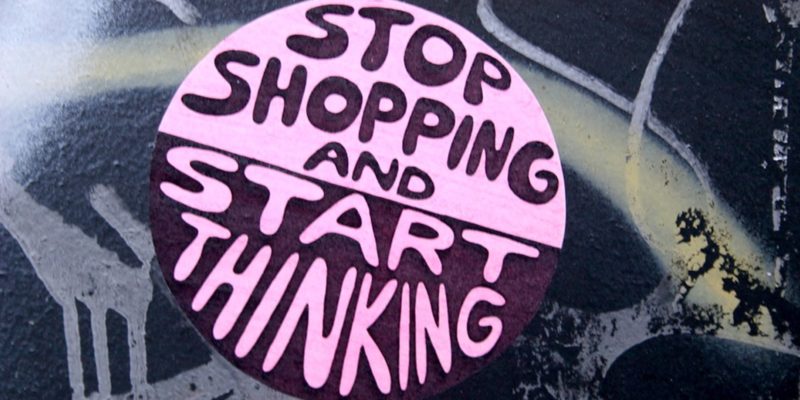
Now this is not to say that we renounce everything and give up buying to boycott consumerism, but recognize what we really need and what we use to fill ourselves with. As humans, we need housing, food, clothing, furniture, transportation, etc and other things for the beautification of inherent qualities. But there’s a need to transcend this ego identification with things that are so obsessive that it makes the economic structure of consumer society thrive with a need for more. One must identify what our bodies need to be nurtured with while giving our souls enough space to breathe rather than compulsively filling it with things that we don’t need. For as Tyler Durden from Fight Club says, “Things that we own end up owning us”.
Frequently Asked Questions
How does advertising target human insecurities in India?
Indian advertisements leverage beauty standards, status symbols, and social acceptance to create insecurities. Brands use celebrity endorsements to suggest that purchasing their products will make consumers look like their favourite stars or improve their social standing, exploiting the psychological need for self-enhancement.
Why do Indians buy more than they need?
Consumerism thrives on the psychological conditioning that began in childhood. Indians identify their sense of self with possessions, believing that owning branded products enhances their personality and social status. This deep-rooted need for identification with objects drives unnecessary purchases beyond actual requirements.
What does Eckhart Tolle say about consumerism and identity?
In his book ‘A New Earth,’ Eckhart Tolle explains that modern individuals often derive their sense of self from the objects they own rather than their intrinsic value. This identification with material possessions becomes the foundation for consumerist behaviour, as people believe products define who they are.
How does Fair and Lovely advertising affect Indian beauty standards?
Fair and Lovely’s celebrity endorsements perpetuate the problematic belief that fairer skin equals beauty and success. By featuring celebrities like Yami Gautam, the brand creates artificial beauty standards that encourage Indians to purchase products promising to lighten their skin tone, exploiting insecurities rooted in colonial-era beauty preferences.
How can Indian consumers resist consumerism and advertising manipulation?
Indians can resist consumerism by recognizing advertisement tactics that target insecurities, questioning whether purchases align with actual needs, and building self-worth independent of material possessions. Critical awareness of how childhood conditioning shapes consumer behaviour helps individuals make intentional choices rather than impulse purchases driven by celebrity endorsements.
Disclosure: This article may contain affiliate links. VoxSpace may earn a small commission if you make a purchase through these links, at no additional cost to you. This does not influence our editorial opinions or reviews.















Comments are closed.