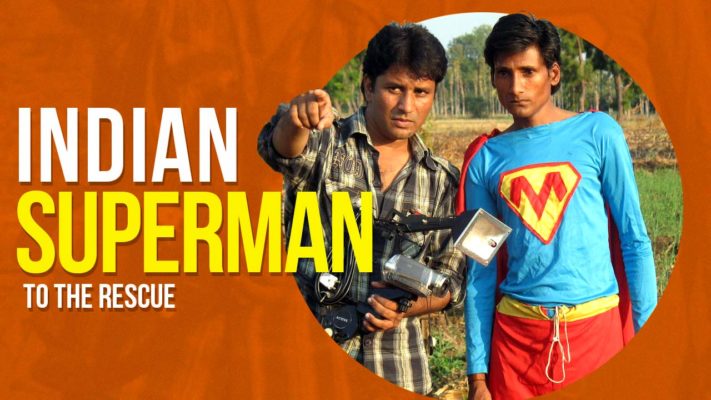
Over six years later, Supermen of Malegaon remains a vital reminder for aspiring Indian filmmakers about the power of resourcefulness over resources.
The VoxSpace Verdict
Supermen of Malegaon is not just a documentary about filmmaking in a small town—it’s a manifesto for every creator struggling with inadequate resources. The film proves that limitations breed creativity, and that the true measure of a filmmaker lies not in their equipment but in their vision and determination. It’s essential viewing for anyone who believes that cinema is born from passion, not budgets.
Cinematic Inspiration
When I received my first camera, I was not happy. It was a brand new camera, but it was not the same camera that my friend had; he had gotten himself a pricier camera and that, by default, in my eyes, was a better camera. Therefore, according to me, it was more capable of taking better pictures than mine. Although I am decidedly wiser now, I feel most of us have been there – stuck with lofty imaginations and the drive to do something amazing but falling back on the limitations and blaming these limitations for not making us reach our full potential. I would not have snapped off from this chain of thoughts, had I not seen a documentary called “Supermen of Malegaon.”

World cinema – that’s what most of the pundits point to when hopeful directors ask what they should look at for inspiration. Names like Majid Majidi, Jafar Panahi, Abbas Kiarostami, and Orson Welles get thrown around. Close at home, we hear names, such as Satyajit Ray, Shekhar Kapur, Shyam Benegal, as portals to look at when one wants to learn movie making. However, my inspiration is a man, who lives in a small town in the Nasik district of Maharashtra.
The Real Superman Of Malegaon
“Supermen of Malegaon,” the documentary opens with a bleak view of a city that has nothing going for it; it is stuck in poverty, communal tensions, power shortages and a booming industry that’s slowly taking the lives of the working population in there. It is here, where you meet a man called Nasir Sheikh, the sole proprietor of Mollywood – the local movie industry. Nasir’s exposure to world cinema is through his now-closed video parlour. Yes, the very same video parlours that were there in the days, when people used to take home CDs during the weekend to watch a movie with the family, rather than just streaming it via online service. There, in the middle of nowhere, Nasir, while rummaging through the CDs of Bollywood and Hollywood movies, had a wish. He wanted to make movies.
“Haptah bhar Majdoor jab thak jata hai…who jhumma ke roj ek film dekhta hai…aur screen pe apne aap ko mehsoos karta hai…kya apni zindagi mein agar ye nahi mila hai…toh tassavur mein dekhenge”
Nasir got a camcorder and delved right into the fray. It’s an overt cliché to say if you want to do something in life nothing can stop you. However, when a cliché is backed by someone as stubborn as Nasir, it’s a tough job to avoid it. Armed with a camcorder, few hopefuls and several Malegaon-fied titles under his belt, he decided to take his biggest leap yet to make a Superman movie based in Malegaon.
Jugaad 101
What follows is a tale of ingenuity, sheer will and a lot of “jugaad.” The last bit i.e. the “jugaad” is something that one should focus on throughout the film. How could a man with no film education, no seasoned actors, and no crew walking through the entire film process make a film? What is the use of a Dolly; if you can get someone to pull you from side to side? What is the use of a crane, if you can run up to the tallest mobile network tower? What is the use of buying green screen equipment, if you can just get it sewed from your neighbourhood tailor? Although all of these things sound preposterous in movie making or at a drama institute, it is a stark reality here. Nasir didn’t have money; he had jugaad and he went on to make a movie with it.
“Assistant bhi nahi samajhta tha, editing bhi nahi samajhta tha…bad mein pata chala ke mein jo kar raha hoon use editing kehte hain, itna department milake ek picture kaise de payenge? Eki aadmi ke dimaag mein ek picture ata hai.”
Nasir persisted and, therein, lays the entire humbling experience of the entire documentary. The joy of creating is a holistic experience. When you are creating something from your heart, it should give you an unadulterated joy that brings tears to your eyes every time you cross a milestone, that looks simple to others but posed a huge challenge to you.
Huge Dreams, But With A Reality Check
It’s not that Nasir didn’t understand the strain it would put on him and his family. His little brother had the big screen dream in his heart. In the documentary, he keeps on warning him about the futileness of it and to not get into this abyss that he has gone through. He keeps on saying “Isme future nahi hai…” but he himself can’t stop the filmmaking keeda from coming in his dreams and making him do these movies, that will never see a larger audience. The lesson in humility comes from here; there is no difference between Nasir and the stalwart directors of the world when he utters that he is driven by his urge to tell stories, and he has to tell his stories even if the future is bleak.
Everyone, who is reading this article, for once, go and watch this movie. It is available for free on YouTube and I will drop the link below. After that, every time you are stuck just look back to this movie for a little bit of hope that’s still in you. I can promise you that this movie will help you in your dark times, to persevere. It’s a movie that celebrates movie making; India’s love with the silver screen and more importantly how important it is to dream.
The link- https://www.youtube.com/watch?v=dqRq7ZpjF0I&t=1743s
Frequently Asked Questions
What is Supermen of Malegaon about?
Supermen of Malegaon is a documentary following filmmakers in a small town in Maharashtra who create action films using jugaad methods and recycled materials. It explores their passion for cinema despite severe financial and infrastructural constraints, celebrating ingenuity and perseverance in grassroots filmmaking.
Who directed Supermen of Malegaon documentary?
Aamir Bashir directed Supermen of Malegaon, which premiered at international film festivals and gained critical acclaim for its authentic portrayal of local filmmakers. The documentary captures the raw energy and creative spirit of these filmmakers without romanticizing their struggles.
Where is Malegaon and why is it significant for Indian cinema?
Malegaon is a small industrial town in the Nasik district of Maharashtra known for its textile mills and communal tensions. It’s significant because despite poverty and infrastructure challenges, it has become a hub for grassroots action filmmaking, producing unique cinema that challenges Bollywood narratives and celebrates local talent.
What does jugaad mean in Supermen of Malegaon?
Jugaad refers to improvised, low-cost solutions using available resources creatively. In Supermen of Malegaon, it symbolizes how filmmakers create professional-quality action sequences using recycled materials, unconventional techniques, and sheer determination rather than expensive equipment or studio facilities.
Why should Indian filmmakers watch Supermen of Malegaon?
Indian filmmakers should watch it to understand that limitations can be catalysts for innovation. The documentary proves that genuine storytelling and creative vision matter more than budgets, inspiring emerging filmmakers to start creating with whatever resources they have rather than waiting for ideal conditions.
Disclosure: This article may contain affiliate links. VoxSpace may earn a small commission if you make a purchase through these links, at no additional cost to you. This does not influence our editorial opinions or reviews.
You Might Also Like
- Malegaon Blast Case 2008: SC Denies Lt Col Purohit's Plea For SIT Probe
- VoxTalks With Varun Todi - 'We Are In The Business Of Making People Happy And Excited'u2028
- [VoxSpace Selects] Bollywood Food Scenes That Will Make You Hungry
- [VoxSpace Selects] A Celebration Of Genre Defining Cinematic Moments Of Telugu Cinema In 2017
- [VoxSpace Selects] Wong Kar-Wai : Cinema Never Happened Academically, It Grew Within Him
- [VoxSpace Selects] Wet Woman In The Wind : Why Akihiko Shiota's Roman Porno Still Remains The Best Homage To The Genre
- [VoxSpace Selects] The Story Of Madhubala : An Unforgettable Beauty With A Poignant Tragedy In Her Heart





Comments are closed.