These provocative masterpieces continue to spark debate among Indian film enthusiasts and remain essential viewing for understanding modern cinema's boundaries.
Why These Films Matter
Controversial cinema challenges societal norms and artistic boundaries. While not for everyone, these films have fundamentally shaped how we discuss freedom of expression, creative vision, and the role of cinema in society. They remain essential texts for film scholars and serious cinephiles.
At the onset, viewer discretion required. The below list of movies is loaded with sexual content ( most supported by cringe-worthy narratives), appalling violence, and language that could give you sleepless nights. The Most Controversial Movies, had to have them all, don’t they? They don’t play out gently. The films have been banned by churches, regional film boards and cultural upholders around the world for reasons of their own. Having said that, sometimes these movies have an impressive artistic range, which eventually gets them to win coveted film awards like Palme d’Or, or an Oscar. Most crucially, these infamous provocations open our eyes, ears, and minds to the forward edge of cinema, taking the art form to places it wouldn’t have gone. So close the door, brace yourself and check out the most controversial movies of all time.
The Last Temptation of Christ (1988):
An explosive tour de force from one of our greatest filmmakers, Martin Scorsese’s long-gestating passion project shares elements with several films on our list: sex, violence, Jesus Christ. But this reimagining of Nikos Kazantzakis’ speculative novel about the Son of God’s human fallibility easily ascends to the top of our countdown due to the sheer furor it inspired worldwide. The Vatican and numerous Christians took vocal issue with the extended sequence in which Jesus imagines an alternate life for himself (sun-dappled sex scenes included) with the prostitute Mary Magdalene. However, William Dafoe’s portrayal of Jesus was lauded to be one of the finest assumptions ever.
Salò, or the 120 Days of Sodom (1975)
Pier Paolo Pasolini’s flesh-tearing drama comes from the lurid writings of the Marquis de Sade. Episodes of torture were transposed to Benito Mussolini’s Fascist Italy of the early-1940s, where sexual decadence could also function as a political critique of then and now. But good luck trying to engage on that high-minded level: The movie was banned in Britain and Australia, and caused a stir nearly 20 years later in America when the owners of a Cincinnati video store were arrested for “pandering.” Yet its most upsetting legacy might be the fate of Pasolini himself, mysteriously murdered only weeks before its world premiere.
A Clockwork Orange (1971)
The tag line for Stanley Kubrick’s adaptation of Anthony Burgess’s novel pretty much sums it up: “Being the adventures of a young man whose principal interests are rape, ultra-violence, and Beethoven.” A future-shock parable about free will, this vivid depiction of a charismatic gang leader gained instant notoriety for its extreme violence and prolonged scenes of sexual assault. Politicians debated whether the movie’s nihilism outweighed any merits it possessed, newspaper columnists around the world called it everything from misogynistic to fascistic, and social critics fretted over whether the movie’s cultish fans would become Clockwork copycats.
Last Tango in Paris (1972)
“Go get the butter,” says Marlon Brando purposefully, in a movie that premiered at the prestigious New York Film Festival. Cognoscenti were then treated to a lengthy scene of anal sex that many hailed as psychologically expressive, others as smut parading as art. The tumult only spread from there: Curious theatergoers were yelled at by protesters, while the doomy romance met with outright banning in Chile, Spain, and even director Bernardo Bertolucci’s native Italy, where his civil rights were revoked for five years.
Poison (1991)
Todd Haynes’s controversial groundbreaking indie—a highly stylized and sexually explicit triptych based on the writings of Jean Genet—heralded the arrival of New Queer Cinema and drew the ruthless attention of family-values pundits after it won the Grand Jury Prize at Sundance. The chief antagonist was Reverend Donald Wildmon, who called for the firing of the chairman of the National Endowment of the Arts, which had given Haynes a $25,000 grant.
Straw Dogs (1971)
A deeply disturbing, ugly, and controversial film that nonetheless spurs valuable discussion, Sam Peckinpah’s thriller takes place on an isolated English farm, where meek American mathematician David (Dustin Hoffman) takes brutal revenge on the locals who violate his wife. How much does Amy enjoy that rape, though? The question was explosive; censors demanded cuts, and the stage was set for a public outcry.
The Exorcist (1973)
So much rumor and urban myth swirl around what is widely considered the freakiest horror movie ever made, it demands a place on our list. Fires and injuries led director William Friedkin to have the set of his “cursed” film blessed by a priest. Alleged subliminal imagery supplied extra spookiness (it was just good editing). And Linda Blair required a bodyguard for months.
Cannibal Holocaust (1980)
Excruciating to watch, this Amazonian misadventure (shot on location) spurred massive outrage for its special effects being too good. A controversial notorious scene of a naked woman’s impalement actually led to the Italian director’s arrest for murder. After those charges were successfully disputed, the movie was still widely banned due to incidents of animal abuse—which, alas, were not faked.
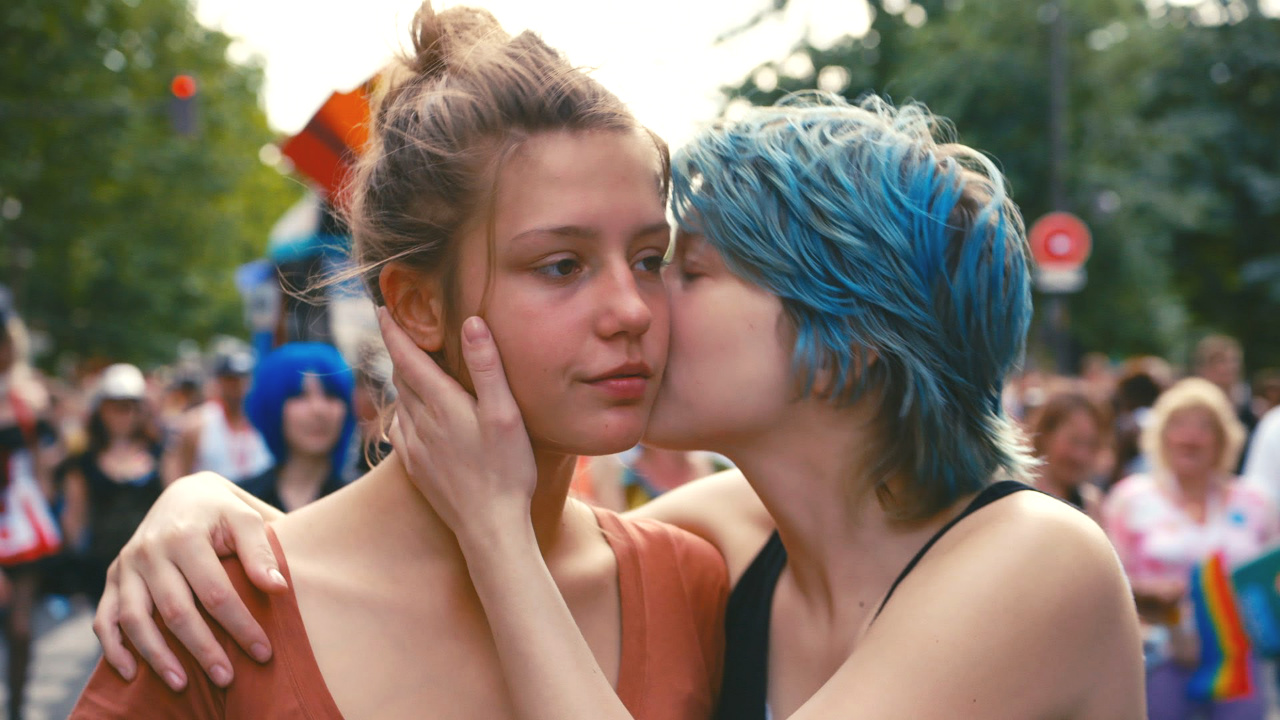
Blue Is The Warmest Color ( 2013 )
The Palme d’Or at 2013 Cannes film festival went to the epic and controversial erotic love story Blue Is the Warmest Colour. But the jury and its president, Steven Spielberg, insisted the prize should be accepted not only by the director, Franco-Tunisian film-maker Abdellatif Kechiche but also by his two young stars, Léa Seydoux and Adèle Exarchopoulos. Controversies came to the fore when the feature got its viewing in Europe in December when Seydoux and Exarchopoulos have since said he was oppressive, intrusive, and even tyrannical in the demands he made, especially in the extended explicit sex scene, which took fully 10 days to shoot.
In the Realm of the Senses (1976)
One expects raised eyebrows when making a movie about real-life sexual obsession—especially if it includes actual instances of actors getting it on. Nagisa Oshima had to ship his undeveloped film to France to avoid Japan’s censorship laws and controversial impositions; an American premiere at the New York Film Festival was aborted when authorities confiscated the film at the airport. Its violent, explicit scenes of lovemaking remain a how-far-can-you-go test of tolerance.
We’ll come back with another list to extend on this topic soon. Until then may the movies prevail. Controversial or not.
Frequently Asked Questions
Why was The Last Temptation of Christ so controversial?
Scorsese’s film faced global outrage for depicting Jesus imagining an alternative life with Mary Magdalene, including sexual content. The Vatican and Christian groups worldwide condemned it as blasphemous, leading to bans in several countries despite critical acclaim for William Dafoe’s performance.
Which controversial movies have won major film awards?
Several films discussed on this list have won prestigious awards including Palme d’Or and Oscars. These accolades demonstrate that critical and artistic merit often transcends controversy, with award bodies recognizing the filmmakers’ vision and technical excellence despite subject matter objections.
Are controversial movies banned in India?
India’s CBFC (Central Board of Film Certification) has banned or restricted several controversial international films. While some are available through edited versions or OTT platforms, others remain prohibited. Indian audiences often access these films through international streaming services or film festivals.
What makes a movie controversial versus simply explicit?
True controversial cinema challenges ideological, religious, or social beliefs through artistic storytelling—not merely shock value. These films provoke thought and discussion about society’s norms and values. Explicitness without purpose is different from controversial cinema that uses provocative content as a narrative tool.
Should Indian film enthusiasts watch controversial movies?
Understanding controversial cinema expands film appreciation and critical thinking. These works represent cinema’s artistic boundaries and historical evolution. Indian audiences interested in serious filmmaking benefit from exposure to diverse perspectives, though viewer discretion is essential based on personal comfort levels and maturity.
Disclosure: This article may contain affiliate links. VoxSpace may earn a small commission if you make a purchase through these links, at no additional cost to you. This does not influence our editorial opinions or reviews.
You Might Also Like
- The Most Controversial Movies Ever Made In The History Of Cinema (Part 2)
- [VoxSpace Life] The Poliu2019Tricksu2019 of BioPics - How Biopics Are Vying To Change The Political Narrative
- [VoxSpace Selects] Lakshmiu2019s NTR Review : RGV Shines In This Telling Of The Controversial Subject
- [VoxSpace Selects] Bollywood Food Scenes That Will Make You Hungry
- [VoxSpace Selects] 2018u2019s First Casualty : How Streaming Services Are Sharply Effecting The Number Of MovieGoers
- [VoxSpace Selects] The Lost Art Of Using 70mm Aperture For Motion Pictures
- [VoxSpace Selects] The Story Of Manu : Telugu Cinemau2019s First Major Crowdfunded Movie