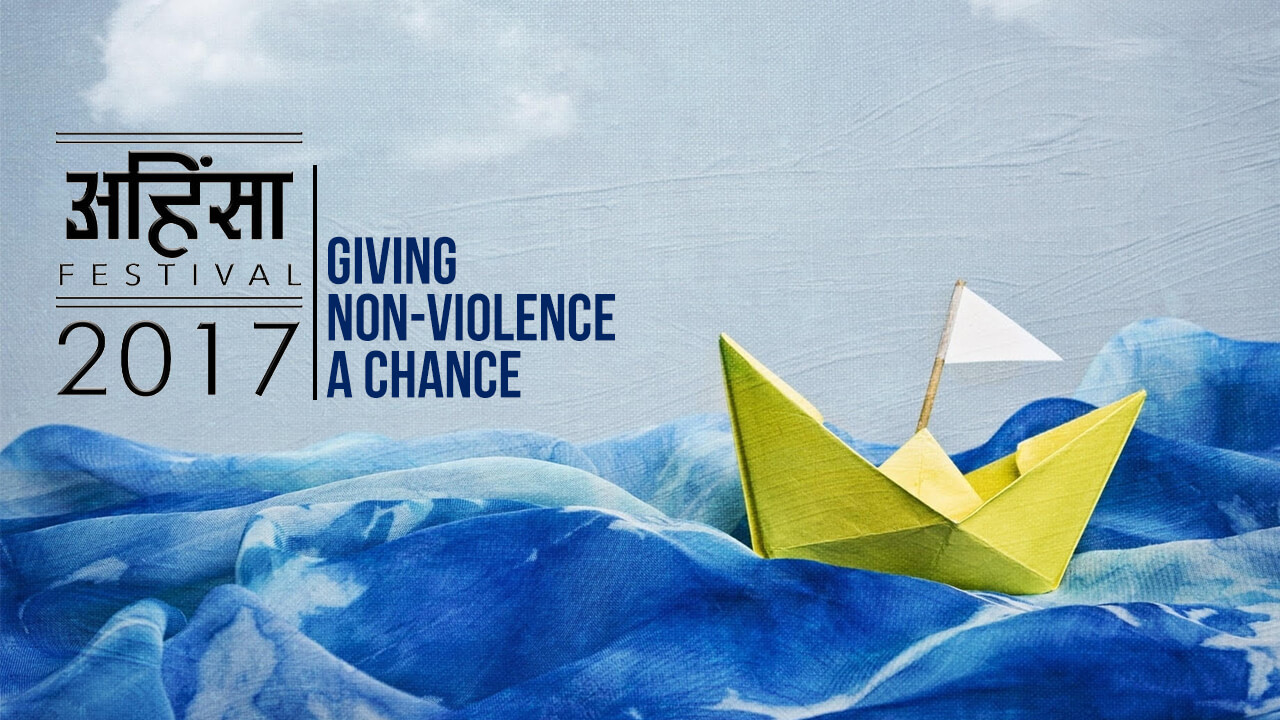
A decade on, the Ahinsa Festival's message against violence remains urgently relevant for contemporary Indian society grappling with conflict and discord.
The Meaning Of Ahinsa – Annulment Of Violence
“Resist tyranny wherever you find it, by all means, resist encroachment upon your liberty, but not by shedding the blood of the tyrant. This is not what is taught by our religion. Our Religion is based upon Ahimsa, which in its active form is nothing but love. Love not only your neighbours, not only your friends but love even to those who may be your enemies. The lover of the peace said ‘Do not kill the sinner. This will double the sins. Instead, fight against the sin with all your determination and strength.”
– Bharti Mazumder
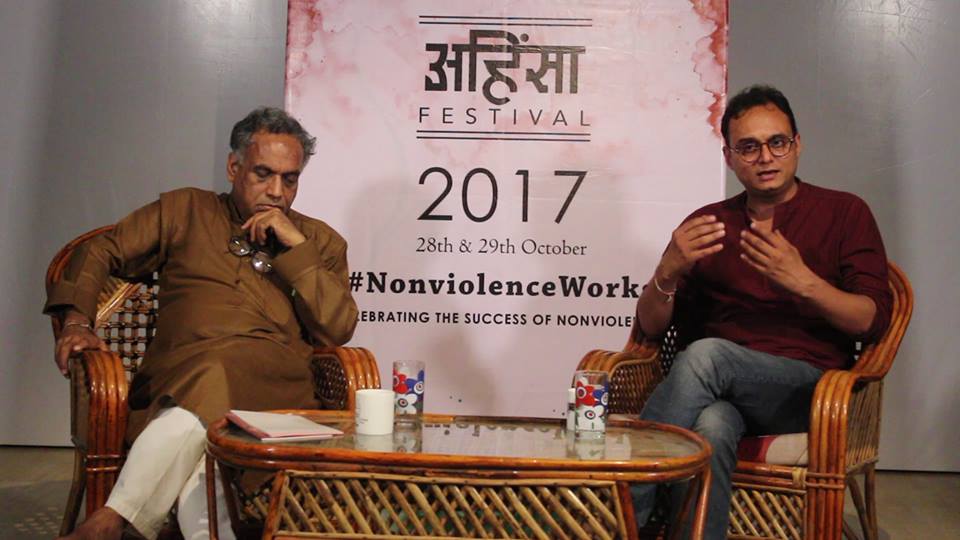
In the small city of Lucknow, some very big hearts and minds live. An organization called Bewajah, which is focused on making Art and different forms of it such as Dastangoi, Theatre, etc. more and more available to people, has been taking a step towards the reviving of the whole Non-Violence Movement, be it Individual Practice of it or Mass Practice. They are trying, to say the least. Joined hands with them are the National Movement Front with the likes of Mr Saurabh Bajpai and Prof. Salil Misra who have both been historians, avid readers and followers of the Gandhian perspectives and philosophy. They not just understand Gandhi but also dig down where he’s coming from and why in a world as messed up as today’s, only Non Violence could show us some light and bring us back peace.
Let’s Look At Why Violence Needs A Replacement At The Latest, Yeah?
1. It never solves the problem permanently. It is always either a temporary fix or either simply postpones the problem.
2. It causes loss. In cash. In kind. In lives. In humanity.
3. It causes anger. And that causes actions that are highly violent in nature.
Now let’s quickly look at why Non-Violence deserves a chance?
1. Mass movements will only be a success if carried out non-violently because we can only then really get together, bring a conflict up, face dissent, really talk things out together, be powerful, reach a consensus and then a conclusion.
2. Non-violence doesn’t question. It accepts.
3. “At the core of all anger, there is a need that is not being fulfilled.” How about we understand the need and fulfil it rather than just being angry in its face?
4. Drops the masks and the labels. See the human beings, shall we?
5. Not revenge. Not retribution. Not sadness. Not punishment. But the settlement, just settlement. Barabari.
The Cultural Exposition Of Non-Violence
So many “cultures”, so many superstitions, so many ideologies around us are violent in nature. Patriarchy. It doesn’t physically hit you in the face but isn’t it violent? But, of course, no blame game. There’s always a reason behind everything. Women themselves sometimes have been the foot soldiers of patriarchy. It’s a strong game and also a false one, which is the problem. When we obey because there is fear, violence prevails. Be it Direct, Structural or Cultural. A lot of violence has been so subtle that we do not believe it’s okay, or normal because it’s deeply embedded amongst us all. It’s all interrelated.
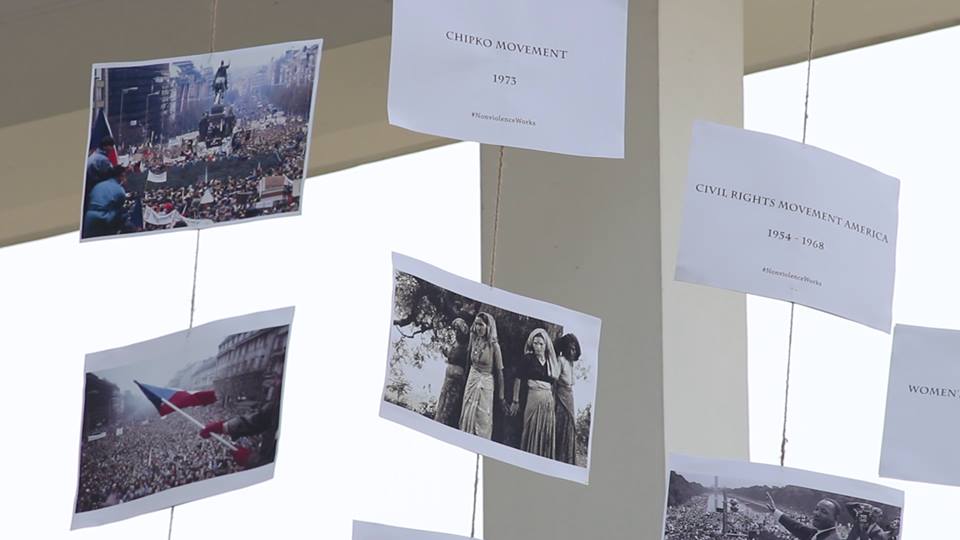
Violence may make a much louder noise but its impact is not as great. Not on the positive side at least. At the Ahinsa Festival, 2017 various theories from the past, incidents, case studies along with approaches were discussed that make Non Violence seem so much more important and I being a part of it myself was astonished to see there’s so much we’ve been missing on. Martin Luther King and Gandhi say it best but id just in case they bore you, there are documentaries, short films, TED talks, you name it, you Youtube it and you’ll have so much material to educate yourself with.
The Definition Of Violence Beyond The Physical Actions…
“Offer belonging, meaning and self-worth. Be encouraging. Understand.”
Also, now that we’re talking, let me also break down a few myths for you right here now,
1. Violence and abuse aren’t just physical. There’s emotional violence. There’s violence of thoughts. You might as well just take away an LGBTQ member’s right to marry whoever they want, without having literally touched them. It’s still violence. I mean, it’s Gender. Not a war, for God’s sake. It’s about genes, something that’s keeping a man from being a great human being is the idea of a gender being superior. If there’s a movement that lets a man be himself, why not? It favours him the most.
2. More than your actions, it’s your thoughts that are violent.
3. The root cause of all violence is a wish not fulfilled, fear, angst, regret. Yes, they’re your regular emotions, aren’t they?
4. Violence (physically), when used in self-defence, isn’t really violence.
Motive Vs Act – The Conundrum Of Violence
“Take away the motive and you take away the violence.”
The big words won’t make much sense to you right now because most of us don’t believe in the power that vests in us of changing the world. I wish we did, though. Because I do. I can change the world, one person at a time. I can change myself, to start with. More than changing the face of the nation, we can change how we perceive things. We can build our stamina and our patience. Non Violence doesn’t mean fear or weakness. Non-violence means more stamina, more perseverance. Everything you deal with punishments, you feel it is the best way out to, there is an equally good, possibly better way out, non-violent in nature that is good enough to fix the situation for the longer run. Best example. You think slapping a child will make him finish his homework? Maybe, yes. But will he learn anything from it? Nope. He’d probably hate you as a teacher as he grows up.
Unless you don’t punish him and try to talk him and get to the root of his laziness, him having no interest in studies? You know what I’m saying.. It’s just a better way out. Even issues as big as of Sexual Abuse can only be fixed in the longer run by Non-Violent Actions ONLY. Sexual abuse and rapes.. they can’t be fixed protest marches. A rapist will always be a rapist. Apparently, I’d like to believe that rapes aren’t even an issue of security. It is an issue of mentalities. And those must be worked on. If we really want the number of rapes and sexual abuse chapters to come down, we must start working on our children, to say the least. Teaching them and the rest of Good Touch, Bad Touch, Consent. Non Violent ways for the win, again!
Oh and also, Prof. Salil Mishra during one his talks at the Ahinsa Festival was asked “All of that is ok, but how will non-violence fight all the terrorism? All the bombs?” to which he effortlessly said, “But, how do you think violence will fix it? Or how do you think it has fixed it rather? Has it? It’s been given enough chances, you know. Groups are making terrorists faster than we can kill them. Shouldn’t there be a better way to deal with that?”
The Peace In Our Times – Violence Is Not The Better Way In Any Manner
Martin Luther King and his speeches are gold. They’re beautiful. Martin Luther King says you don’t only have to NOT hit a man, but you have to not even have to him to be able to hate him or want to hit him.
During the whole phase of British Imperialism and how it was ruining so much for the state of affairs, that man in a speech says to one of the armed men “Get off my back, so we can walk together.”
War Forgets Peace. Peace Forgives War
You know if it comes down to us alone, we can start being non-violent in nature from tomorrow itself. I know we live in a terrible state. But we’ve just gotta be a bit more patient. It’s tough but you’ve gotta do what you gotta do, yeah? You know that friend of yours you call a loser, a coward for being so calm and never getting into fights? He’s actually the strongest. Because he doesn’t let the nuisance, the violence get to his head, to his thoughts. Being violent is the easy way out. You just have zero control on your body. You feel angry, you take it out. Great. But feeling angry and still being non-violent takes so much perseverance, so much patience, you’ve no idea. Keeping your anger in control, knowing when to put it to use and how? It takes a hell lot of strength, my dear.
And I’d like to just end on something beautiful I heard during a short film screening in Ahinsa Festival:
“If you really do want change, don’t change chase the reason, move the heart too.”
Makes you think, doesn’t it? Being a part of Ahinsa Festival changed me a bit inside.
And the ones behind it, they’re ordinary people who just are going out of their ways to bring about a small change around them, through arts and literature.
You may follow The Bewajah Group On Facebook Here. Also, Check Out Their Website For More Compelling Stuff.
Frequently Asked Questions
What is Ahinsa and why is it important in Indian culture?
Ahinsa, meaning non-violence, is a fundamental principle in Indian philosophy rooted in Hinduism, Buddhism, and Jainism. It emphasizes compassion, peaceful resistance, and resolving conflicts without harming others. In contemporary times, ahimsa remains crucial for building a peaceful society and addressing violence through dialogue and understanding rather than retaliation.
Who organized the Ahinsa Festival 2017 in Lucknow?
The Ahinsa Festival 2017 was organized by Bewajah, an organization dedicated to promoting art forms like Dastangoi and theatre, alongside the National Movement Front. Notable historians and Gandhian scholars Mr. Saurabh Bajpai and Prof. Salil Misra contributed to the event, bringing academic rigor and philosophical depth to the celebration of non-violence.
How does Gandhi’s philosophy of non-violence apply to modern India?
Gandhi’s ahimsa teaches us to resist tyranny and injustice without shedding blood or perpetuating violence. In today’s polarized society, this philosophy advocates fighting against wrongdoing through determination and peaceful means. His approach to love—extending compassion even to enemies—offers a powerful alternative to cycles of violence and revenge in contemporary conflicts.
What role does art play in promoting non-violence according to Bewajah?
Bewajah uses diverse art forms including Dastangoi and theatre to make non-violence accessible to broader audiences. Through cultural expression, these mediums help revive the non-violence movement at both individual and mass levels, creating spaces for dialogue, reflection, and collective understanding of ahimsa’s relevance in contemporary society.
Why is the Ahinsa Festival significant for Lucknow and Indian audiences?
The Ahinsa Festival represents a conscious effort by Lucknow’s cultural leaders to revive Gandhi’s peace movement in a modern context. For Indian audiences, it serves as a reminder that non-violence remains the most effective path toward resolving societal tensions, promoting peace, and building a compassionate nation rooted in its own philosophical traditions.
Disclosure: This article may contain affiliate links. VoxSpace may earn a small commission if you make a purchase through these links, at no additional cost to you. This does not influence our editorial opinions or reviews.
You Might Also Like
- [VoxSpace Life] Desensitization Of Violence : Why I Don't Feel Shocked About Any Bombing Anywhere
- The Picture Of Humanity : A Spurned Lover In Chennai Burns His Girlfriend Alive By Pouring 5 Liters Of Petrol Over Her
- [VoxSpace Life] Raksha Bandhan : The Question Is - Do We Really Deserve A Celebration For It?
- [VoxSpace Review] Aravindha Sametha : Old Wine (With A Twist) In A New Bottle
- [VoxSpace Life] Mob Psychology : How Mobs Are Taking The Issue Of Honor Killing To The Cruelest Levels
- The Heart Wrenching Photography Series By Pakistani Photographer Rida Shah Holds A Mirror To Humanity
- 'To Avoid Beating..Dress Sexy..!' Says A Turkish Marriage Guide For Women



Comments are closed.