Nearly a decade later, Muhammad Ali's legacy as both boxer and poet continues to inspire athletes and artists across India and the world.
The Punching Lines Of Muhammad Ali
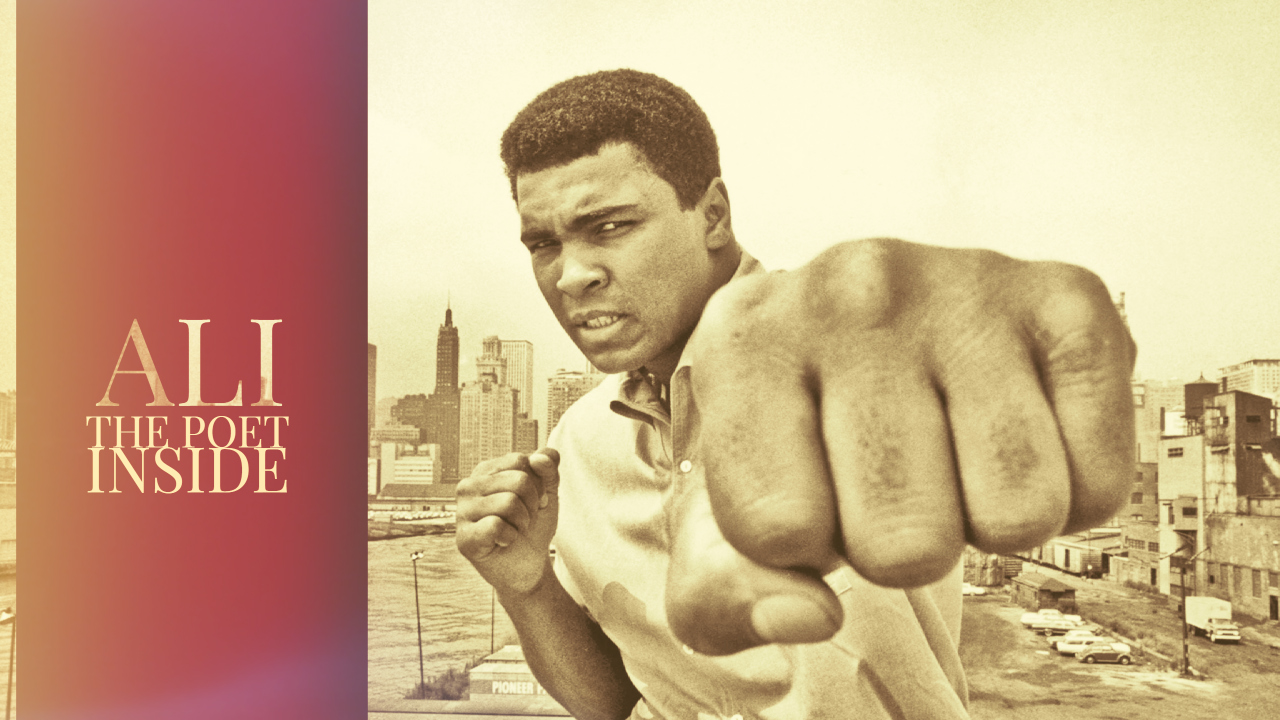
Hold on to your seat because this ride is going to be bumpy. Today is the birthday of the Cassius Clay; umm…nobody actually knows him by that name. The world knows him by Muhammad Ali, the man, who could talk and also back it up with his punches.
Now, the myth and the legend surrounding Ali is so vast that no matter what I write it is going to fall short. So, I am not going to talk about Ali’s life, his change of religion or how he succumbed to Parkinson’s disease at the very end. I am going to talk about his trash talking. Now, what is trash talking? Well, it is a tactic, often used by those involved in sports to intimidate their opponents and boy could Ali trash talk! He would often leave his competitions scratching their heads and wondering how to come back at him during a press conference or a meet.
Another peculiarity that Ali had was that he could speak in verses; so, it created quite a rhythmic movement, which added to his whole persona.
The Poetry Which Made Ali An Enigma
Now, we all know this line – “Float like a butterfly, sting like a bee;” however, most of us haven’t read the entire thing to see how Ali made up the rhythmic statements at the drop of the hat. For example, here is the entire verse –
“You think the world was shocked when Nixon resigned?
Wait ’til I whup George Foreman’s behind.
Float like a butterfly, sting like a bee.
His hand can’t hit what his eyes can’t see.
Now you see me, now you don’t.
George thinks he will, but I know he won’t.
I done wrestled with an alligator, I done tussled with a whale.
Only last week I murdered a rock, injured a stone, hospitalised a brick.
I’m so mean, I make medicine sick”
And this was Ali’s challenge to the then undisputed champion George Foreman, which resulted in the famous fight titled “Rumble in the Jungle.” It has since been etched as one of the significant sporting events in the history. Ali caused a major upset by defeating Foreman via knockout, sealing his name and living up to his boast of being “The Greatest.”
The Cassius Clay Days
Boasting and trash talking was something that was quite effective in the boxing world and is still now to a certain extent. Even before he started bragging that he was “The Greatest” and living up to it, he had earned the nickname “Louisville Lip” for his sharp tongue. His rhymes in his Cassius Clay days were hyperbolic. Thanks to the stars, he really turned out good; otherwise, those words would have sounded quite empty now.
“Everyone knew when I stepped in town,
I was the greatest fighter around.
A lot of people called me a clown,
But I am the one who called the round.
The people came to see a great fight,
But all I did was put out the light.
Never put your money against Cassius Clay,
For you will never have a lucky day.”
He had a vivid imagination or a premonition of how the entire thing would go down. Even if he was bluffing, he knew that if any of his lines actually takes place in the opponent’s mind, the battle would be half-won, as the audience, as well as his competitor, would trigger it in their subconscious.
“Now Clay swings with a right, what a beautiful swing.
And the punch raises the Bear clear out of the ring.
Liston is still rising, and the ref wears a frown.
For he can’t start counting ’til Sonny comes down.
Now Liston disappears from view.
The crowd is getting frantic,
But our radar stations have picked him up.
He’s somewhere over the Atlantic.
Who would have thought when they came to the fight. That they’d witness the launching of a human satellite.
Yes, the crowd did not dream when they lay down their money
That they would see a total eclipse of the Sonny.”
Look at the use of verbiage in the above verse – it is something that supports the entire intimidation tactic of Ali, using a lengthy description of the event. Meticulously picking his enemies’ defences gives his defence a solid footing even before the match starts. The battle is already half-won here.
Also, if you notice the terms that he uses are quite exceptional like “launching of a human satellite” or “total eclipse of the Sonny” ( a clever wordplay, putting in the knock out of the sun-ny feeling that Liston enjoyed as he was a more celebrated boxer at the time when the match took place)
Ali was not concerned about putting a blanket over his words; lest people thought that he was boastful or arrogant. His philosophy was to the point – “Braggin’ is when a person says something and can’t do it. I do what I say.”
Moreover, being humble is something that didn’t quite go well along with his nature; it is not that he didn’t try; it’s just that – “It’s hard to be humble when you’re as great as I am,” in Ali’s own words.
However, this was the persona that Ali carried to the outside world – the man made a myth around him, of being invincible, and by adding hard work into the mix he actually became all that he bragged about.
He understood the importance of doing that. “At home, I am a nice guy: but I don’t want the world to know. Humble people, I’ve found, don’t get very far,” Ali used to say.
Happy Birthday Champ and we agree with what you said – “I’m not the greatest, I’m the double greatest.”
Frequently Asked Questions
Who was Muhammad Ali before he changed his name?
Muhammad Ali was born Cassius Marcellus Clay Jr. in Louisville, Kentucky. He began his boxing career under his birth name, winning an Olympic gold medal in 1960 before eventually adopting the name Muhammad Ali after joining the Nation of Islam in 1964.
What was Muhammad Ali’s most famous quote?
Ali’s most iconic verse is “Float like a butterfly, sting like a bee,” coined during his 1964 heavyweight championship fight against Sonny Liston. This poetic phrase perfectly encapsulated his fighting style and became his signature catchphrase throughout his legendary boxing career.
Did Muhammad Ali really compose poetry and trash talk?
Yes, Ali was renowned for his quick wit and ability to create rhythmic verses on the spot. He used trash talking and poetic statements as psychological warfare against opponents, often leaving competitors speechless during press conferences and public appearances before fights.
How did Muhammad Ali’s trash talking affect his opponents?
Ali’s trash talking was a deliberate tactical strategy designed to intimidate and mentally destabilize opponents. His colorful language and rhythmic boasts created psychological pressure, forcing competitors to respond to his provocations rather than focus solely on their boxing strategy in the ring.
What happened to Muhammad Ali later in life?
Muhammad Ali was diagnosed with Parkinson’s disease in 1982, which gradually affected his mobility and speech. Despite his declining health, Ali remained an influential cultural icon, making occasional public appearances and continuing to inspire millions worldwide until his death in 2016.
Disclosure: This article may contain affiliate links. VoxSpace may earn a small commission if you make a purchase through these links, at no additional cost to you. This does not influence our editorial opinions or reviews.
You Might Also Like
- [VoxSpace Life] The Magic Of Mayong : The Story Of The Black Magic Capital Of India
- [VoxPix Selects] Hyderabad In A Blink- Celebrating All The Glorious Existence Of The City
- Thank you, Nag Ashwin! Your Musings On Savitri Has Taught Us How To Embrace Everything Life Gives Us, Royally!!
- [VoxSpace Selects] Rajasekhar Mamidanna : Hyderabad Comicu2019s Version Of The Epic u2018Ramayanu2019
- This Video Of Piyush Mishra Talking About Alcoholism Is Amazing And Needs To Be Watched..!!
- [VoxSpace Selects] The Ramleela Rap By Transgenders : You Don't Need To Be Preachy To Be Sensitive
- [VoxSpace Selects] #PrayForNesamani u2013 The Vadivelu Meme Storms The Internet