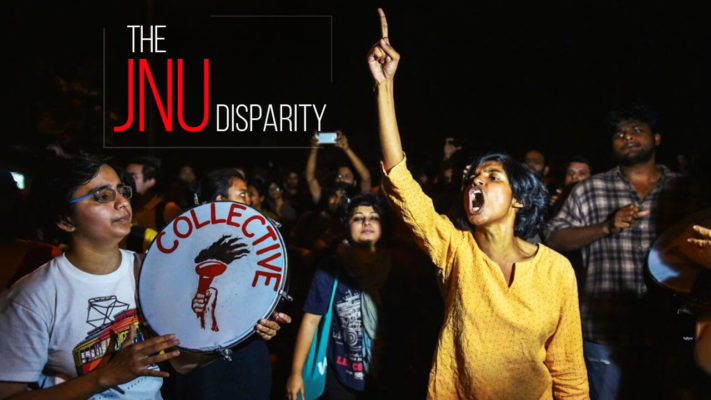
Seven years later, the JNU sexual harassment case remains a stark reminder of how institutional power shields accused perpetrators from accountability.
Key Takeaway
The Atul Johri case exemplifies how institutional hierarchies, political patronage, and administrative complacency combine to undermine gender justice in Indian higher education, leaving survivors without meaningful accountability.
Gender Disparity At It’s Peak In JNU
Gender is one of the areas which has been grossly neglected by the Indian society throughout history. The gender disparity can easily be seen in the population ratio where there are only 940 females per thousand males. On top of that only 65.46 % of the female population is literate, which fares poorly as compared to male literacy rate which is 82.14%. The number of women doing jobs dropped to 27% in 2014 from 34% in 1999. Due to the patriarchal notions prevailing in the society which blames women for any act of sexual harassment perpetrated by males, women find it increasingly difficult to lodge their complaints. This can be easily seen in the case of Atul Johri- a professor in JNU on which 8 complainants have filed sexual harassment charges. In spite of huge protests by students and women organizations, the JNU administration has not yet suspended Mr Johri. The Delhi Police has also played a dubious role by showing complacency in filing an FIR and later not asking for the remand of Mr Johri in court. Mr Atul Johri was shockingly granted bail within 82 minutes of his arrest despite non-bailable charges labelled against him. It is noteworthy that Atul Johri is a close aide of the BJP/RSS and has been at the forefront in the propagation of Saffronisation of education in JNU.
https://www.youtube.com/watch?v=dGEWgx5jC2M
The BJP’s Stand On Gender
“A woman doesn’t need Independence, but needs to be protected and channelized.” – Yogi Adityanath, CM of UP. This statement pretty much sums up the understanding of BJP on gender. With its narrative of Hindu pride and efforts of distorting history, the RSS led BJP’s well-stated agenda is to convert India into a Hindu Rashtra. The ideals of this Hindu Rashtra would be based on the ancient Golden era of Hinduism during the Guptas and other Hindu rulers. This ideology is not only backwards-looking but also threatens to undermine the independence of women. The practical manifestation of this regressive ideology is being witnessed in the form of ‘ Anti Romeo Squads’ which places the security of women in the hands of vigilante groups who often harass consenting adult couples in the name of safeguarding Indian culture and traditions.
Dismantling Of GSCASH
The brunt of RSS ideology is being felt in all academic institutions including JNU. Last year witnessed the scrapping up of GSCASH(Gender Sensitization Committee Against Sexual Harassment) in a unilateral move by the JNU administration. This diktat was vociferously opposed by the JNU student community which held the scheduled GSCASH elections despite provocations and muscle flexing by the JNU admin. The administration sought to replace GSCASH with ICC(Internal Complaints Committee) which enables the VC to nominate its members including student representatives. In contrast, the student representatives of GSCASH are chosen in a democratic manner through elections. The GSCASH was established in JNU in the year 1999 on the guidelines of Vishaka Judgement of the Supreme Court. Apart from dealing with complaints of sexual harassment, the GSCASH also organizes gender sensitization activities across the campus. The GSCASH had psychiatrists, doctors, lawyers and gender activists in its panel who helped the complainants at every step of lodging their complaints.
Efforts To Shield Mr Atul Johri By His Aides
The ICC which consists of members, handpicked by the JNU VC, has clearly failed to fit into the shoes of the GSCASH. It did not issue any restraint order which would have prevented the accused from trying to pressurize the complainants into withdrawing their complaints. Instead, a social media tirade was launched against the complainants which were aimed towards shielding Atul Johri. It was alleged that the complainants were part of a political ploy in order to eliminate Mr Johri. The complainants later smashed this conspiracy theory by bringing out a press statement stating that many of them were registered ABVP members.
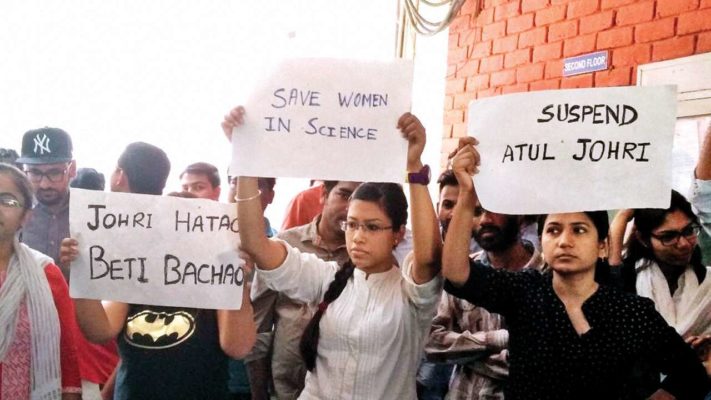
It has been an established practice to resort to victim blaming when women try to raise their voices against sexual harassment. In a recent tv interview, the identity of one of the complainants was disclosed by the lawyer of Mr Johri. This was one of the many attempts by Mr Johri and his aides to force the complainants to withdraw their complaint. The situation is aggravated by the fact that Mr Johri continues to be the supervisor of these complainants. The suspension of Atul Johri is a prerequisite in order to ensure a free and fair enquiry. The JNU administration has turned a blind eye to these demands of the students. As the protest of the JNU students against gender discrimination continues it is the responsibility of all progressive citizens of India to ensure that Mr Atul Johri does not escape the claws of Justice.
https://www.youtube.com/watch?v=Ob_5XEwNbUI
Frequently Asked Questions
Who is Atul Johri and what are the sexual harassment charges against him?
Atul Johri is a JNU professor who faced eight sexual harassment complaints from women students and staff members. Despite serious allegations and widespread protests, the JNU administration refused to suspend him, demonstrating institutional protection of the accused.
Why was Atul Johri granted bail so quickly?
Johri was granted bail within 82 minutes despite non-bailable charges, raising serious questions about judicial bias and police complacency. His alleged connections to BJP/RSS leadership and the political protection he received significantly influenced the rapid bail decision.
What role did the Delhi Police play in the Atul Johri case?
Delhi Police demonstrated clear complacency by delaying FIR registration and avoiding bail opposition in court proceedings. This dubious conduct allowed an accused perpetrator of alleged sexual harassment to escape accountability through procedural negligence.
How has gender disparity affected women’s safety in Indian institutions?
With only 940 females per 1000 males and patriarchal societal norms, Indian women face significant barriers reporting sexual harassment. Institutional inaction in cases like Johri’s reinforces victim silence and perpetuates gender-based injustice across academic settings.
What is Saffronisation of education and how does it relate to this case?
Saffronisation refers to introducing right-wing ideology into educational curricula. Atul Johri’s role in promoting this agenda at JNU, combined with his political connections, allegedly influenced institutional protection and weakened accountability mechanisms against him.
Disclosure: This article may contain affiliate links. VoxSpace may earn a small commission if you make a purchase through these links, at no additional cost to you. This does not influence our editorial opinions or reviews.
You Might Also Like
- [VoxSpace Exclusive] UoH Administration's Political Bias Getting More Evident?
- [VoxSpace Exclusive] Chaos Ensues In University Of Hyderabad - Is Crushing Dissent And Patriarchy The Way Ahead?
- [VoxSpace Life] The Need To Introduce Gender Sensitization Classes In Educational Institutes
- [VoxSpace Exclusive] Student Protests In NLIU, Bhopal : A Demand For Transparency In Examinations
- A Slap In The Face Of Justice : Sreejith's Unwavering Fight For 765 Days To Seek Answers For His Brother's Death
- Watch The Brand New Full Length Trailer Of Justice League - The Heroes Come In All Ways
- In A Historical Verdict The Supreme Court Abolishes Section 377















Comments are closed.