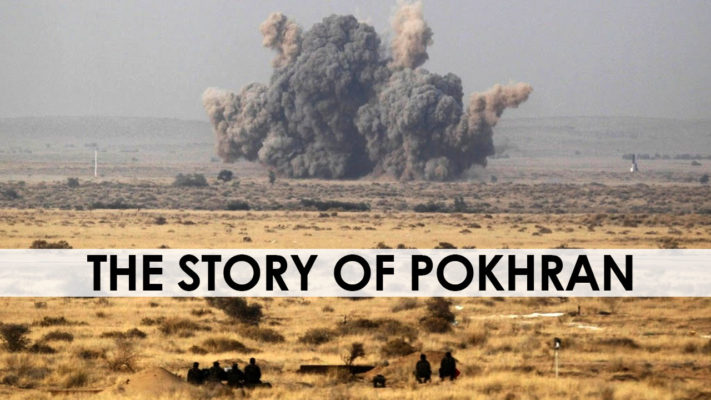
Nearly three decades later, Operation Shakti remains a defining moment in India's journey toward strategic autonomy and technological self-reliance.
Key Takeaway
Operation Shakti (Pokhran 1998) marked India’s successful transformation into a nuclear state despite international surveillance and technological embargoes. Through meticulous planning and strategic secrecy, India demonstrated its capability to develop indigenous nuclear technology, fundamentally altering its geopolitical position and establishing itself as a credible nuclear deterrent in South Asia.
Post Independence Woes
After 1947, The American and Canadian Imperialistic sanctions against India, loss of territory in the Indo-China war and state-sponsored terrorism from Pakistan, and Russia turning out to be an unreliable ally in the hour of the crisis had pushed India to develop indigenous tools and technology for her security. The domestic nuclear technology is the brainchild of Homi Bhabha in Indira Gandhi regime when he began persuading the Indian Congress to nurture the harness of Nuclear Energy in 1944. India faced international criticism for trying to develop and test nuclear technology, it was thoroughly monitored for any nuclear activity and the program eventually was crippled due to the technological embargo imposed by USA and Canada. And this is where the story of Pokhran starts.
After the 1998 general election, the then Prime Minister Atal Bihari Vajpayee rekindled the hope to develop nuclear technology. The Department of Atomic Energy officials Mr R.Chidambaram briefed the Prime Minister on nuclear options and Dr Abdul Kalam presented the status of missile program. On 28th March 1998, Scientists were asked by the PMO to make preparations for the tests in Pokhran, developing the first nuclear weapon and the event is famously known as Operation Shakti.
The Itinerary Of Shakti
Operation Shakti consisted of five detonations of one fusion bomb and four fission bombs and in two groups. Group 1 consisted of 3 nuclear devices (Shakti I, Shakti II, Shakti III) and Group 2 consists of 2 nuclear devices (Shakti IV and Shakti V). Unlike Pakistan’s nuclear weapon testing laboratories in Baluchistan, the bushes in Thar desert were scattered and the sand dunes didn’t provide cover from the spy satellites of USA. President Clinton’s administration had deployed 4 powerful satellites to monitor India’s activity at the testing site in Pokhran.
The satellites were the best of the kind and could snap photographs of the wristwatch of an Indian soldier and read out the time in Pokhran. After the success of Smiling Buddha aka Pokhran I, India’s debut in testing nuclear technology in 1974, USA under the foreign policy imposed strict rules and surveillance by preliminary observation using high-resolution photos and electronic eavesdropping satellites, which recorded the increasing activity of any thermonuclear device. Operation Shakti is a sequel to Operation Smiling Buddha and that is why it is famously known as Pokhran II.

Spy Satellites
The reconnaissance satellite or spy satellite is an Earth Observation and Communications Satellite deployed for military or intelligence applications. It can render high definition photographs of the earth with the minute details. Major types of recon satellite about nuclear powers have applications like an early warning of incoming missiles, Imaging of earth from space, Intercepting Signals, Radar Imaging and Nuclear Explosion Detection. Nuclear Measurement and Signature Intelligence (MASINT) was one such mission of an American Spy satellite over India’s nuclear program in Pokhran. The 58th Engineer Regiment of Indian Army’s Corps of Engineers were successful in by-passing this state of the underground nuclear art technology.

The 58th Engineer Regiment
The 58th Engineer Regiment are Combat Engineers who provide mobility to the forces, by the provision of Military Engineer Services, like the construction of roads, bridges, helipads and, highways and helps combat forces by damaging enemy infrastructure. Colonel Gopal Kaushik headed the regiment and supervised the test preparation, and ordered his men to ensure complete secrecy. Col Kaushik’s men had learned the movement and functioning of the American spy satellites from 1995 and sketched plans accordingly. Work was done in the night and the equipment was moved back to their regional position when the satellites weren’t hovering over India or South Asia.
The Planning
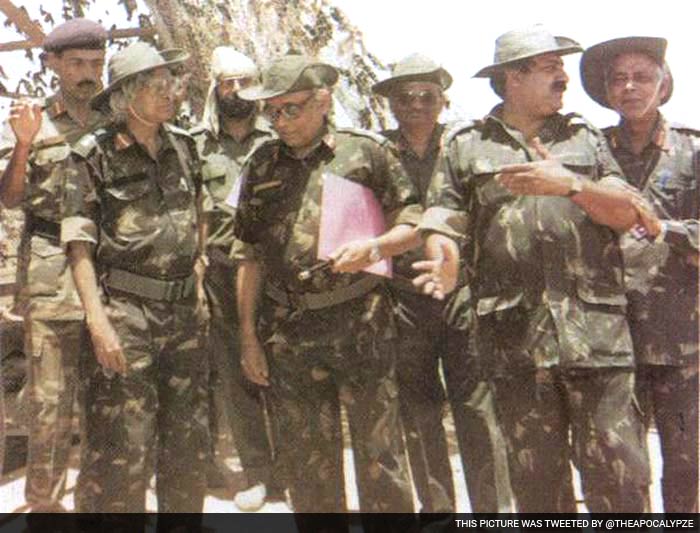
Extensive planning and defining the pokhran test range was done by a very small group of scientists, senior military officers and, senior politicians to ensure that the test preparations would remain a secret, and even senior members of the Indian Government didn’t know what was going on. Bomb shafts were dug under camouflage netting and the dug-out sand was shaped like sand dunes. Cables for sensors were covered with sand and concealed using native vegetation. Scientists would not depart for Pokhran in groups of two or three. They were transported by the army and travelled under pseudonyms. Technical staff at the test range wore the military uniform to prevent detection.
The Deception
Central Intelligence Agency (CIA) has always boasted of its “Human Intelligence”, a team of agents used to sneak into the power corridors of New Delhi to access the sensitive information. The Indian Government left no stone unturned to maintain complete secrecy from them. New communication pattern was designed using metaphors and encrypted phrases to monitor Operation Shakti. For instance, Bunkers to assemble bombs is called “Prayer Hall”, shaft used for the test is called “Kumbhakaran”, generators supplied power to the range is called “Farm House” and, control room to trigger devices is called “Deer Park”. All forms of communication in an encrypted language and the test area was made up in such a way that nothing happened there and equipment was never moved. No wonder CIA described Pokhran II as “Intelligence failure of the decade”.
The Detonation
Three labs of DRDO were responsible for preparation of the bombs. They transported them to Jaisalmer Army Base from Mumbai Airport in an Indian Airforce AN-32 plane under the command of Colonel Umang Kapur. They were then transported to Pokhran in four army trucks to the building “ Prayer Hall “ and this took three trips. Testing depended on the local weather conditions. By early afternoon, the winds had died down and the test sequence was initiated.
Dr K. Santhanam of the DRDO, in charge of the test site preparations, gave the two keys that activated the test countdown to Dr M. Vasudev, the range safety officer, who was responsible for verifying that all test indicators were normal. After checking the indicators, Vasudev handed one key each to a representative of BARC and the DRDO, who unlocked the countdown for the nuclear bomb system together. On 11th May at 3:45 pm IST the three devices of group 1 were detonated and on 13th May at 12.21 pm IST two devices of group 2 were detonated.

The Aftermath
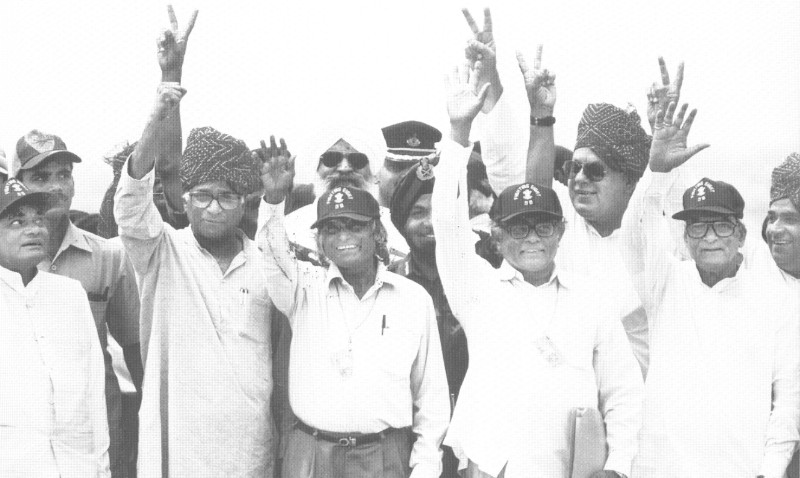
India became the sixth country to join the nuclear club, after the successful tests of Pokhran II. India stunned the world by pulling off such a big feat in a short amount of time by outsmarting the head of American spy satellites. United States of America, Canada and, Japan withdrew all economic grants from India, except the humanitarian aid. However, U.K, France and, Russia refrained from condemning India. China and Pakistan expressed their shock over India’s nuclear tests and portrayed it as “threat” to them and expressed their concern over escalating tensions across the borders. The people of India were elated about the success of the nuclear tests and it earned large-scale approval from all sections of India. The Bombay Stock Exchange earned significant gains and editorials sung the praises of the Indian Government for the gutsy decision.
Frequently Asked Questions
What was Operation Shakti and when did it happen?
Operation Shakti was India’s nuclear weapons test conducted in May 1998 at Pokhran in Rajasthan. It consisted of five detonations—one fusion bomb and four fission bombs—conducted in two groups. This marked India’s transformation into a declared nuclear weapons state under PM Atal Bihari Vajpayee’s government.
How did India hide the Pokhran nuclear tests from US satellites?
India employed sophisticated deception strategies including disinformation, using civilian infrastructure to mask preparations, and conducting tests during periods of reduced satellite surveillance. The operation maintained absolute secrecy at the highest levels, with only essential personnel aware of the test schedule and location details.
Who were the key figures behind Operation Shakti?
Prime Minister Atal Bihari Vajpayee initiated the project. Key officials included R. Chidambaram from the Department of Atomic Energy who briefed the PM on nuclear options, and Dr. Abdul Kalam who presented the missile program status. Scientists from BARC and other institutions executed the actual testing.
Why did India need to develop nuclear weapons in 1998?
Post-Independence, India faced multiple security threats including American and Canadian sanctions, loss in the Indo-China war, Pakistan-sponsored terrorism, and unreliable Russian support. Developing indigenous nuclear technology became essential for national security and to establish India as a credible deterrent in South Asia.
What was the international reaction to Pokhran tests?
The international community, particularly the USA and Western nations, strongly criticized India’s nuclear tests. Economic sanctions were imposed, but India’s strategic independence and demonstrated technological capability garnered respect in the region. The tests established India as a nuclear power and altered South Asian geopolitics significantly.
Disclosure: This article may contain affiliate links. VoxSpace may earn a small commission if you make a purchase through these links, at no additional cost to you. This does not influence our editorial opinions or reviews.
You Might Also Like
- A Slap In The Face Of Justice : Sreejith's Unwavering Fight For 765 Days To Seek Answers For His Brother's Death
- Pragati Nivedana Sabha Of TRS : Of Delhi Supremacy, Federal Front And The Snippet Of Telangana's Future
- [VoxSpace Life] Hanan Hamid : Girl Who Sells Fish After College Warms Hearts, But Divides Society
- [VoxSpace Selects] Review Of Half Widow : An Empathetic Ode to The Victims of War
- Review Of Story Discussion Season 2: A Rewarding Experience For Cinephiles
- Uttar Pradesh : Father, Brother And Uncles Rape A Woman For Having Eloped With Her Boyfriend
- The Nagaland Floods : As The State Reels Under Catastrophe It Remains Neglected Even Now












Comments are closed.