Eight years on, Bangladesh's Eco-Cooler remains a crucial blueprint for sustainable cooling as India grapples with rising temperatures and energy demands.
Key Takeaway
The Eco-Cooler represents a game-changing approach to combating global warming in resource-limited regions. By converting discarded plastic bottles into an effective cooling device, it addresses two critical issues: rising temperatures and electricity scarcity—a solution particularly vital for India’s urban poor and rural communities.
Global warming is showing its fangs this time around. World nations right now are brainstorming methods to bring sustainable energy sources to meet the demands of rising temperatures. With scorching heat across the globe and lack of electricity in the third world nations already a bleak reality, the future looks in bad shape. We need solutions to overcome this heat, and we need them now. One can safely assume that households in our part of the world, will see a furious shoot-up in their electricity bills this year. The situation is even contrasting when we see at the distribution of the population. While the urban population resorts to air-conditioning to escape the heat wave, the poor clamour for shade in various confinements. Most parts of the nation depend on just one single device, a cooler, to bring them the relief. But even that can burn electricity. Then how?

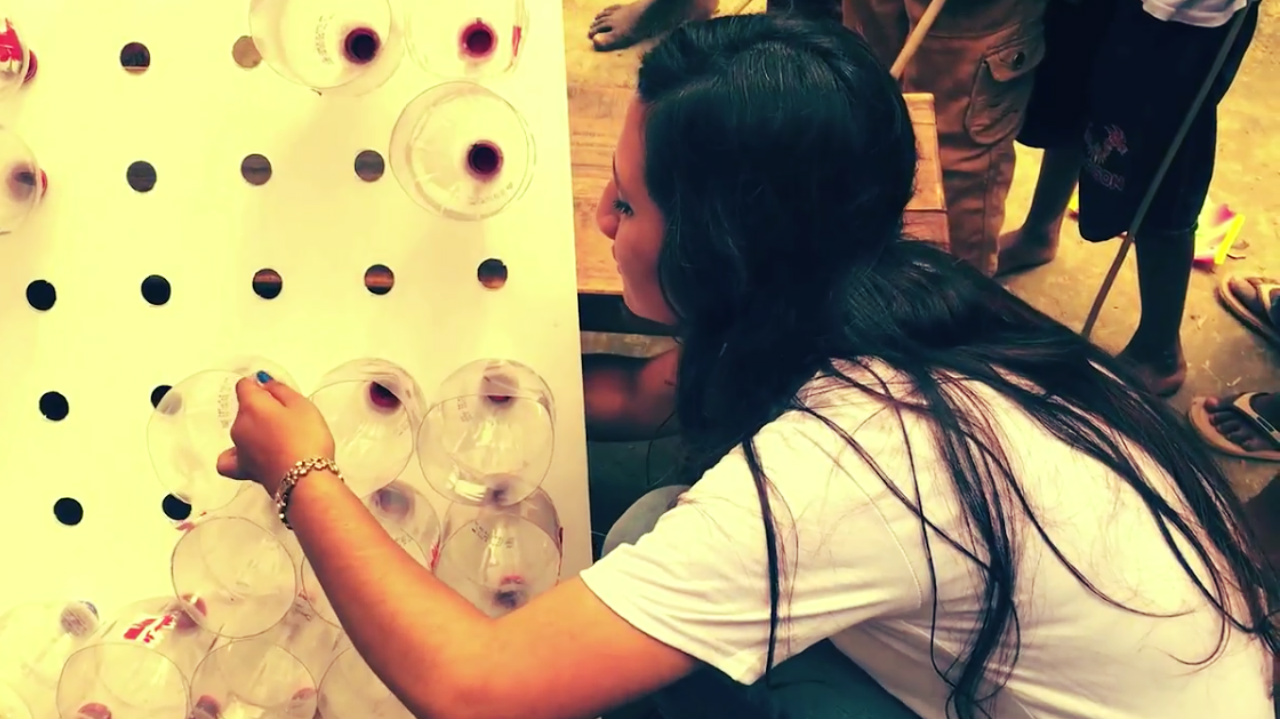
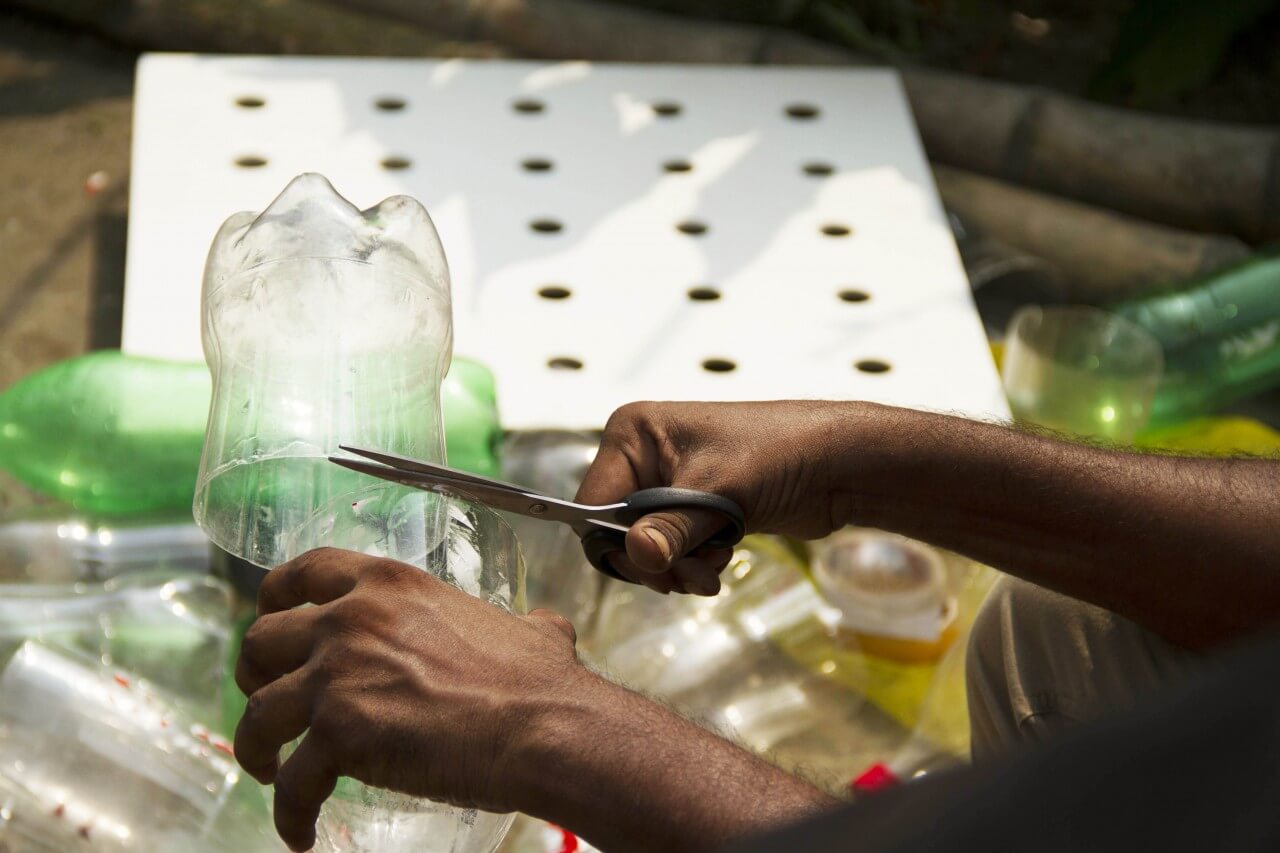
Enter Eco Cooler. Grey Dhaka, the Bangladesh wing of New York-based advertising agency Grey, in collaboration with Grameen Intel Social Business Limited (a Dhaka-based IT company), has introduced the ‘Eco-Cooler’, a cooling device that can run without electricity. It’s nothing but a grid made from the half cut out plastic bottles, which can be placed in windows. Hot air enters the open end of the bottle and gets compressed in the bottle’s neck, making it cooler before it passes into the room.
https://youtu.be/oSbZWNk84F4
According to the video (above), the cooler can reduce the temperature in a room by five-degree celsius. The device is the brainchild of a partnership between the advertising agency Grey Bangladesh and Grameen Intel Social Business, a Dhaka-based “social business Information Technology company”. “After initial tests, blueprints of the Eco-Cooler were put up online for everyone to download for free. Raw materials are easily available, therefore, making Eco-Coolers a cost-effective and environmentally-friendly solution”, says Syed Gousul Alam Shaon, managing partner and chief creative officer at Grey Dhaka.
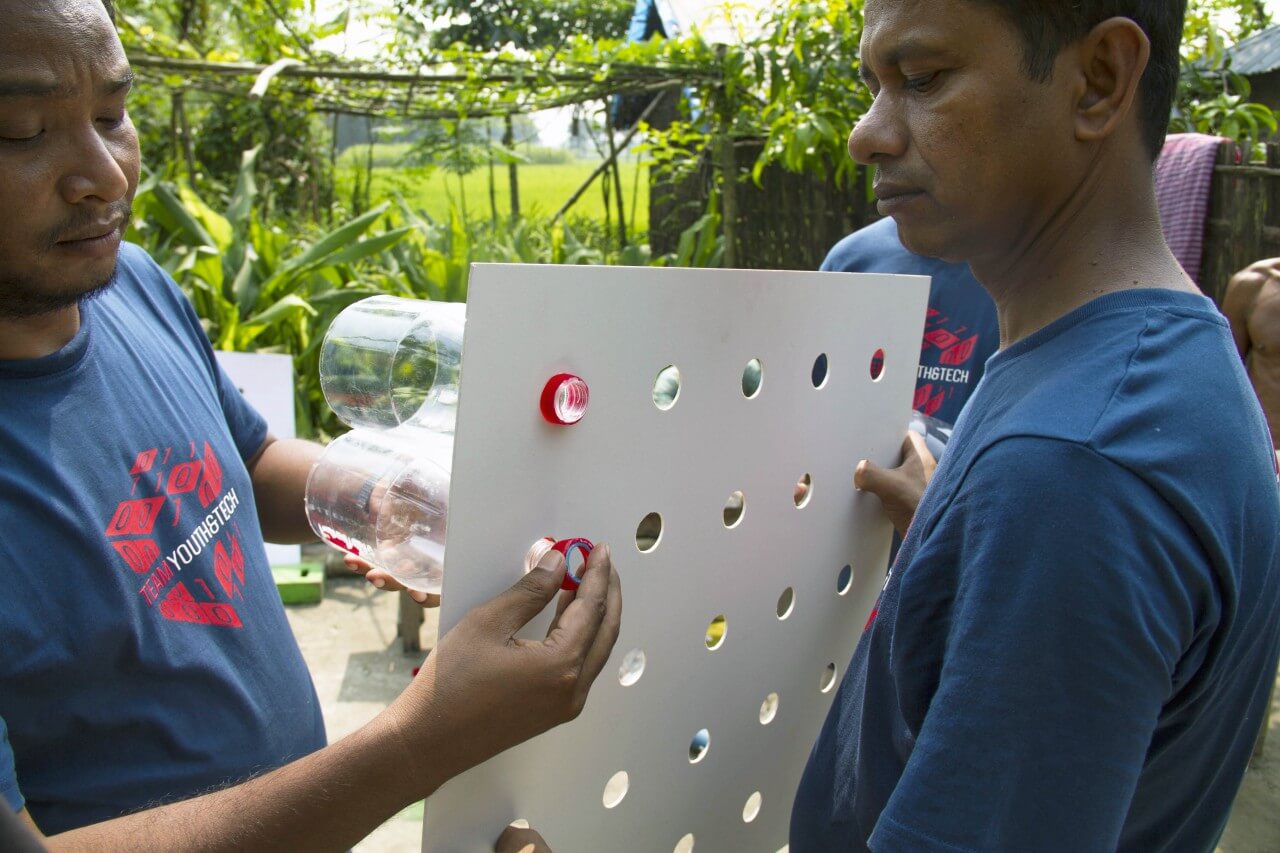
The Eco-Cooler works better for houses which are made with corrugated tins. Since most of the houses in Bangladesh are made in this way, the cooler works miracles for them. Even India can endorse this technology in the rural sections of the country, given that most of our rural house-structures echo the corrugated tin houses of Bangladesh. The idea brings a hope to not only the Asian heat zones, but to the entire world. Innovation exists and persists.
(With Inputs from : YourStory/Scroll/TheWeek)
Frequently Asked Questions
How does Bangladesh’s Eco-Cooler work without electricity?
The Eco-Cooler uses a grid made from half-cut plastic bottles installed in windows. Hot air enters the open bottle end, gets compressed in the bottle’s narrow neck, and cools before entering the room. This passive cooling mechanism requires zero electricity, making it ideal for resource-limited areas.
Can the Eco-Cooler reduce room temperature effectively?
Yes, according to Grey Dhaka’s tests, the Eco-Cooler can reduce room temperature by up to five degrees Celsius. While modest, this significant cooling effect provides substantial relief during heat waves without consuming any electricity or running costs.
Is the Eco-Cooler suitable for Indian households?
Absolutely. India’s poor and middle-class households struggling with electricity bills and heat waves can greatly benefit. The device uses recycled plastic bottles, making it cost-effective, environmentally friendly, and adaptable to India’s diverse climate zones and building structures.
What materials are needed to build an Eco-Cooler?
The Eco-Cooler primarily requires plastic bottles (commonly available waste), basic tools for cutting, and a frame structure to hold the bottles in a window. This minimal material requirement makes it affordable and accessible for communities across Asia facing electricity and heat challenges.
Who created the Eco-Cooler innovation?
Grey Dhaka, the Bangladesh division of New York-based advertising agency Grey, collaborated with Grameen Intel Social Business Limited (a Dhaka-based IT company) to develop the Eco-Cooler. This partnership exemplifies how creative thinking can address global warming sustainably.
Disclosure: This article may contain affiliate links. VoxSpace may earn a small commission if you make a purchase through these links, at no additional cost to you. This does not influence our editorial opinions or reviews.
You Might Also Like
- [VoxSpace Life] Teen Burned To Death For Reporting Sexual Harassment
- The Borderlands : Border Stories Beyond Military And Diplomatic Relationships
- [VoxSpace Life] Rohayl Varind's Slum School : An Endeavour Par Excellence For A Future In Pakistan
- [VoxSpace Life] Degradation In Our Print And Media Journalistic Standards
- Hercules : The Curious Case Of A Serial Killer Hunting Down Rapists
- Uber Just Revamped Everything In Its App And It's Cooler Than Ever
- [VoxSpace Life] SAD In The Summer : Reverse Seasonal Affective Disorder













Comments are closed.