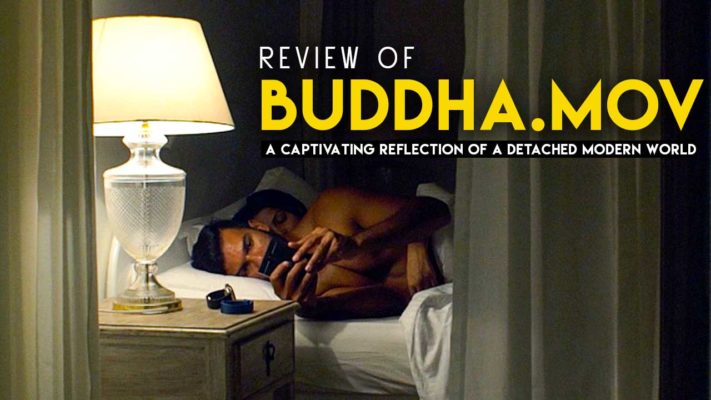
Years after its 2019 release, Buddha.Mov remains a landmark example of experimental Indian cinema that challenges documentary conventions.
VoxSpace Verdict
Buddha.Mov is a fearless deconstruction of the documentary form that refuses easy categorization. Kabir Mehta’s experimental approach—blending static frames with social media intrusions—creates a hypnotic portrait of hypermasculinity and modern excess. Essential viewing for anyone interested in form-breaking Indian cinema.
A Skewed Look Into The Life Of A Hyper-Masculine Cricketer
After watching Buddha.Mov, I was so perplexed and fascinated that I could not stop myself from thinking about it. So, the most obvious thing to do was to find out who this person was, that literally left me speechless. A lot of Indian film-makers have been winning a lot of international awards, films like these allow them to experiment more. While most filmmakers are dealing with new kinds of stories, there are a few who are going further & playing with the medium itself. Kabir Mehta is one such filmmaker. His docu-fictional short film, Sadhu in Bombay, won multiple top awards at various international film festivals like EMAF and Annual German Film & Media Festival.
Buddha – A Ballsy Attempt
In his latest feature, he turns his eye towards a hypermasculine cocksure goan cricketer Buddhadev Mangaldas and follows him for a brief period of his life. I have struggled hard to categorise the film because I don’t know if it is a documentary or fiction or both or neither. It defies any kind of categorization. For the first almost wordless 10-minutes of the film, we just see the subject going through his routine. This sequence is mostly just shot in static symmetrically composed frames, then it slowly transitions into a cross-media exercise by introducing social media into the mix.
You Need To See It To Believe It
The film goes on to follow him as he lives his colourful life filled with women, expensive cars, swanky clubs and a beautiful mansion. As we go further and further into the film, the more meta it gets. We are puzzled as to why the subject would allow anyone to have that much access into his own life. The film just doesn’t imply the intimate moments in his life, it shows it to us. We actually see him fuck these women, be naked in his bathtub and even his mom looking at him courting these women. At a certain point in the film, we even see him seeing the film about himself. The natural sceptical part of your brain cannot comprehend the gullible nature of Buddha. I spent hours going through his social media footprint to just accept he exists and this film has to be at least partially real.
Taking Experimentation With Form To New Heights
The film is constantly questioning you if ‘you believe what you are watching’ or ‘you want to believe it because you are watching it’. This constantly keeps you engaged not just with the subject and his daily activities, but asks you decipher how much of it is staged and how much of it is documentation. This kind of experimentation is rare and almost insane (in a good way), I would say. It expects the audience to pay attention, not just to the narrative, but to the constantly shifting intentions and motives of the film-maker and the subject. The film gets so referential by the end that we actually see the desktop of the filmmaker, in which he is editing the film.
https://www.youtube.com/watch?v=Cgd1ctgNE4g
Interesting Mix Of Edgy Content And Technique
It closely reminded me of a couple of films, Gummo (Harmony Korine) and Somewhere (Sofia Coppola). While they never really went as far as Mehta does, the idea of observation being the intent of the piece was interesting. As he says in his own words, “I was exploring the grey zone between reality and fiction and essentially making a film about filmmaking, interesting mix of edgy content and technique.”
I would not say that it is a good film, because it is not aiming to be. But it is an unendingly interesting film, that keeps you glued to the screen for its 65-minute runtime. If you are interested in watching a film that wants to question the difference between reality and fiction, please don’t miss this film.
“Through the lens of a camera, every moment is as fictional as something fabricated & conversely as authentic as a documentary” – Kabir Mehta
Frequently Asked Questions
What is Buddha.Mov about?
Buddha.Mov is a docu-fictional short film by Kabir Mehta that follows Buddhadev Mangaldas, a hypermasculine Goan cricketer, through his daily routine and lavish lifestyle. The film blends documentary realism with fictional elements and social media aesthetics, creating a genre-defying portrait of contemporary excess and masculine performance.
Is Buddha.Mov a documentary or fiction?
Buddha.Mov deliberately defies categorization, blending documentary and fictional elements seamlessly. The film employs static symmetrical frames, wordless sequences, and cross-media techniques that make it impossible to classify as purely documentary or fiction, making it a deliberately ambiguous work.
Who is director Kabir Mehta?
Kabir Mehta is an Indian filmmaker known for experimental cinema. His earlier short film “Sadhu in Bombay” won multiple awards at international festivals including EMAF and the Annual German Film & Media Festival, establishing him as a filmmaker willing to push formal boundaries.
Where can I watch Buddha.Mov online?
Buddha.Mov has been featured on various film festival platforms and independent cinema channels. As an experimental short film, availability varies by region and platform. Check MAMI, Indian independent cinema databases, and international short film festivals for screening information and access.
Why is Buddha.Mov significant for Indian cinema?
Buddha.Mov represents a growing trend of Indian filmmakers experimenting with form and medium itself. Rather than focusing solely on narrative, Mehta deconstructs the documentary form, positioning the film as essential viewing for audiences interested in experimental and innovative Indian cinema practices.
Disclosure: This article may contain affiliate links. VoxSpace may earn a small commission if you make a purchase through these links, at no additional cost to you. This does not influence our editorial opinions or reviews.
You Might Also Like
- The Tale Of Dwindling Culture Of Puppeteers, Bommalollu, Is A Must Watch
- [VoxSpace Life] Full Throttle : A Documentary Feature Which Looks To Celebrate The Biker's Spirit Of Hyderabad
- A Tongue Untied - The Riveting Tale Of A Dialect Called Dakhani Of Hyderabad
- Before The Flood Is Leonardo DiCaprio's Sincere Attempt To Save Environment
- [VoxSpace Life] The Growth Of Atheism Worldwide And Its Effect On India
- Review of NetFlix's The Irishman: A Quiet But Haunting Deconstruction of The Gangster Genre
- [VoxSpace Life] Bhimrao u2018Ramjiu2019 Ambedkar?? - His Stance On Hinduism And Rama



Comments are closed.