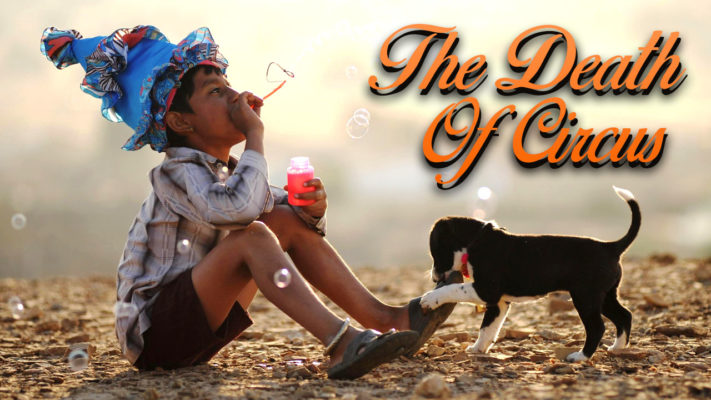
Even in 2025, the memories of circus arrivals remain cherished across Indian households, a testament to simpler times.
The Good Ol’ Days
One of the things that are constantly on my checklist is what my next generation will miss out on. A very unlikely thought for a millennial but then again, if we as custodians of our present don’t take the effort to talk about the things that we were lucky to witness, then, perhaps, our future generation is going to be poorer for it. I would very much like to believe that I am leaving behind a time capsule in the form of an online letter, which someone, five years later, will stumble upon and his/her eyes will glisten with excitement. I am an old fool, and I sincerely hope that those, who are reading this now, are the ones too; that even in the loss I may find a kindred spirit.
If you look back into your childhood; yes, when having a colour television in a household was a matter of pride, when people didn’t have smartphones in their hands and life was simpler, you will remember the anticipation in your heart, when it was winter; because, making time between Christmas and New Year a spectacle was in town. I don’t know if your memory serves you well, but let me regale you the time when the circus came to town.

We would know, well ahead a week of the performance that something was going on. My father, a usually reticent man would come home with a pamphlet that would gaudily read that the great XYZ circus will have a show from so and so date and we should prepare ourselves for a spectacle that we haven’t seen before or will ever see! As children, we were never allowed to go to movies, because coming from an orthodox household, sitting huddled beside people watching a heroine gyrate through motions was not something the family approved of. Yes, the 90s was not known for path-breaking commercial cinemas. So, the only outing that we were allowed was on a single day in December when we decked up in our finest and holding our father’s hands made way to the “maidan” or the festival grounds, where the circus had set up a tent.
It Was Majestic…
It was a lavish affair; set over three acres of land you had majestic tents and huge boards. Each board carefully hand painted (another losing art) showing the enthralling performances that were present inside. There were images of the daring trio! The flying gymnasts! The man that had the strength of an elephant! The fire-eater and the list went on. And once you enter the biggest tent, you would have been captivated for two hours. For a measly sum, you could witness miracles, one after the other! But you had to hold your breath! Once the times of tame mortals were done then entered the real deal – the animals of the circus! A chimpanzee that does trapeze! An elephant that can juggle balls! And a lion that runs through hoops of fire. My little heart didn’t know what animal cruelty was and nor did the million bulbs, that shone in the tent, allow us the insight to see the pain in the eyes of those animals. So, to me, it was an experience of a lifetime.
What The Hell Happened ?
https://www.youtube.com/watch?v=o-g8rlhlPlg
The circus died slowly during my teen years. What happened to it was at one end justified and at the other end, just sad. The Indian government banned the circus performance of the animals, which was a welcome move; however, our government, regardless of the regime, has always had a penchant towards short-sightedness. Although it levied a ban, it kept the future of the animals, who have been with the circus for years, hanging. These are animals that have been kept in captivity for so long that set them back in the wild was a terrible idea. The exotic ones were shipped to zoos, where they didn’t have to perform but at the same time, fell into the same laconic care that others are used to. A better fate morally; but the practicality of the entire charade was questionable. Then again, who bothers about animals in India, a country that has failed its human citizens repeatedly.
Not getting into a moral debate here. Let’s go back to the story. The circus history says that it was born out of a challenge. In 1880, when a circus owner William Chireney challenged Maharaja Bale Saheb of Kanmdwad’s stable-keep Vishnupant Vinayak Chatre to prove whether or not he was capable enough to train the horses better than Chireney himself; Chatre didn’t just win the challenge; he went on to create India’s first successful circus.
The Death Was Slow And Painful
In the golden days, more than 300 circuses spread across India employed more than 50,000 people. Motley of artists and workers brought together a spectacle that would send the audience gasping. The ban on animals didn’t only weaken the circus; it also took away their biggest draw while, at the turn of the tide, they were battling with television. Armed with just humans, the circus didn’t have much chance. People were not interested anymore in watching talented artists defying gravity or brushing aside death in the giant pit while driving motorcycles at a breakneck speed. A fully fleshed out circus needs at least Rs 80,000 per day to run a show. With the footfall slowly falling and people slowly forgetting about them; it became very hard for the circuses to keep the gates open. So, many started calling it quits.
There is an Indian Circus Federation (ICF) and an INTUC- affiliated Indian Circus Employees Union, however; there are more figureheads rather than robust bodies that would battle it out for the circus. In 2010, a Kerala Circus Academy was opened in Chirakkuni, situated in the suburbs of Thalassery. By 2016, it shut off its doors due to lack of funds, management and students.
My next generation will not be able to see Indian circuses; they will hear about it in old man’s tales, in newspaper clippings, in old footages and wonder what actually went on there. Those, searching for an answer, will find this article, maybe They will find a small remembrance of the past and the answer to “Why one December, the circus stopped coming to the town?”
Frequently Asked Questions
Why did circuses stop coming to Indian towns?
Circuses declined primarily due to animal welfare regulations that banned performing animals in shows. The prohibition, though ethically justified, removed the primary attraction that drew families to circus tents across Indian towns.
What was special about circus visits in India during the 1990s and 2000s?
Circus arrivals were major cultural events in Indian towns, announced weeks in advance through pamphlets. Families gathered for the spectacle between Christmas and New Year, creating shared memories across generations and serving as primary entertainment before digital media.
When did animal acts get banned from Indian circuses?
India implemented restrictions on animal performances through animal welfare legislation, significantly reducing circus performances. The exact timeline varied by state, but the enforcement accelerated during the 2010s, marking the end of traditional circus culture in most Indian towns.
Are there any circuses still operating in India today?
Very few traditional circuses continue operations in India. Most modern performances focus on human acts and acrobatics rather than animal performances, and even these are rare attractions in contemporary Indian entertainment landscape compared to their historical prevalence.
What will younger generations miss from the circus experience?
Future generations will miss the shared family experience, anticipation building weeks before performances, and the magical sense of wonder that circus arrivals created in Indian towns. This cultural phenomenon represented a simpler era of entertainment before digital media dominated leisure activities.
Disclosure: This article may contain affiliate links. VoxSpace may earn a small commission if you make a purchase through these links, at no additional cost to you. This does not influence our editorial opinions or reviews.
You Might Also Like
- [VoxSpace Tech] The Social Media Circus : How Our Data Stored By Social Media Is Highly Dangerous?
- Haroon Abbas Wani : Educated Youth Joins Militant Organization In Doda District
- [VoxSpace Selects] Pinky Memsaab : The Saving Grace For A Comatose Lollywood
- [VoxSpace Life] Degradation In Our Print And Media Journalistic Standards
- [VoxSpace Selects] Barah By Barah : A Unique And An Interesting Film Which You Can Be A Part Of
- [VoxSpace Life] Modi's Ache Din : Was The Modi Led BJP Government Worth The Try?
- [VoxSpace Life] Greta Thunberg : The Young Crusader Professing For A Better Tomorrow





Comments are closed.