
In 2025, the social media trap for Indian teenagers has only deepened, making this conversation more urgent than ever.
Key Takeaway
Social media amplifies the illusion of perfection among teenagers, leading to anxiety, low self-esteem, and distorted self-image. While it connects us digitally, the constant comparison and curated feeds create an unhealthy psychological environment that demands conscious digital literacy and parental awareness.
The Web Of Social Media
How long have you not eaten a lunch or dinner with your loved ones without taking a sneak-peek into your social media feeds? Don’t you feel an innate mandate to go through your Facebook or Instagram feed every once in a while, even while you’re at the office doing some important work? Well, don’t be perplexed – that’s just most of us bitten by the social media bug.
Social media is no villain. It helps us stay connected with our friends, family and peers – even when we are miles apart from each other. It is a boon to many of us, who wish to get a glimpse of what’s happening around in the world without having to read lengthy newspaper reports. In short, social media is an unputdownable platform for the busy, urban crowd. But is that all about social media? We think not!
Is Social Media An Addiction?

As Newton once said, every action has an equal and opposite reaction. Going by this, social media’s vices are also not hidden from us. It won’t really be wrong to term social media as an addiction, and addictions are never healthy. In trying to become the microcosm of the entire society and world, social media is slowly taking our very own social life away from us. We tend to smile more through emoticons on WhatsApp and over memes in Facebook than by engaging in some hearty talk with our near and dear ones. However, the thing which worries me the most is social media’s impact on teenagers and how they are constantly losing contact with the pragmatic life in order to achieve a fake perfection.
Social Media’s Popularity Among Children
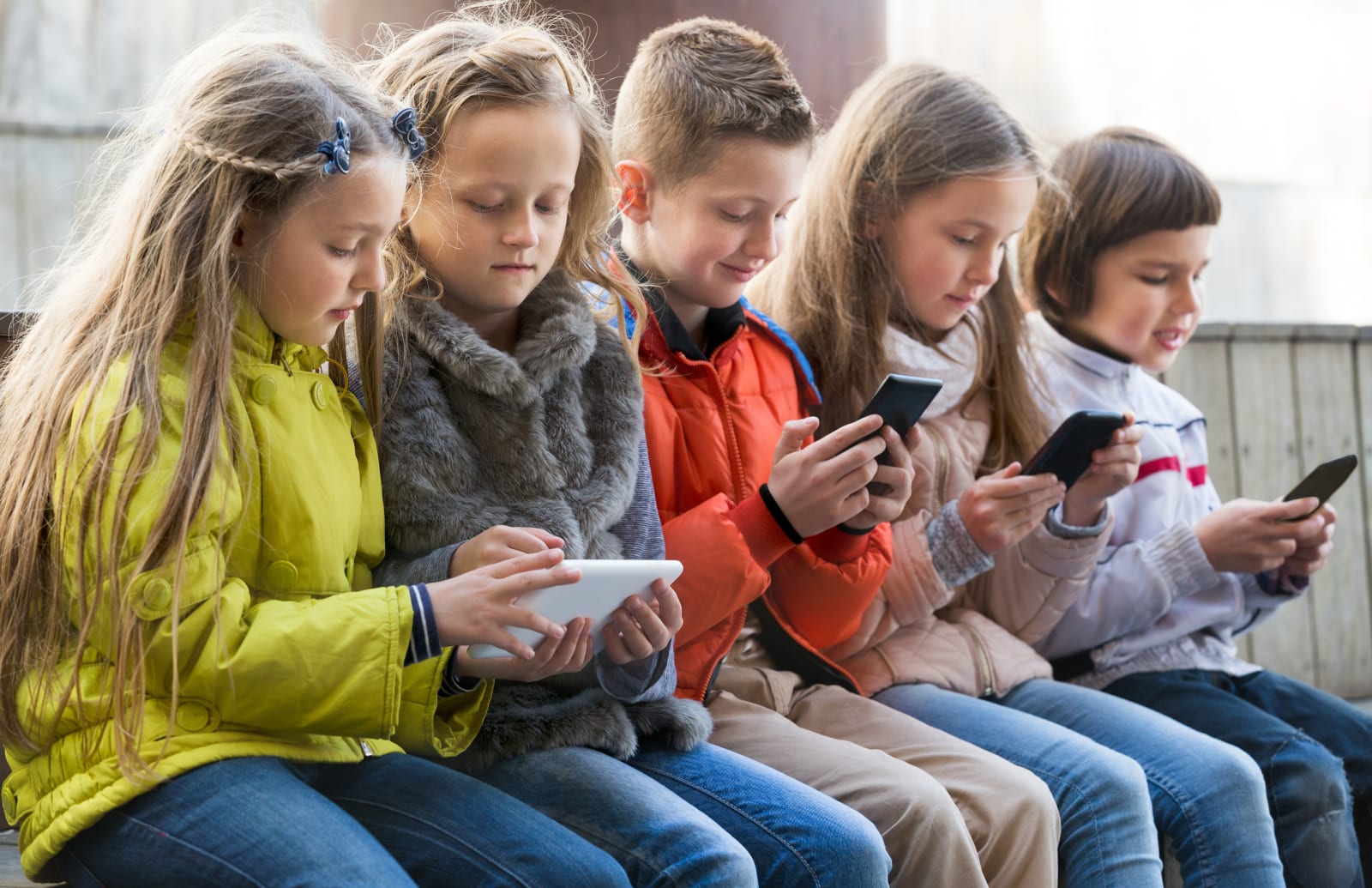
The modern-day children are no longer as vulnerable as we used to be back as kids. They know how to operate a mobile phone better than any ordinary grown-up person does. Instead of going out to the fields or parks to play with their playmates, they are mostly seen hooked on to their parents’ mobile phones, playing various games, such as Temple Run. So, it is indeed not quite shocking to find teenagers or young adults – as they are referred to nowadays – getting hooked on the most prevalent addiction of all times – the social media.
A few days back, while scrolling through my Instagram feed, I came across my niece’s profile – she is in standard 8. Shockingly, she was not her cute and chirpy self on the social media platform. Rather, she had all kinds of filters playing on, that ended up making her look akin to a Vogue model. To be honest, I would never have been able to relate her to her essential self-had I not known her in person. What is she up to? For what is she imposing on herself a fakeness that’s no way needed? And no – sadly, she is not the only person engaged in the “game” – the game of being and looking perfect on the social media.
Social Media And The Heady Competition To Achieve Perfectness

The social media is a microcosm of the society itself. To put it simply, it brings the Page 3 personalities as well as actors virtually closer to us – to the extent that the vulnerable teenagers’ minds tend to get conditioned by the way they look and appear on-screen. Look at any celebrity’s Instagram or any social media feed. It is always perfect – too good to be true. While they treat their social media profiles as tactical PR platforms, the young minds of children are too vulnerable to get that. Hence, they fall prey to the outer shine and stardom, and hence, the usage of a flurry of filters and other aids just to make them stand out and look PERFECT.
The Pressure To Fit In And Cyber Bullying
The idea to fit in is not something new. Except for the Mavericks, all of us common men and women, at some points of our lives, have tried to fit into our immediate social groups. However, technology has magnified this problem to a great extent. The teenagers not only try to emulate the lives or the looks of an actor or a celebrity but are even found at times trying to portray themselves as perfect to fit into the society of social media. It is an indeterminable scary loop, where one needs to be perfect or face the wrath of severe trolling and shaming.

For example, a social media addict never fails to update their live events (whether they are attending a concert or going for a weekend gateway or even sleeping over at their friends’ place). He or she might have had immense problems at home for getting permission but s/he will never upload the same. This makes his/her life seem exciting and great to the world, specifically to people of the same age group. Needless to say, likewise the entire world seems rose-tinted to a vulnerable teenager, who tries with all their might to fit in and be one of the most “happening” persons around. After all, there is always a latent fear to grasp the wrath of cyber bullies and lose their dignity in a matter of minutes.
Life Beyond Social Media

With the advent of social media, teenage depression has also reached an all-time high. So that it does not reach its extremity, the parents need to understand their child’s requirement and help the children understand their own worth and innate talents. The child must understand that the social media is an interactive platform and not a social judge. A beautiful letter written by actress Sonam Kapoor tried to hit this point hard.
A few months’ ago, Sonam Kapoor wrote an open letter addressed to the young girls of the country. While you may or may not like her acting skills, it is indeed commendable of her to have taken the first step at breaking the myth of perfectness of actresses. Her letter was entitled, “I didn’t wake up like this” and it focussed on how imperfect she is and how much time, energy, effort and money it takes to achieve the virtual perfection, which has made her famous across the world. Towards the end of the letter, she is also seen urging the teenagers to concentrate on what’s in front of them – studies – and feel beautiful from inside rather than going for the artificial. But, will the teenagers understand this point? We wonder…!
Frequently Asked Questions
How does social media affect teenage mental health in India?
Social media creates constant comparison cycles where Indian teenagers measure their self-worth against curated, filtered posts. This leads to anxiety, depression, body image issues, and diminished real-world social skills. Studies show heavy social media users report higher stress levels and lower self-esteem than their peers.
Why do teenagers feel pressure to maintain a perfect image on Instagram and Facebook?
Algorithm-driven feeds reward polished, attractive content with likes and comments. Indian teenagers internalize these metrics as validation, creating pressure to present idealized versions of themselves. The permanence of posts and audience judgment intensifies this need for perfection and social acceptance.
What are signs that social media addiction is affecting Indian teenagers?
Warning signs include constant phone checking, anxiety when unable to post or check feeds, sleep disruption, declining academic performance, withdrawal from face-to-face interactions, and obsessive monitoring of likes and comments. Teenagers may also experience mood swings linked to online validation or negative feedback.
How can parents help teenagers develop healthy social media habits?
Parents should establish screen-free family time, encourage open conversations about online experiences, model healthy social media use, teach critical thinking about curated content, and set reasonable time limits. Building real-world relationships and hobbies offers teenagers alternative sources of validation and self-worth beyond digital platforms.
Is social media inherently bad for teenagers or just when misused?
Social media itself isn’t harmful—connection and information-sharing are valuable. However, excessive use, constant comparison, and algorithmic design prioritizing engagement create toxic environments. The key is mindful, moderated usage with digital literacy, where teenagers understand the difference between real life and curated online personas.
Disclosure: This article may contain affiliate links. VoxSpace may earn a small commission if you make a purchase through these links, at no additional cost to you. This does not influence our editorial opinions or reviews.
You Might Also Like
- [VoxSpace Life] Prajakta Koli : Being MostlySane At The UN
- [VoxSpace Selects] Why Social Mediau2019s Divine Right To Moral Policing Is Not Okay
- [VoxSpace Tech] Online Propaganda : How Russia Used Facebook And Twitter To Make Trump The POTUS
- [VoxSpace Tech] Bots And Fake News & Accounts : Government's New Age Tools For National Propaganda
- [VoxSpace Tech] Are Program And Bot Generated Fake Likes Misleading Us?
- [VoxSpace Life] Social Tagging : When Did Tagging In Memes Become A Solid Parameter Of Friendship
- [Voxspace Life] Is Social Media Behaviour Linked To Weather Outside?








Comments are closed.