In 2025, Urdu poetry's influence on Indian OTT and cinema remains stronger than ever, making this exploration of overlooked poets more relevant today.
Key Takeaway
While Ghalib dominates popular culture, poets like Mir, Dard, and Nasikh deserve equal recognition for their profound contributions to Urdu literature and their lasting influence on Indian music, cinema, and contemporary poetry.
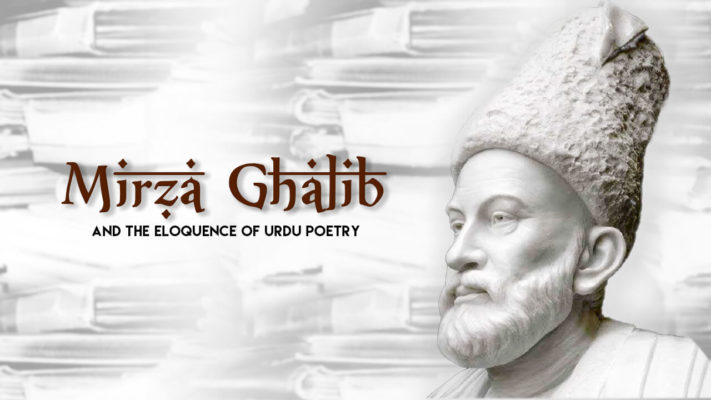
The Eternal Wordsmith – They Called Him Mirza Ghalib
“Reekhta kay tumhi ustaad nahi ho Ghalib, Kehte hain agle zamane me koi Mir bhi tha.”
– Mirza Ghalib
First, let’s get this out of the way. I love Mirza Ghalib. I love his work and I also like the fact that despite him being so popular, when I visit Mirza Ghalib Street in Kolkata and asked around where Ghalib’s house was, nobody had a clue. What really made my day was when I made my way to Ghalib ki Haveli in Purani Dilli, after going through a bustling bazaar and millions of shops in Gali Qasim Jan, Ballimaran; it looked like it was a derelict shack in need of major repairs.
So, what made Ghalib so popular? Is it the fact that there is an old TV series about him, which had Naseeruddin Shah as the lead or the fact that Bollywood picks up random lines from his poems to adorn its songs without any context? If that is the case, at least some other poets out there should get the similar amount of recognition because Bollywood has been churning Urdu poems into songs since its nascent days.
The Fame Of Ghalib – The Poignancy Of Poetry
I don’t know the reason behind Ghalib’s fame. But, what I do know is that although Ghalib is a known name among the millennial generation, there are a lot of poets, some of whom were more famous than Ghalib in their hey-days, are now being forgotten. That bothers me a lot. There is a certain sense of despair when you realize that lovers from our generation won’t take their names while trying to woo their beloved, put forward an argument in a lover’s squabble or take heart in them while being spurned.
Ghalib is wonderful; Ghalib is poignant but if every time someone talks about Hindi or Urdu poetry, it begins and ends with him; then he is also the part of a cliché.
Valentine’s Day is here. It’s supposedly a day for lovers to say what is in their heart to their loved ones. I know it’s an overtly western concept and it doesn’t sync with Urdu poetry. Then again, I would urge the lovers out there to take that risk. Find a voice that echoes with you and is not Ghalib.
If this day, works as a pivotal moment for you to expand your horizon and discover some hidden gems of Urdu poetry; I really believe that you’ll be richer at the end of it. So without further ado, I would like to introduce to you five such poets, whose work I am certain you will enjoy.
Faiz Ahmed Faiz – The Forgotten
Faiz Ahmed Faiz was one of the renowned voices of 20th century Urdu poetry. A behemoth in his own right, he was also a great admirer of Ghalib. Since we are easing into the subject, it’d be, perhaps, more engaging to inform you that his work has also been used in movies. Vishal Bharadwaj’s Haider, which is loosely based on Hamlet, took one of his works. It has been sung by several noted singers, such as Mehdi Hassan, the modern-age Arijit Singh and many more.
The song is “Gulon mein rang bhare baad-e-naubahaar chale, Chale bhi aao ke gulshan ka kaarobaar chale” which I am sure a lot of you must have heard.
Here is an excerpt from another of his iconic poems:
“Mujh se pehli si mohabbat mere mehboob na maang
Maine samjhaa tha ke tu hai to darakhshaan hai hayaat
Tera gham hai to gham-e-dehar ka jhagdaa kyaa hai
Teri surat se hai aalam mein bahaaron ko sabaat
Teri aankhon ke siwaa duniyaa mein rakhkhaa kya hai
Tu jo mil jaaye to taqdir nigoon ho jaaye
Yoon na thaa maine faqat chaahaa thaa yoon ho jaaye…”
I am also leaving a video of this poignant poem being recited by the inimitable Zohra Segal. I hope you’ll enjoy it and yes, a line of this poem was also recited by Aishwarya Rai Bachchan in Ae Dil Hai Mushkil.
Jaun Elia – The Liberated One
Jaun Elia, in his lifetime, was a lot of things. He was a freethinker, a sceptic, a shining star of the Urdu Poetry scene in the latter half of the 20th century, an alcoholic and a lover. Elia was not afraid of speaking the truth and he was not worried about offending people. In his lifetime, he had been threatened by religious fanatics and liberals alike. However, Jaun Elia, who earned the title of being “The Great Depression Poet,” never blinked. He died in 2002, living behind a rich tapestry of words and a legacy that gets stronger with each passing day.
Here’s an excerpt from one of my favourites from his infinite gems.
“Tumhara Hijar mana loon agar ijazat ho?
Mein dil kisi se laga loon, agar ijazat ho?
Tumharey baad bhala kaya hain waada-o-paimaan
Bas apna waqt gawa loon agar ijazat ho?”Here are two more lines from his pen
“Jo dekhta hun wohi bolney ka aadi hun,
Main apne shehr ka sabse bada fasadi hun.”
https://youtu.be/QPCy4WvXZ2U
Nida Fazli – The Trance Of Eloquence
If you are fond of old Bollywood movies, you can be assured that you have come across Nida Fazli’s words. One of the famous lines, by him, which was made into a song was –
“Kabhi kisi ko mukammal jahan nahi milta,
Kahin zameen to kahin aasman nahin milta…
Jise bhi dekhiye woh apne aap mein ghum hai,
Zuban mili hai magar hum-zuban nahin milta”
This stalwart was awarded Padma Shri for his contribution to literature. Right now, in India, where communal tensions are at its peak, one would be surprised to know how this writer discovered his passion.
In an interview, he says, “I felt a knot in my heart. I wanted to express my ache through verse but couldn’t… But one day I heard a pujari in a mandir singing Surdas’ pad ‘Madhu ban tum kat rahat harey…’ This kick-started his journey into Urdu poetry and then subsequently into Hindi film industry. Also, “Hoshwalon Ko Khabar Kya, Bekhudi Kya Cheez Hai, Ishq Ki Jaye Phir Samajhiye, Zindagi Kya Cheez Hai”– this timeless song, sung by Jagjit Singh, was written by him.
Sahir Ludhianvi – The Controversial Creative
Urdu poems, love, Bollywood, talent, words – if we are talking about all these things and we don’t take the name of Sahir Ludhianvi; it would be like having a meal and trying to complete it without the dessert. Ludhianvi is, perhaps, the most controversial poets out there.
His over-vaulting ego, his torrid love affair with Amrita Pritam, his distaste for writing commercial lines; then managing to carve out a niche for himself in songs and the fact that he had been blessed with genius – all these added to his persona.
He towered over his contemporaries and if he wouldn’t have been in Bollywood, a lot of movies would have probably faltered, because who else but he would write lines such as the ones he did.
If you want to see him at his best, go watch the movie, which most of us would say was also Guru Dutt’s best; a landmark in the history of cinema-Pyaasa. Every song in this movie was written by Ludhianvi and when you listen to lines such as this,
“Yeh Mehlon, Yeh Takhton, Yeh Taajon Ki Duniya,
Yeh Insaan Ke Dushman Samaajon Ki Duniya,
Yeh Daulat Ke Bhookhey Rawajon Ki Duniya,
Yeh Duniya Agar Mil Bhi Jaye To Kya Hai,”
….you can’t help but fall in love!!
I do intend on making this into an ongoing series. A monthly article to talk about poets, their contribution to literature and their notable works both on-screen and off-screen. To bring out voices forgotten or are discussed in select circles. I would really appreciate if the readers who have stuck with me till the very end of this article to participate and if you are unaware of them, to Google them online and I assure you, you will not be disappointed with what you discover.
Frequently Asked Questions
Who were the major Urdu poets before Ghalib became famous?
Poets like Mir Taqi Mir, Khwaja Mir Dard, and Nasikh were prominent figures in Urdu literature before Ghalib’s rise. Mir was particularly revered in his era and influenced many poets who came after him, including Ghalib himself.
What is the difference between Ghalib’s poetry and Mir’s poetry?
While Ghalib’s work is known for intellectual complexity and philosophical depth, Mir’s poetry is celebrated for its emotional directness and accessibility. Mir focused on human experience and everyday emotions, making his work relatable to common audiences.
How have Urdu poets influenced Hindi film music and Bollywood songs?
Bollywood has extensively drawn from Urdu poets since its inception, lifting couplets and themes for songs. However, this often happens without proper context or credit, leading to these poets’ reduced recognition among modern audiences despite their profound cultural impact.
Why is Ghalib more popular than other Urdu poets today?
Ghalib’s popularity stems from popular culture references, including the 1988 TV series featuring Naseeruddin Shah and frequent Bollywood citations. Media representation has significantly contributed to his contemporary fame, sometimes overshadowing equally talented poets from his era.
Where can I read authentic translations of major Urdu poets’ work?
Several academic publishers and cultural institutions offer authentic translations of Urdu poetry. Collections dedicated to Mir, Dard, and Nasikh are available through Indian publishers and university presses, providing contextual readings that preserve the poets’ original intentions and meanings.
Disclosure: This article may contain affiliate links. VoxSpace may earn a small commission if you make a purchase through these links, at no additional cost to you. This does not influence our editorial opinions or reviews.
You Might Also Like
- [VoxSpace Life] Demystifying Ghazal u2013 The Myths, Facts & The Form
- [VoxSpace Life] Still Bombay Not Mumbai, Still Calcutta Not Kolkata, Still Dilli Not Delhi
- A Tongue Untied - The Riveting Tale Of A Dialect Called Dakhani Of Hyderabad
- [VoxSpace Life] Art Is Liberating : Our Talks With Young Spoken Word Poets Who Redefine The Beauty Of Literature
- [VoxSpace Selects] Imran Pratapgarhi : A Poet Who Thinks Beyond Poetry
- [VoxSpace Life] Emergence Of Slam Poetry In India - The New Age Of Literature
- VoxTalks With Twin City Poetry Club (TCPC) : Hyderabad's Most Decorated Poetry Collective