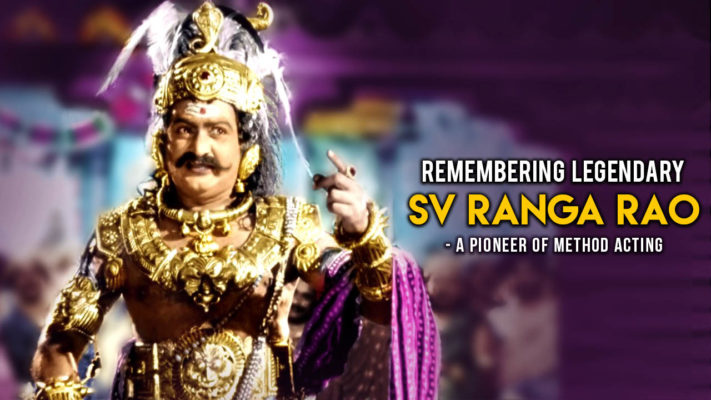
Decades later, SV Ranga Rao's mastery of method acting remains a benchmark for understanding authentic character portrayal in Indian cinema.
An Ode To Method Acting
The Indian film industry boasts of a good number of actors who literally live the role and mystically become the ‘character’. We call them ‘method’ actors or in layman terms ‘natural’ actors, where any character portrayed by these actors give us an authentic feel of that character, not just by expressions but also psychologically. In the present generation, there are a bunch of such actors from Kamal Haasan, Nawazuddin Siddiqui, Mohanlal to the latest Fahadh Faasil, Vijay Sethupathi or Ranveer Singh.
But way before cinema turned to colour, it was SV Ranga Rao, who along with Dileep Kumar, was considered as the pioneer and the finest method actor of India. In the present times, our memories are occupied mostly with the current updates apart from thriving to know what’s in the future for us. While it is a good sign of progress, it’s not a bad idea to be aware of the contributions made by a few legends to one of the most creative fields, filmmaking. And when it comes to SV Ranga Rao or famously known as SVR, who was a versatile actor, explored himself in character roles all through his career. He was referred to as the ‘Viswanata Chakravarthi’.
Akbar, Bhishma, Dhuryodhana, Yama, Ravana, Tandra Paparayudu, Ghatotkacha, Harishchandra, Hiranyakashipu, Kamsa, Keechaka, Mayasura, Narakasura, you name an interesting character from mythology and SVR excelled in it. He stood as one of the highest paid actors back in those times in spite of not acting in lead roles.
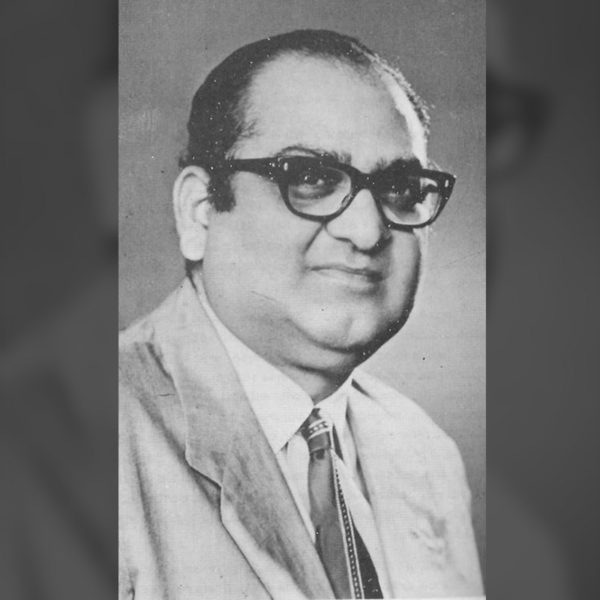
Born in Nuzvidu on July 3, 1918, when the World War I was coming to an end, Samarla Venkata Ranga Rao completed his schooling from Madras. At the age of 12 itself, he developed immense interest towards acting in plays. He was a brilliant student and as a result post his bachelor’s degree, he earned himself a job as an officer in the Fire Service department. However, the young SVR had by then only two objectives – one to complete his M.Sc and the second to take active participation in plays.
A Bumpy Beginning
Seeing his interest in acting, the first opportunity SVR received was through a relative, BV Ramanandam, who offered him the lead role in his movie Varoodhini. Without any second thought, he immediately quit his job and went to Salem to take part in the shoot. It was indeed a great opportunity for the young SVR back then. But, just when everyone thought SVR got his first chance quite easily, the movie released and tanked at the Box-Office. Thereafter, no maker dared to give SVR a second chance.
This disheartened SVR immensely and he had no other option than to pick up a job again. For the ace talent, he was in every field, he secured a job as the budget assistant with Tata Company. He moved to Jamshedpur while his love for dramas almost doomed. He married Leelavathi in 1947. With great difficulty, another opportunity knocked on SVR’s door He was asked to play the antagonist in one of BA Subba Rao’s flick. However, when SVR was all prepared to board the train to Madras, little did he know that his luck would be pushed farther. He received the news that his father expired and hence had to go to his hometown. He completed the last rituals and arrived in Madras two days later. By then, the unit had a replacement for his role thus knocking away his opportunity.
The Breakthrough
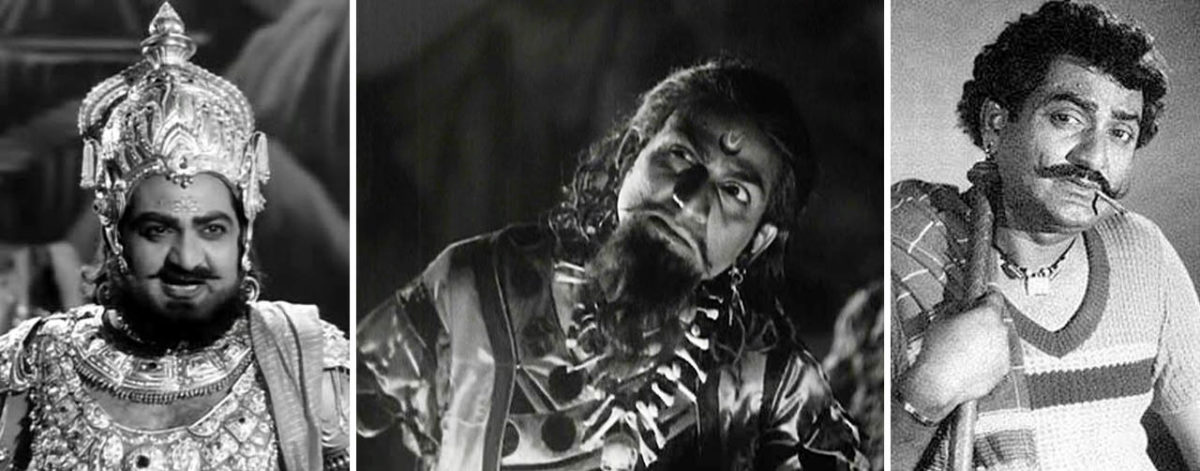
However, it was Vijaya Pictures who came to SVR’s rescue giving him a break through the much-acclaimed role of ‘Nepala Mantrikudu’ in the 1951 blockbuster Pathala Bharavi. From there on he never stopped, offers kept pouring in and SVR hit the bull’s eye every time. He eventually became a crucial actor for the industry. He gradually ventured into Tamil cinema and garnered great name in the industry as well. Missamma, Mayabazaar, Sati Savitri, Gundamma Katha, Nasthanasala, Pathala Bhairavi, Pandava Vanavasam in Telugu and Sarada, Annai, Naanum Oru Penn in Tamil are a few of the gems where he added great weight to the movie with his roles. He acted in a total of 162 movies, 53 in Tamil and 109 in Telugu. He was known for showing a sort of recklessness and arrogance in his dialogue delivery, which actually gave a raw essence to the characters he portrayed. This style was even adapted by MGR in the Tamil cinema. It was to such an extent that, people who would imitate MGR would end up imitating SVR.
The Rise Of India’s First Method Actor
Back in the 50s and 60s, most of the big ventures by Vijaya Vauhini Studios or Vijaya Pictures that involved the biggest stars such as NTR, ANR, Savitri, Gummadi, Anjali Devi and so on had one factor in common. The inclusion of SVR in their cast. He added great value to the inclusive performances of everybody merely by his involvement in the roles that he essayed. Many times, he was even offered lead roles, but he didn’t want to restrict himself to any particular image and hence let go of them. This, in turn, paved a path for many legends to build their image and career. Kaikala Satyanarayana and NTR are the actors who are a result of this.
He was the first Indian to receive the Best Actor Award at an International Film Festival. It was for the film Narthanasala where he donned the role of Keechaka and he won it at the Afro Asian Film Festival, Jakarta. This was SVR’s first acclaimed recognition and ironically till then from the Indian Film Fraternity. Surprisingly not many are aware of this fact. He further won the Rastrapathi Award five times, a couple of Nandi Awards and a Filmfare Award. He was also an ace director. He directed two movies, Bandhavyalu and Chadarangam, both of which won Nandi Awards. As a tribute, the Andhra Pradesh Government gives away an award every year to the Best Character Actor under his name. It is called the SV Ranga Rao Nandi Award for Best Character Role.
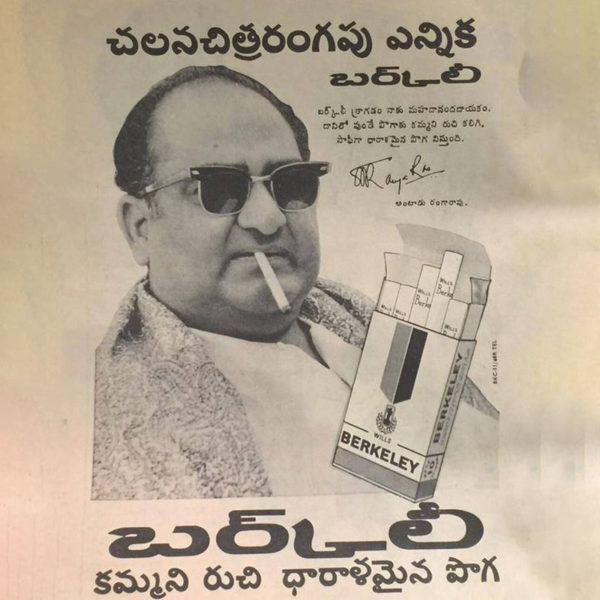
Unfortunately, Rao suffered from a cardiac arrest on 18 July 1974 and breathed his last. He was only 56 then. Just when you think you’ve got everything right, guess fate loves to get cruel.
Frequently Asked Questions
Who was SV Ranga Rao and what made him special?
SV Ranga Rao was a pioneering method actor in Indian cinema, particularly known for his work in Telugu films. He excelled in character roles, portraying mythological figures with unparalleled authenticity. His dedication to living the character earned him the title ‘Viswanata Chakravarthi’ and made him one of the highest-paid actors despite not playing lead roles.
What is method acting and how did SV Ranga Rao pioneer it?
Method acting involves actors psychologically immersing themselves in their characters to deliver authentic performances. SV Ranga Rao, alongside Dilip Kumar, was considered a pioneer of this technique in Indian cinema. He didn’t just perform expressions; he embodied the psychological essence of characters, making them believable and memorable.
Which mythological characters did SV Ranga Rao famously portray?
SV Ranga Rao portrayed numerous mythological characters including Bhishma, Duryodhana, Yama, Ravana, Harishchandra, Hiranyakashipu, Kamsa, Keechaka, and many others. His versatility in bringing these complex characters to life demonstrated his mastery of the craft and deep understanding of Indian mythology and storytelling traditions.
How is SV Ranga Rao’s legacy compared to modern method actors?
While contemporary actors like Nawazuddin Siddiqui and Fahadh Faasil are celebrated method actors, SV Ranga Rao established the foundation for this craft decades earlier. His work predates the modern era and influenced the industry’s approach to character acting, making him a foundational figure in understanding authentic performance in Indian cinema.
Why is SV Ranga Rao less known to modern Indian audiences?
SV Ranga Rao’s work predates the digital and colour film era when cinema consumption patterns were vastly different. Modern audiences are primarily occupied with contemporary updates and current entertainment, making legendary figures from earlier eras less visible in popular memory despite their significant contributions to Indian filmmaking.
Disclosure: This article may contain affiliate links. VoxSpace may earn a small commission if you make a purchase through these links, at no additional cost to you. This does not influence our editorial opinions or reviews.
You Might Also Like
- [VoxSpace Selects] Remembering The Story Of Kishore Kumar, The Reluctant Superstar
- [VoxSpace Selects] Rajasekhar Mamidanna : Hyderabad Comicu2019s Version Of The Epic u2018Ramayanu2019
- [VoxSpace Life] Tidying Up With Marie Kondo : De-Clutter The House, De-Clutter The Mind
- The Fading Line Between Drama And Life - An Insight Into The Theatre Circuits
- Winners Of The 76th Golden Globe Awards- A Complete List
- [VoxSpace Selects] Remembering Rituparno Ghosh : The Pioneer Of Bengali Experimental Cinema
- [VoxSpace Selects] The Art Of Parenting A Slow Learner : In Providing Attention And Love







Comments are closed.